The short answer
After a hip replacement in Dallas, start rehab at home while getting in and out of a car is the hard part, then move to a clinic once the plan needs heavier strength and balance work. Osteopractic Physical Therapy & Pain Relief does both: 60-minute one-on-one visits with Dr. Brent Lockett, PT, DPT at your home across Dallas, then at the North Dallas clinic, inside your surgeon’s protocol.
- Start hip replacement rehab at home while the car is the hard part, then move to the clinic when the plan needs heavier strength and balance work.
- Precautions and weight-bearing limits are your surgeon’s; good rehab works fully inside them and asks the surgeon when something seems unworkable.
- Gluteal strength decides whether the limp goes, and balance training is what most hip rehab stops too early.
- Set the house up before the operation: a firm chair with arms, a clear route to the bathroom, everything at waist height.
- Home visits across Dallas carry an upcharge; clinic packages are 6 visits for $840 and 12 for $1,560, every visit 60 minutes with Dr. Lockett.
Your hip replacement has a date, or it has just happened. The surgical team has covered the operation and the hospital stay, and somewhere in the paperwork it says you will need physical therapy. It rarely says where, and in the first weeks the honest answer for most people is: at home, because getting into a car and out again is the hardest thing you will do all day.
Below: how hip replacement rehab runs in Dallas from the first home visit to the last clinic session, what changes at each stage, how to set the house up, where your surgeon’s precautions fit, what a home visit actually includes and which areas it covers, the questions to ask a clinic before you book, and when to call your surgeon instead of us.
Home first, then the clinic: why hip replacement rehab usually starts at home
A hip replacement for end-stage arthritis is one of the most successful operations in medicine. The operation replaces the worn joint. It does not rebuild the muscles around it, which have usually been working around a painful hip for years, and it does not teach you to walk without the limp you learned. That is the rehab’s job.
In the early weeks, the obstacle is rarely the exercise. It is the journey. After a knee or hip replacement, getting in and out of a car is often the hardest part of the day, and you may not be allowed to drive at all. A session that starts with twenty minutes folded into a passenger seat on Central Expressway is not a good session.
The early work also happens to suit a living room. Range within your surgeon’s limits, swelling management, getting the gluteal muscles to fire and walking safely with your aid need no gym equipment. And the things you actually have to manage, your stairs, your bed, your shower and your chair, are right there to be practiced.
Later the balance shifts. Heavier strengthening, step and balance work and testing need weights, space and the same equipment each time, so sessions move to the clinic. A plan that starts at home and moves in is a normal progression, not a change of mind. The general version of that decision is in when a mobile visit makes sense, and when the clinic is better.
The stages after a hip replacement, and where each one happens
The work changes as you heal: protect and calm the hip first, then walking and range, then strength and balance, then whatever your life asks of the hip. The order comes from your surgeon’s protocol. The pace comes from how you respond, measured at every visit.
| Stage | Usual window on our post-surgical timeline | What rehab works on | Where it usually happens | What moves you on |
|---|---|---|---|---|
| Before surgery | The weeks before the operation | Baseline measurements, hip and thigh strength while the joint allows it, the first exercises taught while nothing is sore, the house planned | Clinic, or home if the hip already makes the car hard | You have the protocol in writing and the first visit is booked |
| Protect and switch on | Weeks 1 to 2 | Swelling and pain control, the range your surgeon allows, getting the gluteal and thigh muscles to fire, safe walking with your aid, bed, chair, toilet and stairs | Home | The muscles switch on, swelling settles between sessions, transfers feel safe |
| Walking and first loading | Weeks 3 to 6 | A more normal walking pattern, progressing off the aid only as your surgeon allows, light resistance, blood flow restriction if permitted | Home, then the clinic once you can travel comfortably | Walking steadier and longer, no swelling after sessions |
| Strength and balance | Weeks 6 to 12 | Progressive loading of the hip muscles, single-leg work, step-ups and step-downs, balance training | Clinic | Strength rising and the gap with the other side closing |
| Back to your life | Beyond 3 months | Whatever your week asks: longer walks, golf, pickleball, travel, lifting a grandchild | Clinic, then your own program | Tested against your other side and your goals, and cleared by your surgeon |
How to read this table: the windows are the ones on our general post-surgical timeline, not a hip replacement rulebook. Your surgeon’s protocol sets the timing for your operation, so it always wins over this table. The fourth column is where most plans happen to land, and it can change with your house, your transport and how fast the hip settles. The last column is what to check each week.
The early phase is covered for every operation in post-surgical rehab: the first six weeks. One thing to expect: in that phase the home program is the treatment. A few exercises done several times a day do more than any single visit, and the visits exist to check the range, adjust the dose and catch problems early.
Precautions: they are your surgeon’s, not ours
After a hip replacement many people go home with a list of movements to avoid for a period. These are called hip precautions. They differ from surgeon to surgeon and from one operation to another, so the only list that applies to you is the one your surgeon gave you.
Here is how that works in practice:
- Bring the sheet. Your surgeon’s protocol and any precautions are read at the first visit, and every exercise, transfer and stair is taught inside them.
- We do not add or remove rules. If a precaution seems to make a daily task impossible, we work out a way to do the task within it. If it still seems unworkable, that is a conversation with the surgeon, not a quiet decision to ignore it.
- We ask when they end. Precautions are usually for a period, and the date they lift is your surgeon’s call. Write it down before you leave the hospital if you can.
- Weight-bearing is the same. How much weight the leg may take, and when, comes from the protocol. Progress is reported back to your surgeon if they want it.
This is not caution for its own sake. Working fully inside the protocol, rather than at its edges, is what lets the rest of the plan move on time.
Setting up the house before you come home
The house is easier to fix before the operation than to describe afterward. Most of this takes an afternoon:
- A firm chair with arms, at a height you can get out of without a struggle.
- A clear route to the bathroom, with loose rugs, cords and clutter out of the way of a walker or crutches.
- Everything at waist height: the things you use every day moved off low shelves and high cupboards, so you are not bending or reaching for them.
- The bed and the stairs thought through. Which side you get out on, and whether the first days are spent upstairs or down.
- Somebody to hear the plan. Family can be in the room at a home visit, and for post-surgical clients it often helps to have whoever is supporting you hear it first-hand.
At the first home visit the bed, the chair, the toilet, the shower and the stairs are looked at and practiced where they are, inside your precautions. That part is impossible to do from a clinic, and it is the part people tell us they worried about most.
Walking again: the aid, the limp and the gluteal muscles
Walking is the goal everyone starts with, and it is made safe first with whatever aid your protocol requires, usually a walker or crutches at the start. Moving to less support, and eventually to none, happens as your surgeon allows and as the hip muscles can hold you steady. The temptation to drop the aid early is worth resisting: a fall is the setback nobody needs.
The limp is worth deliberate attention rather than being left to sort itself out. The gluteal muscles control the thigh bone through every step, stair and squat, and after years of a painful hip they are almost always under-built. When they cannot hold the pelvis level, you lean or dip on every step, and that pattern can persist long after the new joint has healed.
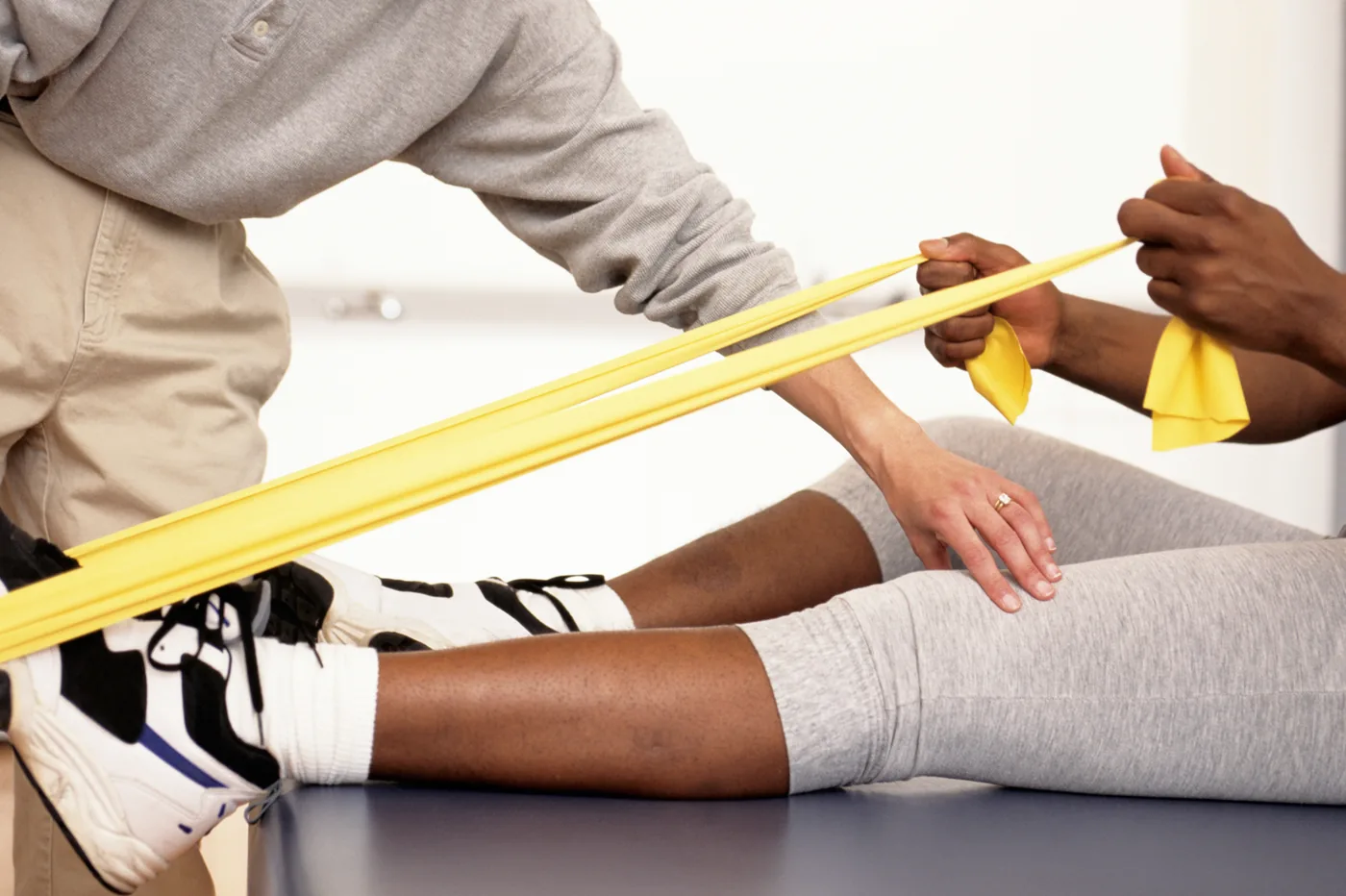
So hip abductor and extensor strength is the lever, built in stages: first getting the muscles to switch on at all, then light resistance, then single-leg work and step-ups and step-downs as the protocol permits. Where heavier loading is not allowed yet, blood flow restriction lets the hip and thigh muscles work hard at light weights; it is used after hip surgery for exactly that reason, once your surgeon and your screening allow it. The timing question has its own article, how early BFR can start after surgery.
For the wider picture of how hip problems are examined and loaded here, see hip pain treatment in Dallas. If the other hip is the one keeping you up now, hip pain at night covers the side-lying pain that usually is not the joint.
Balance: the part most hip rehab stops too early
Balance depends on the inner ear, vision and the position sense in your joints, plus the strength to react when something goes wrong. Weak hips and calves make people unsteady even when everything else is healthy, and after a hip replacement both have usually been weak for a while.
It is very trainable at any age. Single-leg balance, step training, hip and calf strength and practice at reacting quickly reduce unsteadiness and the risk of falls directly. Fear of falling often leads people to move less, which weakens the legs and makes a fall more likely; breaking that cycle is a legitimate goal of the plan, not an extra.
This is clinic work. It needs space, steps, something to hold and progressions that a living room cannot offer for long. More on it in vertigo and balance physical therapy.
What a home visit includes, and which Dallas areas it covers
A home visit is the same session as a clinic visit: 60 minutes, one-on-one with Dr. Lockett, from start to finish. Nothing is delegated to an aide, and the same clinician sees you every time.
- You need no equipment. A treatment table, bands and weights come with Dr. Lockett. A room where you can lie down and move is enough.
- The first visit reviews your surgery, protocol and goals, measures range and strength, addresses swelling and pain, and teaches the first home exercises.
- Your house is part of the assessment: stairs, bed, chair, shower and the route between them, practiced inside your precautions.
- Your home program is built around the furniture and equipment you actually have, at the heights they actually are.
- Hands-on work for stiffness and scar tissue once your surgeon has cleared the area, and PEMF as an adjunct where an area is still too swollen or sore to touch.
Home visits are offered across Dallas and the surrounding areas, including Preston Hollow, the Park Cities, Highland Park, University Park, North Dallas, Uptown, Lakewood, Lake Highlands, Addison, Richardson, Plano and Farmers Branch. Tell us your address when you get in touch and you will get a straight answer on whether it is covered.

Home visits carry an upcharge over clinic visits; call (214) 600-7762 for the price for your location. Full details are on the mobile physical therapy page.
Seven questions to ask a clinic before you book hip replacement rehab
Ask these on the phone or at a first conversation. A good clinic answers all seven without hesitating.
| Question | Why it matters after a hip replacement | How it works here |
|---|---|---|
| 1. Will you follow my surgeon’s protocol and precautions? | The precautions are your surgeon’s and differ from one operation to another | Range, weight-bearing and loading limits are followed, and progress is reported back if your surgeon wants it |
| 2. Can you come to my house at first? | Early on, the car is often the hardest part of the day | Yes, across Dallas and the surrounding areas, for an upcharge |
| 3. Who am I with, and for how long? | Walking, transfers and swelling need checking every visit | 60 minutes, one-on-one with Dr. Lockett; nobody else runs part of your session |
| 4. Will you practice my stairs, bed and shower? | Those are what you have to manage every day | Yes, at the home visits, inside your precautions |
| 5. How do you work on the limp and balance? | Weak gluteal muscles keep a limp going long after the joint heals | Gluteal strength in stages, single-leg and step work, balance training, measured against your other side |
| 6. When do I move to the clinic? | Heavier strength and balance work need equipment and space | When you can travel comfortably and the plan needs heavier loading; plenty of plans use both |
| 7. What does it cost, and how is it paid? | Know the terms before you start | Out of network with a superbill after every session; clinic packages of 6 visits for $840 and 12 for $1,560; home visits carry an upcharge |
How to read this table: the middle column is the reason to ask, whichever clinic you call. The right-hand column is what our own pages state, so you can hold us to it. If a clinic cannot answer questions 1 and 2 clearly, keep looking. Comparing more broadly? How to choose a physical therapist in Dallas covers the questions that apply to any problem.
Start before the operation if you can
If you are waiting for a hip replacement, there is a point to therapy now. Going into surgery with more strength and better movement makes the recovery on the other side markedly easier, and some people find the wait itself becomes far more comfortable.
A visit or two beforehand records your baseline, builds strength while the joint still allows it, teaches the first exercises while nothing is sore, and plans the house and the first home visit. Before the operation, also ask your surgeon:
- What is the protocol, and are there precautions? For how long?
- How much weight may the leg take, and with which aid?
- When can I drive, and when can I go back to work?
- What would tell you the recovery is not going to plan?
Driving depends on the side, the car and whether you could perform an emergency stop. It is a question for the surgeon, not a general rule. More on the before part in physical therapy before orthopedic surgery.
When to call your surgeon, not us
Some things are not a therapy problem, and it is worth knowing them before you come home:
- A wound that is red, hot or draining, or a fever: call your surgeon.
- Calf pain and swelling: seek urgent medical care.
- Sudden shortness of breath: that is an emergency.
- A fall, or a hip that suddenly cannot take weight: see a physician before the next session.
- Your surgeon has said no therapy yet: we start when they clear it.
Some swelling is expected for weeks, and a hip that swells after every session is telling you the last session was too much. That one is ours to adjust, and it is checked at every visit.
Who you see, what it costs and how to book
At Osteopractic Physical Therapy & Pain Relief every visit is 60 minutes, one-on-one with Dr. Brent Lockett, PT, DPT, who holds a Diploma in Osteopractic from post-doctorate residency training and certifications in dry needling, spinal manipulation and blood flow restriction therapy. Hip replacement is one of the operations our post-surgical rehabilitation in Dallas is built for. The practice holds a 5.0 rating from 81 Google reviews, and you can read them here.
- Free discovery visit: No charge — a conversation about your operation, your protocol and whether home visits fit
- 6-visit pain/movement plan: $840 — six 60-minute, one-on-one visits
- 12-visit performance package: $1,560 — twelve 60-minute visits
- Home visits: an upcharge over clinic visits; call for the price for your location. Single sessions: see sessions & packages
The typical plan after surgery is one to two visits a week until strength, range and your own goals are tested and back, and you get an honest estimate after the first visit, not before it; how many physical therapy visits will I need explains why. The practice is out of network: you receive a superbill after every session to file with your insurance for potential reimbursement.
Texas allows up to 30 days of treatment without a referral, so you can book directly. After surgery, your surgeon’s protocol and clearance still guide the plan; the full rule is in do you need a referral for physical therapy in Texas.
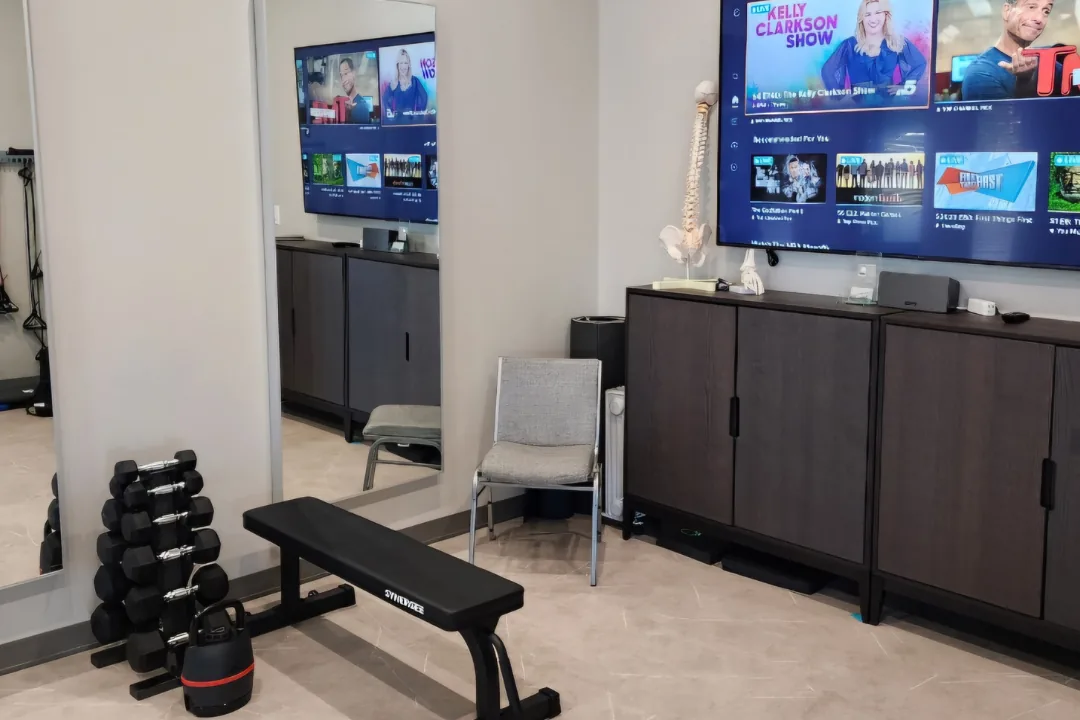
The clinic is at 10670 North Central Expressway, Suite 110, Dallas, TX 75231. Call (214) 600-7762 or book a free discovery visit, ideally before the operation, and bring your surgeon’s protocol and precautions.
Questions people ask
Where can I get physical therapy after a hip replacement in Dallas?
Osteopractic Physical Therapy & Pain Relief provides hip replacement rehab with Dr. Brent Lockett, PT, DPT in 60-minute one-on-one visits, at your home across Dallas in the early weeks and at the clinic at 10670 North Central Expressway, Suite 110. Call (214) 600-7762.
Can physical therapy after a hip replacement be done at home?
Yes. Mobile visits bring the full 60-minute session to your home across Dallas and the surrounding areas, which helps in the weeks you cannot drive. Home visits carry an upcharge over clinic visits.
Do I need any equipment at home?
No. A treatment table, bands and weights come with Dr. Lockett. A room where you can lie down and move is enough, and your program is built around what you already have.
Which areas do your home visits cover?
Dallas and the surrounding areas, including Preston Hollow, the Park Cities, North Dallas, Uptown, Lakewood, Lake Highlands, Addison, Richardson, Plano and Farmers Branch. Tell us your address and you will get a straight answer.
Do you follow my surgeon’s hip precautions?
Yes. Your surgeon’s protocol and precautions are read at the first visit, and every exercise, transfer and stair is taught inside them. Progress can be reported back to your surgeon.
When do I move from home visits to the clinic?
When you can travel comfortably and the plan needs heavier strength and balance work. For many people that is around the time loading begins in earnest, and plenty of plans use both.
Why do I still limp after my hip replacement?
Often because the gluteal muscles that hold the pelvis level are still weak after years of a painful hip. Building them in stages, with single-leg and step work, is a large part of the rehab.
Should I start physical therapy before my hip replacement?
Yes. Going into surgery with more strength and better movement makes the recovery markedly easier, and a visit beforehand sets your baseline and plans the house and the first home visit.
Does insurance pay for hip replacement rehab at your clinic?
The practice is out of network. You receive a superbill after every session to file with your insurance for potential reimbursement. A 6 visit plan is $840 and a 12 visit package is $1,560.
Do I need a referral for physical therapy after a hip replacement in Texas?
Texas allows up to 30 days of treatment without a referral, so you can book directly. After surgery, your surgeon’s protocol and clearance still guide the plan.