The short answer
If a knot is new, easy to press on and stays away after a massage, deep tissue massage is a reasonable choice. If the same knot returns within days, sits too deep to press, or sends pain somewhere else, dry needling is usually the better tool, because the needle reaches the trigger point directly. In Dallas, Dr. Brent Lockett, PT, DPT examines the back first, then needles and loads it in the same visit.
- Deep tissue massage presses from the surface and suits broad tension and a sore point within reach of a thumb; its relief tends to be short-lived.
- A dry needle passes through the layers above a knot and reaches trigger points that pressure cannot, which is why it suits knots that sit deep or keep coming back.
- If the same knot returns within days of every massage, the pressure is not reaching it or something keeps switching the muscle back on. That calls for an examination.
- You can have both, but not on the same area on the same day.
- We are a physical therapy practice, not a massage studio: soft tissue work and dry needling happen inside a 60-minute, one-on-one visit, followed by loaded exercise. No referral needed to start: Texas allows up to 30 days without one.
You know exactly where it is. A hard, tender spot beside the shoulder blade or low on one side of your back, which you have dug into with a thumb, a tennis ball and the corner of a door frame. A deep tissue massage helps. For some people it helps for a month; for others the knot is back before the weekend.
People who search for knots in their back in Dallas usually arrive at the same question: book another massage, or try dry needling? Below is what each one does to a knot, how to tell which your back needs, what each feels like, whether you can have both, and what we do at our North Dallas clinic.
What a knot in your back actually is
The clinical name for a knot is a myofascial trigger point: a hard, irritable band inside a muscle that will not let go. Press it and it hurts. More usefully, it often sends pain somewhere else, in patterns that are remarkably consistent from person to person.
In the back, the usual places are:
- The upper back and shoulder: the upper trapezius and levator scapulae. A trigger point in the upper trapezius sends pain up the side of the neck and behind the eye, which is why a knot at the top of the shoulder so often comes with a headache.
- Beside the lower spine: the erector group, the long muscles that hold you rigid after a back “goes” and often keep doing it long after the strain has healed.
- Deep in the side of the low back: the quadratus lumborum, between the lowest rib and the top of the pelvis. When it guards, one side of the back feels jammed.
- The buttock: the glutes. A trigger point in gluteus minimus sends pain down the leg convincingly enough to be mistaken for sciatica.
Two things about a knot decide which treatment suits it: how deep it sits, and why the muscle tightened in the first place. A muscle that keeps tightening is often protecting a stiff joint or making up for weakness somewhere else. Everything below comes back to those two questions.
What deep tissue massage does well, and where it stops
Deep tissue massage is firm, slow pressure from a thumb, a forearm or an elbow, aimed at the deeper layers of a muscle. It has real strengths, and none of what follows is an argument against it:
- It eases muscle tension and pain in the short term, and many people feel better and sleep better afterwards.
- It suits a point you can put a finger on. Sustained pressure, held until the point releases, works when the target is well within reach of a thumb.
- It covers large muscles and broad tension faster than any other hands-on method, and the calming effect on the nervous system is worth having when you are carrying tension everywhere.
- It does not usually leave a mark.
Its limit is mechanical. A thumb, an elbow or a tool pushes into the tissue and compresses everything between the surface and the target. A trigger point sitting under three layers of muscle cannot be pressed without squashing everything above it, and deep in the quadratus lumborum, pressure from the surface may not reach it at all.
The second limit is what happens next. The benefit of massage tends to be short-lived, and massage alone does not build the strength or tolerance a back needs. If the muscle tightened to protect something, it tightens again. How pressing compares with lifting the tissue instead is in cupping vs. massage.
What dry needling does differently
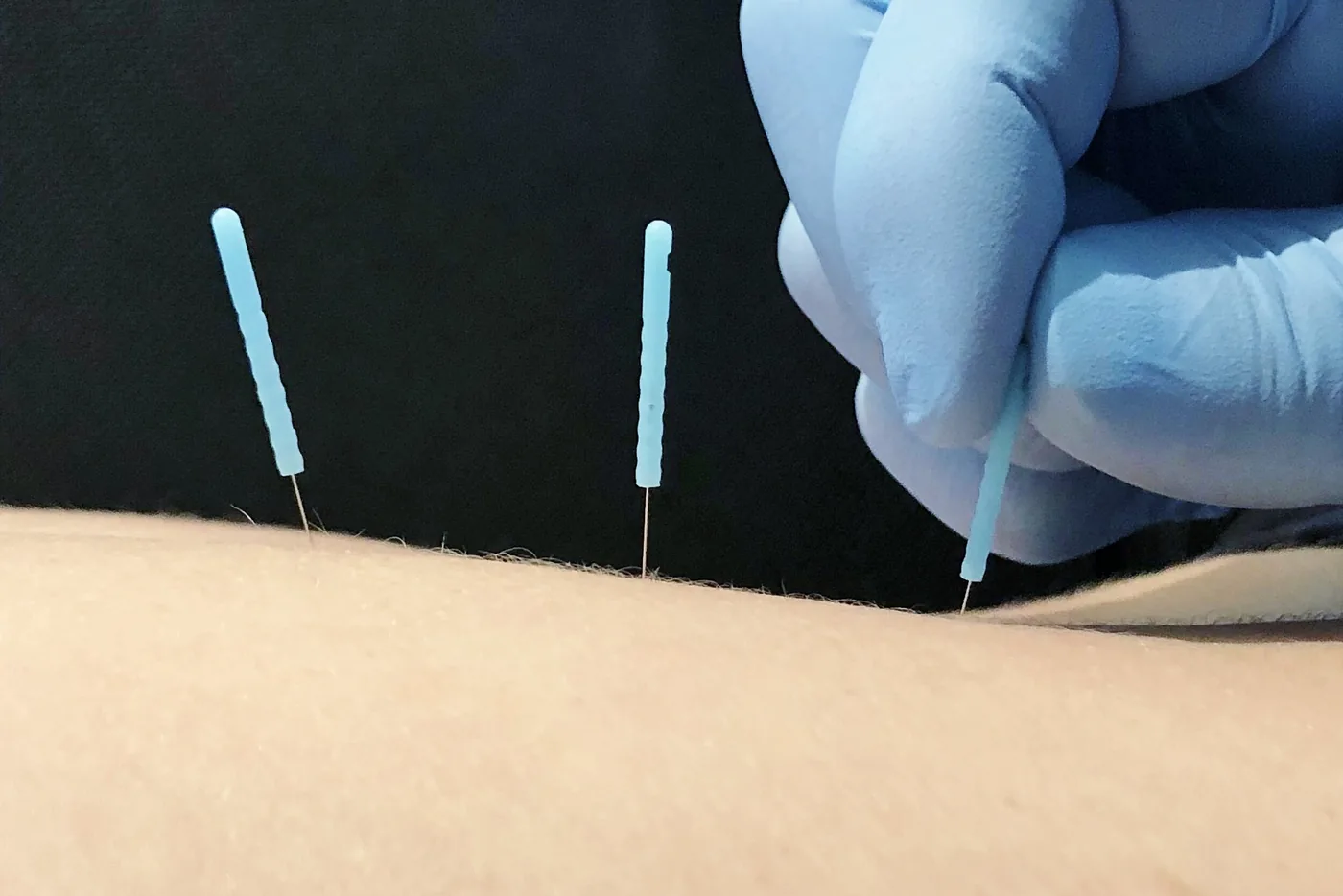
Dry needling uses a fine, sterile, single-use needle placed into the trigger point itself. Nothing is injected; the needle is the treatment. It is not acupuncture either, and the difference is explained in dry needling vs. acupuncture.
The needle passes through the layers above a knot instead of pressing on them. That is why it can reach a point that hands cannot. When it arrives, the muscle often gives a brief involuntary twitch, then lets go. Tension drops, blood flow increases, and most clients feel a change in range of motion in the first session.
At our clinic the needle is never the first step. A neuro-musculoskeletal examination comes before it, because the spot treated is frequently not the spot that hurts. And it is not the last step: the range you gain is used straight away with loaded movement, and with manipulation where a joint is stiff, so the nervous system has a reason to keep it. The service is described in full on our page about dry needling in Dallas.

Dry needling has limits too. It is rarely the whole answer, and you will be told so. Release a muscle that has been guarding for two years and leave it alone, and it re-adopts the pattern it knows within days. If the plan is a needle every week forever, the plan has failed.
Dry needling vs. deep tissue massage, side by side
Both treat the same knot. They differ in how they reach it, what comes with them, and who should take care.
| Compare | Deep tissue massage | Dry needling at our clinic |
|---|---|---|
| How it reaches the knot | Pressure from the surface, compressing every layer above it | A fine needle that passes through those layers to the trigger point |
| Best for | Broad tension, large muscles, and a sore point within reach of a thumb | A knot that keeps returning to the same muscle, sits deep, or refers pain elsewhere |
| What it feels like | Firm, sometimes uncomfortable pressure | Insertion is usually barely noticeable; then a brief twitch and a heavy, warm sensation |
| The next day or two | Often looser; firm work can leave the area sore | Mild soreness for 24 to 48 hours, like the day after an unfamiliar workout; occasionally a small bruise |
| What comes with it | The muscle is treated; finding out why it tightened is not part of the service | An examination first, a re-test after, then loaded movement in the same visit |
| Take care or say so first | An acute injury with a suspected fracture, infection, reduced sensation | Blood thinners or a bleeding disorder, infection or an open wound over the area, pregnancy, a strong fear of needles |
How to read this table: the first two rows usually settle it. If your knot is shallow and a massage clears it, the left column is all you need. If it is deep or keeps coming back, the right column reaches it and looks for the reason at the same time.
Which one does your back need? Five patterns
You can answer most of this yourself from how the knot has behaved so far. Start with a simple press test: if pressing on the spot feels good and brings relief that lasts, pressure is reaching the problem. If pressing makes it worse, or changes nothing, more pressure is unlikely to be the answer.
| What you notice | What it suggests | Better starting point |
|---|---|---|
| A new knot after a hard week, a long drive or a weekend of yard work; pressing on it feels good | Ordinary muscle tension within reach of pressure | Deep tissue massage, heat and movement |
| The same knot, in the same spot, back within days of every massage | Pressure is not reaching the trigger point, or something keeps switching the muscle back on | An examination and dry needling |
| You can feel it is deep, and no thumb, ball or elbow quite gets to it | A trigger point under several layers of muscle | Dry needling |
| Pressing the knot sends pain into the neck, the head, the hip or down the leg | A trigger point referring pain, or a nerve that needs testing | An examination first |
| The area is too sore to be pressed at all, or you would rather not be needled | Tissue that is too irritable for deep pressure | Cupping or instrument-assisted work inside a physical therapy visit |
How to read this table: find the row that sounds most like your back. Only the first row is a clear case for another massage. Rows two to four are the ones we see most, usually after months of massage that helped every time and never for long.

The last row matters if needles worry you. Say so. Plenty of nervous clients get through it comfortably once they see how fine the needle is, and if you would rather not, dry cupping, instrument-assisted work and manipulation cover a great deal of the same ground.
What each one feels like, and the day after
Compared with a deep tissue massage on a genuinely sore muscle, needling is usually less unpleasant, because a thumb has to compress everything between the surface and the target while a needle passes through it. The insertion is usually barely noticeable. The twitch is the part that surprises people: a deep cramp or small jolt that is over in well under a second. The longer answer is in does dry needling hurt.
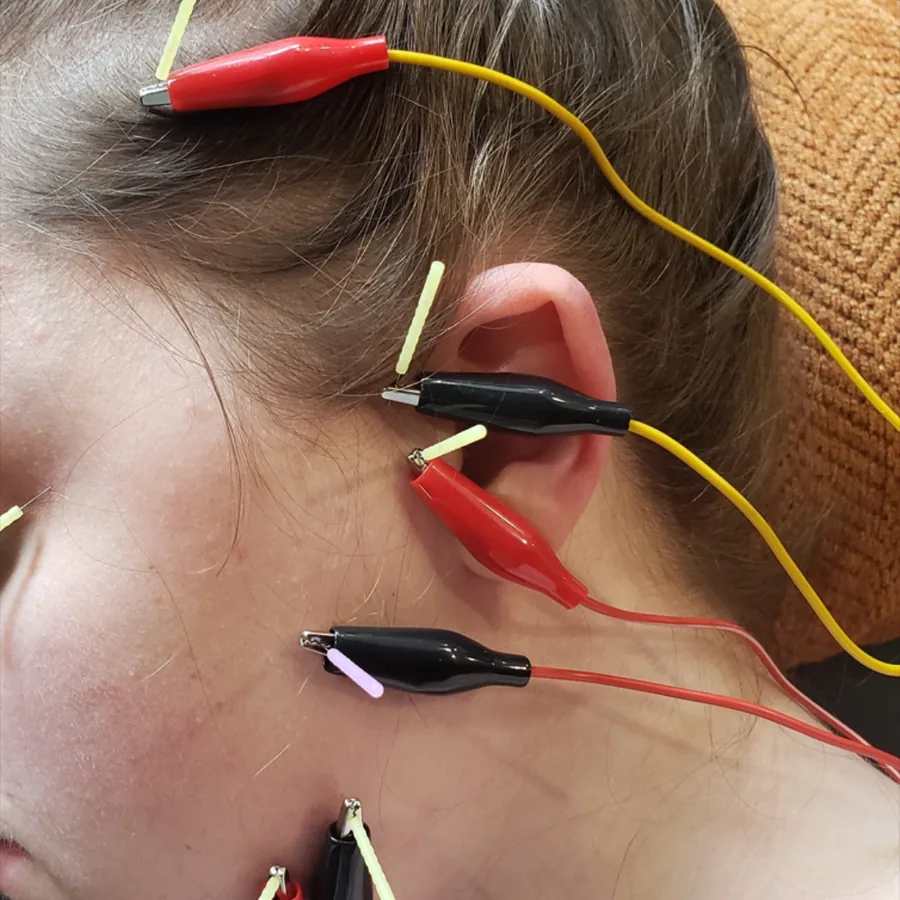
In the low back, needling is often combined with gentle electrical stimulation through the needles, which many people find relaxing once the muscle has let go. The first session is done lying down, the dose is set by what you report, and you can say stop at any point.
Afterwards, expect the treated muscle to feel like it had a hard workout for 24 to 48 hours. Light movement and heat help; heavy loading of that exact muscle can wait a day. A small bruise appears occasionally and settles within a few days. What is normal and when to call is in dry needling aftercare.
One thing soreness does not tell you, after either treatment, is whether it worked. A punishing session is not a better one. The marker is what the back can do: turn, bend or sit for longer than it could before.
Can you have both?
Yes, with two rules.
Not on the same area on the same day. A deep tissue massage over a muscle that was needled that morning irritates tissue that has already had enough input, and it makes it impossible to tell what caused what if you are sore the next day.
Know what each one is for. Massage is a reasonable way to feel better between sessions of active treatment, not a replacement for it. If you enjoy a regular massage and it helps you sleep and unwind, keep it. Tell your massage therapist which areas have been needled and when, and tell us what the massage changed and for how long, because that is useful information.
What does not work is the same pressure on the same spot, on the same schedule, for a year. If the knot keeps needing the same treatment on the same timeline, the answer is an examination of why.
When the knot is not the real problem
A knot is often the result of a problem and not its cause. Three findings explain most knots that keep coming back:
- A stiff joint next door. When a segment of the spine stops moving, the muscles around it guard. Releasing the muscle without moving the joint gives a good day or two. This is where manipulation comes in.
- A capacity problem. A back that is asked to do more than it has the strength for tightens to cope. That is fixed with graded loading, and no amount of pressing or needling replaces it.
- The same position, eight hours a day. A commute on Central Expressway and a full day at a desk reload the same muscle faster than any weekly appointment can release it. More in back pain from sitting all day.
This is the part of the decision a massage cannot make for you, and the reason our visits start with testing. The cycle of guarding and brief relief is explained in why low back pain keeps coming back.

A few things are not knots at all. Get urgent medical care, not a massage or a needle, if you have loss of bladder or bowel control, numbness around the groin or inner thighs, leg weakness that is getting worse, unexplained weight loss, or fever with back pain. Pain, tingling or numbness that travels below the knee or down the arm should be examined before anyone works on the muscle.
How we treat back knots at our North Dallas clinic
First, the plain part: we are a physical therapy practice, not a massage studio. If what you want is a relaxing hour of massage, that is a legitimate thing to want, and it is a different service from the one we provide.
What we do provide is hands-on soft tissue work inside a physical therapy visit: sustained pressure by hand, instrument-assisted soft tissue mobilization, cupping, and dry needling where a trigger point sits too deep for hands. It differs from massage in three ways. It is chosen from an examination, it is re-tested in front of you to see whether it worked, and it is followed by exercise. The full description is on the manual physical therapy page.
For a knotted back, a 60-minute visit usually runs like this:
- Examination. How the spine and hips move, which movement reproduces your pain, what the deep muscles feel like, nerve tests if anything travels, and a red-flag screen.
- Treatment that fits the findings. A needle for a deep trigger point, manipulation for a stiff segment, hands, instruments or cups for tissue nearer the surface.
- Re-test. The movement that hurt at the start is tested again. If it has not changed, the approach changes in the same session.
- Load it. Exercise that uses the new range, then a short home program so you hold the change between visits.

Dr. Brent Lockett, PT, DPT holds a Diploma in Osteopractic from post-doctorate residency training, a Certified Dry Needling credential (Cert. DN) and a certification in spinal manipulation (Cert. SMT), along with certifications in cupping and instrument-assisted soft tissue mobilization. Every visit is one-on-one with him, never handed to an aide. The practice has a 5.0 rating from 81 Google reviews.
If you already know which muscle it is and have been needled before, a 30-minute dry needling session is available for a familiar knot. A back that has never been examined gets the full hour first. For knots low in the back, the detail is in dry needling for lower back pain; for the top of the shoulders, see neck pain treatment.
Cost, insurance, referral and how to book in Dallas
- Free discovery visit: No charge — a conversation about your back and whether this approach fits
- 6-visit pain/movement plan: $840 — six 60-minute, one-on-one visits
- 12-visit performance package: $1,560 — twelve 60-minute visits, for ongoing wellness, mobility and preventative care
- Single session or 30-minute dry needling: see sessions & packages
Dry needling is part of the visit, not an add-on. The practice is an out-of-network provider: you receive a superbill after every session to file with your insurance for potential reimbursement.
No referral is needed to start: Texas allows up to 30 days of treatment without one, and continuing past that needs a referral. The full rule is in do you need a referral for physical therapy in Texas.
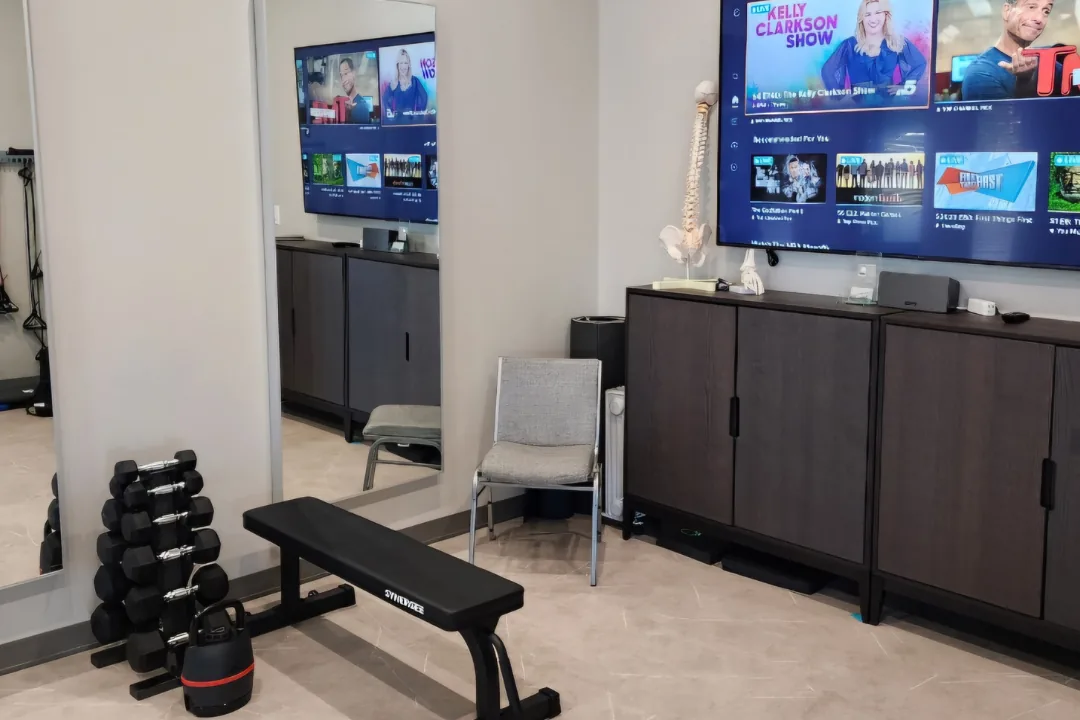
Most clients come to the clinic at 10670 North Central Expressway, Suite 110, in North Dallas. Visits at your home, office or gym are available across Dallas and the surrounding areas for an upcharge. Call (214) 600-7762 or book a free discovery visit, and tell us where the knot is, how long a massage usually holds it, and whether pressing on it sends pain anywhere else. For the wider picture of how backs are treated here, see low back pain treatment.
Questions people ask
Should I try dry needling or deep tissue massage for knots in my back in Dallas?
If the knot is new and a massage clears it, massage is a reasonable choice. If the same knot returns within days, sits too deep to press, or sends pain elsewhere, dry needling is usually the better tool. Osteopractic Physical Therapy & Pain Relief in North Dallas provides it one-on-one with Dr. Brent Lockett, PT, DPT, Cert. DN, after an examination.
Is dry needling better than deep tissue massage?
Neither is better in general. Massage suits broad tension and a sore point within reach of a thumb. Dry needling suits a trigger point that sits under several layers of muscle or keeps returning to the same spot.
Does dry needling hurt more than a deep tissue massage?
Usually less. A thumb has to compress everything between the surface and the knot, while a needle passes through it. The insertion is usually barely noticeable; a brief twitch follows when the trigger point releases.
Can I get a massage after dry needling?
Not deep tissue massage on the same area on the same day. The tissue has already had enough input, and you would not know which treatment caused any soreness. A massage on another day is fine.
Why do my back knots come back after every massage?
Either the pressure is not reaching a trigger point that sits deep, or the muscle is tightening to protect a stiff joint or make up for weakness. Massage alone does not build the strength the back needs, so the knot returns.
How long am I sore after dry needling compared with massage?
After dry needling, mild soreness in the treated muscle for 24 to 48 hours is normal, similar to the day after an unfamiliar workout. Firm soft tissue work can also leave an area sore for a day or two.
Do you offer deep tissue massage at the clinic?
No. We are a physical therapy practice, not a massage studio. Soft tissue work by hand and with instruments, cupping and dry needling are provided inside a 60-minute physical therapy visit, chosen from an examination and followed by exercise.
Who should not have dry needling for back knots?
Tell us first if you take blood thinners, have a bleeding disorder, are pregnant, have an infection or open wound over the area, or have a strong fear of needles. The plan changes, or another technique is used.
Do I need a referral for dry needling in Texas?
Not to start. Texas allows up to 30 days of treatment without a referral, so you can book directly. Continuing past that needs a referral.