
Treatment · Physical therapy in Dallas, TXPhysical Therapy for Runners
Find out why it hurts at mile four, keep running where it is safe to, and build the hip, calf and single-leg strength that lets the next training block go better than the last one.
- Hips, knees and ankles tested under load, one leg at a time
- Load is modified, not removed — most runners keep running in some form
- A 30-minute dry needling session before a race or after a heavy week
The short version
Physical Therapy for Runners in 30 seconds
What it is
Physical therapy built around running: the examination, the hands-on work and the strength program all aim at the miles you want to run, not just at the spot that hurts.
What it usually finds
A training load that climbed faster than tissue tolerance, and a hip, calf or single-leg control deficit that let the load land on the knee, shin, tendon or heel.
What gets ruled out first
A stress fracture, compartment syndrome, a tendon rupture and anything else that needs imaging or a physician rather than a running plan.
Why people choose it
What you get out of physical therapy for runners
Runner's knee, shin splints, Achilles and heel pain treated as what they usually are: training load that got ahead of what your legs could take.
The cause gets named
A spike in mileage, a new surface, hill or speed work, a change of shoe, weak calves or poor hip control. You finish the first visit knowing which one was yours.
You keep running where it is safe
Volume, surface and speed are adjusted so training continues. Complete rest de-trains the exact tissue that needs capacity, and the pain returns on the first comeback run.
Side-to-side numbers, not guesses
Single-leg heel raises, single-leg control and strength are compared with your other side, so each step back toward full training is earned by a test.
Deep calf, hamstring and hip work
Dry needling, cupping and manual therapy reach the tissue that stretching and foam rolling do not, and the change in range is usually felt the same day.
Strength when impact has to come down
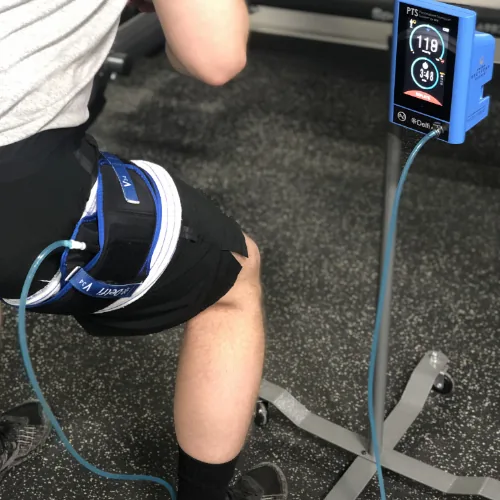
Blood flow restriction builds real leg strength with light loads, so the weeks of reduced running are not weeks of losing strength.
Seen where you train
Sessions can happen at your gym or near your route, so the movement being tested is the one that hurts. Visits away from the clinic carry an upcharge.
Worth knowing
Strength that keeps pace with the running
Dr. Lockett is certified in Blood Flow Restriction Therapy. A cuff on the thigh partially limits blood flow while you exercise with light weights, so the muscle works as if the load were heavy. For a runner, that means the calf, quadriceps and hip can keep getting stronger in the weeks when an irritable knee, shin or tendon cannot take heavy loading or much impact. It is used when your screening allows it.
What it commonly helps with
- Runner's knee (pain around the kneecap)
- IT band syndrome
- Shin splints
- Achilles tendon pain
- Plantar fasciitis
- Calf tightness and weakness
- Recurring hamstring strains
- Hip and gluteal pain
- Returning to running after injury
- Pre-race and training-block tune-ups
Inside a session
What actually happens
Your running history
The last three months of training: mileage, pace, hills, surfaces, shoes, races and time off. Something almost always changed, and this is where it shows up.
Tested under load
Hips, knees and ankles examined while they carry weight: single-leg squat and step-down control, single-leg heel raises, hip strength, ankle range, each side compared with the other, plus a red-flag screen.
Treat and re-test
Dry needling, manual therapy, cupping or instrument-assisted work where the examination found restriction, then the painful movement tested again in the same hour.
Load it and plan the running
Strength work, with blood flow restriction where heavy load is not yet tolerated, and a written running plan with a marker you track between visits.
What to expect afterwards
First visit
Your training history, a full lower-limb examination under load, a clear name for what is going on, treatment in the same hour, and what running is allowed this week.
While it settles
Running continues in modified form where it is safe. Hands-on work settles the tissue; strength work builds the capacity that was missing.
Back to full training
Volume first, then hills, then speed, each step tested before the next. You leave with a program to keep doing.
Be honest with yourself
Is physical therapy for runners right for you?
Being told “not this, and here is why” is part of the service. If it is not the right tool for your problem, you will hear that at the free discovery visit.
A good fit if
- Pain shows up at a predictable point in your run, then settles with rest
- The same injury comes back every training block or every season
- You have a race on the calendar and do not want to lose the block
- You were told to stop running and want a plan that does not start there
- You are coming back after an injury and want to do it on criteria, not dates
- You want one clinician for the whole hour, at the clinic or where you train
Tell us first if
- Sharp pain over one small spot on a bone, pain at rest or at night, or pain when you hop — that needs imaging before running
- A sudden feeling of being kicked in the back of the leg, or you cannot push off — get same-day medical assessment
- A shin or calf that goes numb, swollen or unusually tight during runs
- A knee that locks, gives way completely or swells quickly after an injury
- Calf swelling and warmth after travel or surgery — seek urgent medical care
- You want passive treatment only, with no strength work — it will not hold
In depth
Everything else worth knowing
Written for people who want the reasoning, not just the summary.
Most running injuries are a load problem
Pain around the kneecap, along the shin, in the Achilles or under the heel usually has the same story behind it. Training load rose faster than the tissue could adapt, and the hip, calf or foot that should have absorbed part of that load did not. The place that hurts is where the load landed, not always where the problem started.
That is why physical therapy for runners here starts with the last few months of your training, not just with the sore spot. More mileage, more hills, faster work, a new surface, a return after time off or a change of shoe — two of those at once is the classic setup. A cause you can name is a cause you can manage, and the same conversation helps prevent it next season.
| Injury | Where it hurts | What usually drives it | Read more |
|---|---|---|---|
| Runner’s knee | Around or behind the kneecap; stairs, hills, after sitting | Training load that outpaced hip, quadriceps and calf capacity | Runner’s knee |
| IT band syndrome | Outside of the knee, at the same distance each run, worse downhill | Hip control, cadence and how fast volume climbed | IT band stretching |
| Shin splints | A broad ache along the inner shin that eases as you warm up | A spike in mileage, hills, speed, surface or shoes; calf endurance | Shin splints |
| Stress fracture | Sharp pain over one small spot on the bone; hurts at rest or when you hop | Bone loaded beyond what it has adapted to — running stops and imaging comes first | Shin splints or stress fracture |
| Achilles pain | In the tendon above the heel, or where it meets the bone; stiff in the morning | Added volume, hills or speed; calf capacity | Achilles: load, not rest |
| Plantar fasciitis | The heel, worst on the first steps of the morning | A jump in walking or running volume; a calf that tires early | Plantar fasciitis |
| Hamstring strain | Back of the thigh, often during faster running | Returning before eccentric strength and length are back | Recurring hamstring strains |
How to read this table: find the row that matches where it hurts, then look at the middle column, because that is what the plan has to change. The stress fracture row is the exception to keep running, and it is checked for first.
What the examination for runners looks at
A running injury rarely shows itself on a treatment table. The examination here tests your hips, knees and ankles while they carry weight: how the knee tracks on a single-leg squat and a step-down, how many quality single-leg heel raises each calf can do, hip abductor and extensor strength, ankle range, and how well you control your pelvis on one leg. Each side is compared with the other, because the difference between sides is often the finding. Groin, outer-hip and buttock pain get the same approach, covered on the hip pain page.
The things that predict runner’s knee are measurable before they hurt: single-leg control, hip strength, calf endurance and a training load that climbed faster than tissue tolerance. The same tests guide the plan for shin, Achilles and heel pain, which is why calf strength comes up in so many of these conversations.
The examination also screens for what is not a running injury, such as a stress fracture, compartment syndrome or a tendon rupture. If your problem needs imaging or a physician, you will be told that directly. We don’t guess, we assess.
Keep running where it is safe
“Stop running” is easy advice and usually poor advice. Complete rest takes capacity away from the exact tissue that needs more of it, and the pain comes back on the first run after the break.
So load is modified rather than removed. Volume, surface, hills and speed become a dose you control, and a marker you track tells you whether the dose is right — most runners use the distance at which symptoms begin, or how the area feels the next morning. Small cadence changes are worth checking too, because overstriding raises the load at the knee and shin.
The exception is a suspected stress fracture: that stops running until it has been checked. See shin splints or stress fracture for how the two feel different.
Hands-on treatment, then strength
Dr. Lockett is certified in dry needling (Cert. DN) and spinal manipulation (Cert. SMT), and trained in cupping and instrument-assisted soft tissue mobilization. For runners, the needle most often goes into the deep calf, the hamstrings, the gluteal muscles and the hip, where trigger points limit range and keep a muscle guarding. Joint mobilization and manipulation are used where a stiff ankle, hip or lower back is changing how you load the leg. More on timing it in a season in dry needling for athletes.
Hands-on work opens a window; strength keeps it open. Every session moves into loaded work: calf and foot work for anything below the knee, quadriceps and hip for anything above it, single-leg control for both. Where a knee, shin or tendon is too irritable for heavy loading, blood flow restriction therapy lets the muscle train hard with light weights.
Coming back after an injury
Re-injuries tend to come a few weeks into a return, exactly when everything feels fine. Pain settles before the tissue has adapted, so capacity and confidence are furthest apart just when the temptation to speed up is strongest.
The return here uses criteria, not dates: brisk walking without pain, controlled single-leg hops without pain, no swelling or limp, full range, and strength close to the other side. Then running comes back in stages, volume before hills and hills before speed, each one judged by how you feel the next morning. The full stage-by-stage plan is in returning to running after injury, and hamstrings have their own version in hamstring strains that keep coming back.
If you have a race on the calendar, talk early about whether the return fits before it. Downgrading the distance is usually a better choice than squeezing the plan, and that decision is far easier in week two than in week eight.
Before a race, after a heavy week
Not every visit has to be a full hour. A 30-minute focused dry needling session is available for fast, targeted relief on a specific area — before a race, after a heavy training week, or when a known problem flares up. It suits a muscle you already know is the issue; a new or recurring problem needs the full 60-minute examination first. See the 30-minute dry needling session.
Sessions run at the clinic at 10670 North Central Expressway, Suite 110, in North Dallas, or at your home, office or gym across Dallas and the surrounding areas. Seeing you where you train means the movement that hurts can be tested where it happens. Visits away from the clinic carry an upcharge.
Runners, and the wider sports service
This page is about running. If you play a court or field sport, lift, or want a full-body screen before a season, sports performance therapy covers that wider picture with the same toolkit.
Every visit is 60 minutes, one-on-one with Dr. Brent Lockett, PT, DPT. The practice is out-of-network: you receive a superbill at the end of every session to file with your insurance for potential reimbursement. A 6-visit pain and movement plan is $840 and a 12-visit performance package is $1,560, both discounted against single sessions. No referral is needed to start: Texas allows up to 30 days of treatment without one, explained in do you need a referral in Texas.
Real Google reviews · Osteopractic Physical Therapy Dallas
Clients treated with this
“I’ve been dealing with hip pain for years and honestly thought it was just something I’d have to live with. After working with this PT, I’m finally running completely pain-free for the first time in years. Not only did they get rid of my…”
“I had been suffering pain in both knees for over a year. As a woman who was used to intense, frequent exercise, it was hard to give up things I enjoyed. Thanks…”
“I started seeing Dr. Brent about a month ago for neck pain that was really interfering with my workouts and weightlifting routine. Within five minutes of my…”
Physical therapy FAQ · Dallas, TX
Physical Therapy for Runners: 13 questions answered
Where can I get physical therapy for runners in Dallas?
Osteopractic Physical Therapy & Pain Relief, 10670 North Central Expressway, Suite 110, Dallas, TX 75231. Dr. Brent Lockett, PT, DPT treats running injuries one-on-one for the full 60 minutes, at the clinic or where you train. Call (214) 600-7762.
What is performance physical therapy for runners?
Physical therapy aimed at keeping you running, not only at the spot that hurts: an examination of your hips, knees and ankles under load, hands-on treatment, strength work and a running plan built around your training and races.
Do I have to stop running?
Usually not. Load is modified rather than removed — volume, surface, hills and speed — because complete rest takes away the capacity you are trying to build. A suspected stress fracture is the exception and is checked first.
What running injuries do you treat?
Runner’s knee, IT band syndrome, shin splints, Achilles tendon pain, plantar fasciitis, calf and hamstring strains, and hip and gluteal pain, plus the return to running after any of them.
Is it shin splints or a stress fracture?
Broadly, shin splints ache over a wide area and ease as you warm up; a stress fracture is sharp over one small spot, often hurts at rest and hurts when you hop. That is a guide, not a diagnosis. The examination settles it, and imaging is arranged if it should be.
Why does my knee hurt at the same point in every run?
Pain that arrives at a predictable distance usually means the load has passed what the tissue can currently take. It is common in runner’s knee and IT band syndrome, and hip control, cadence and how fast your mileage climbed are the usual levers.
Will stretching or foam rolling fix my IT band?
Not on their own. The IT band does not meaningfully lengthen. Hip strength, load management and cadence change the load reaching it; rolling can feel good but does not build capacity.
Does dry needling help runners?
Often. It reaches trigger points in the deep calf, hamstrings and hip that hands cannot press at depth, and the change in range is usually felt in the same session. Mild soreness for a day or two is common.
Can I get dry needling before a race?
Yes. The 30-minute focused dry needling session is meant for exactly that, and for after a heavy training week. Tell us the race date and the timing is planned around it.
Can you see me at my gym or on my route?
Yes. Sessions can take place at your home, office or gym across Dallas and the surrounding areas; visits away from the clinic carry an upcharge. Most clients are seen at the North Dallas clinic.
How many sessions will I need?
That depends on the injury and how long you have had it. The typical plan is one to two visits a week until the result holds. You get an honest estimate after the examination, not before it.
Do I need a referral?
Not to start. Texas allows up to 30 days of treatment without a referral. If the examination finds something that needs a physician or imaging, you will be referred.
Does insurance cover it?
The practice is out-of-network. You receive a superbill at the end of every session to file with your insurance for potential reimbursement. A 6-visit plan is $840 and a 12-visit package is $1,560.

Dr. Brent Lockett
Dr. Lockett treats busy executives, professionals and athletes in chronic pain at the North Dallas clinic and across Dallas and the surrounding areas. He holds a Diploma in Osteopractic and is certified in dry needling, spinal manipulation and blood flow restriction therapy. Read his full background.
Written by Dr. Brent Lockett
Keep reading
Returning to Running Without Getting Hurt Again
Re-injuries tend to come a few weeks into a return, exactly when everything feels fine.
Read the articleRunner's Knee Is Preventable — Here's What Predicts It
It is a load problem, not a damage problem — which is exactly why it can be seen coming.
Read the articleShin Splints or Stress Fracture? How to Tell
Both hurt along the shin in runners who did more than usual. Only one of them gets worse if you keep going.
Read the articleAchilles Pain Needs Load, Not Rest
Where exactly it hurts on the tendon changes the whole program, and getting that wrong is why so many of these drag on for a year.
Read the articleAlso offered
Other treatments
Dry Needling
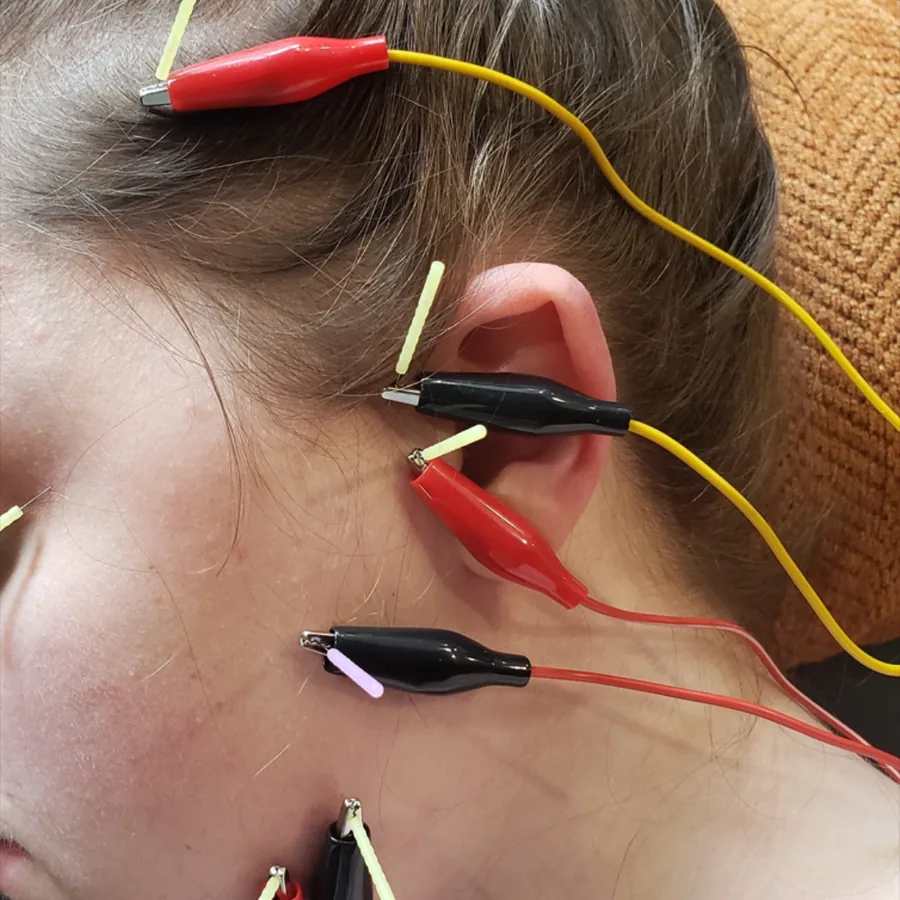
Fine microfilament needles into the trigger point that is actually driving your pain — releasing knots ordinary hands-on work cannot reach.
Explore
Spinal & Extremity Manipulation
A gentle, targeted thrust that restores movement to a specific joint — comfortable, controlled, and delivered inside your available range.
ExploreBlood Flow Restriction Therapy
Build strength and muscle size at light loads — one of the few practices in the Dallas area offering certified BFR inside a rehab plan.
ExploreReady to start?
Book a free discovery visit and find out whether physical therapy for runners is the right tool for your problem. No referral needed to start, no obligation.