
Condition · Physical therapy treatment in Dallas, TXKnee Pain
Find out what is actually overloading your knee, then build the strength that lets it take stairs, squats and runs again — without a brace becoming the plan.
- Examination of the knee, hip and ankle at the first visit
- Hands-on treatment, dry needling and blood flow restriction strength work
- 60 minutes one-on-one, at the North Dallas clinic or where you train

The short version
Knee Pain in 30 seconds
Knee pain is a symptom with several common sources: the kneecap, a tendon, the joint itself, or a hip and ankle that hand the knee more than its share. The treatment depends on which one is yours.
What it usually is
Pain around or behind the kneecap, a sore tendon above or below it, an irritable arthritic joint, or a meniscus or ligament that has been strained. Each one behaves differently.
Why it often is not just the knee
A stiff ankle, a weak hip or a sudden jump in training pushes load onto the knee. The knee is where it hurts; the cause is often above or below it.
What gets ruled out first
A knee that locks, gives way, swelled fast after an injury, or is red and hot needs a physician or imaging first. That screen comes before any treatment.
What treatment gets you
Why people come in for this
A named cause, not a label
You leave the first visit knowing whether the kneecap, a tendon, the joint or the hip and ankle are driving your pain, and what that changes.
Strength without a flare
Blood flow restriction lets the thigh muscles get stronger with light loads, useful when a sore or arthritic knee will not tolerate heavy weight yet.
Tight, guarding muscle released
Dry needling and manual work for the quadriceps, hamstrings, calf and hip muscles that are pulling the knee out of its easy path.
Tested against your other leg
Strength, single-leg control and range are measured side to side, so progress is a number rather than a feeling.
Sixty minutes, one clinician
The whole hour is with Dr. Lockett: examination, hands-on treatment and the strength work, adjusted as the knee responds.
Honest about surgery and injections
Many knee problems settle with the right loading. Where yours needs a surgeon or imaging, you will be told and pointed to the right physician.
Does this sound like you?
Signs we hear most often
None of this is a diagnosis. It is a good reason to have the area properly examined rather than managed for another year.
Common signs
- Pain around or behind the kneecap on stairs, squats or after sitting
- Pain just below or above the kneecap when you jump, run or kneel
- Stiffness in the morning or after rest that eases as you move
- Swelling after activity that settles over a day or two
- Pain on the inside or outside of the knee when you twist or pivot
- A knee that aches after runs, hikes or long walks but not during them
See a physician instead if
See a physician first if your knee locked and will not straighten, gives way repeatedly, swelled within hours of an injury, cannot take your weight, or is red, hot and swollen with a fever. Calf pain and swelling, especially after surgery or a long flight, needs urgent medical care.
How we treat it
The tools we reach for
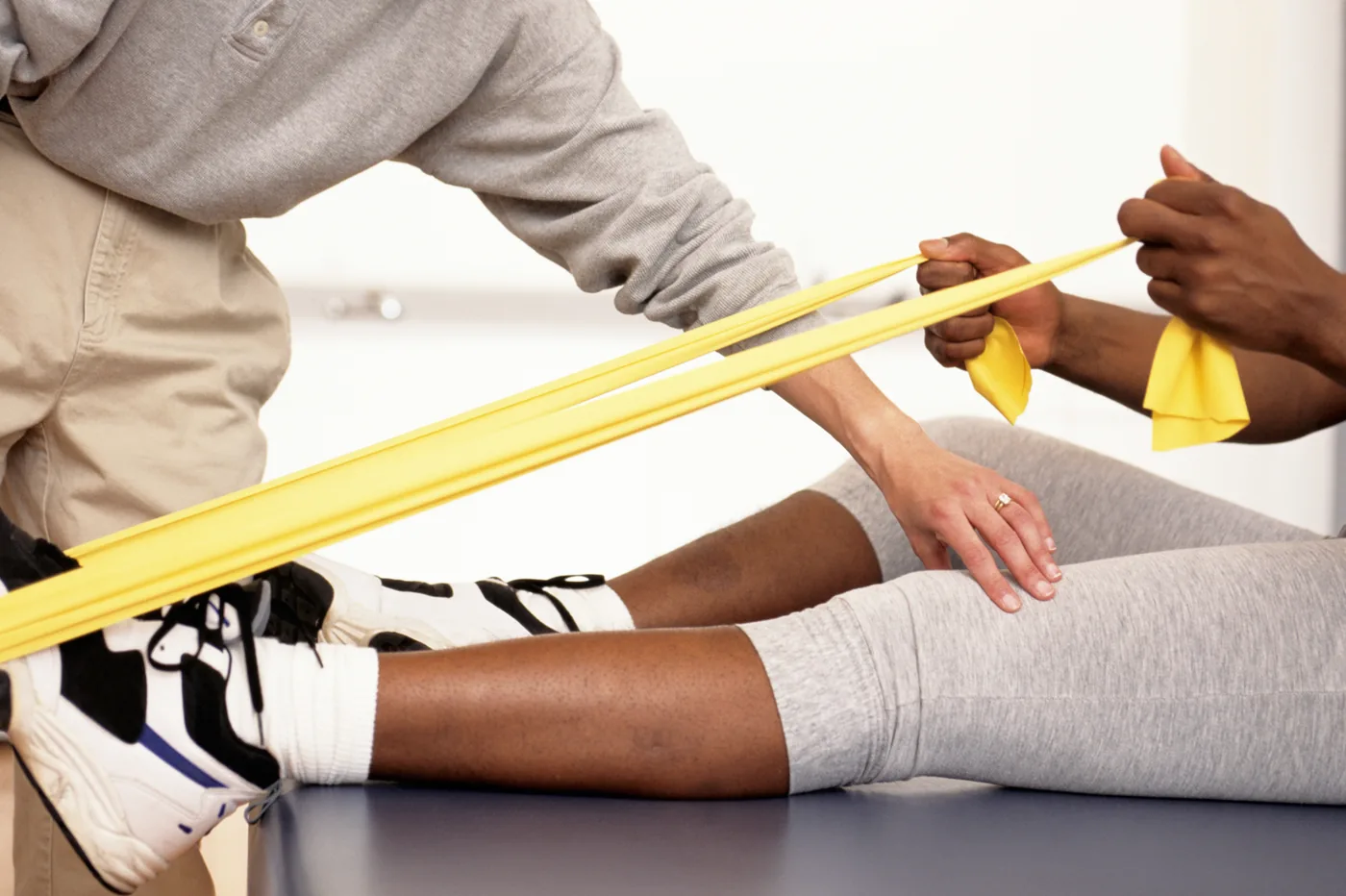
Manual Physical Therapy
Skilled hands-on treatment of joints and soft tissue — manipulation, mobilization and instrument work — followed by the loading that makes the change hold.
Explore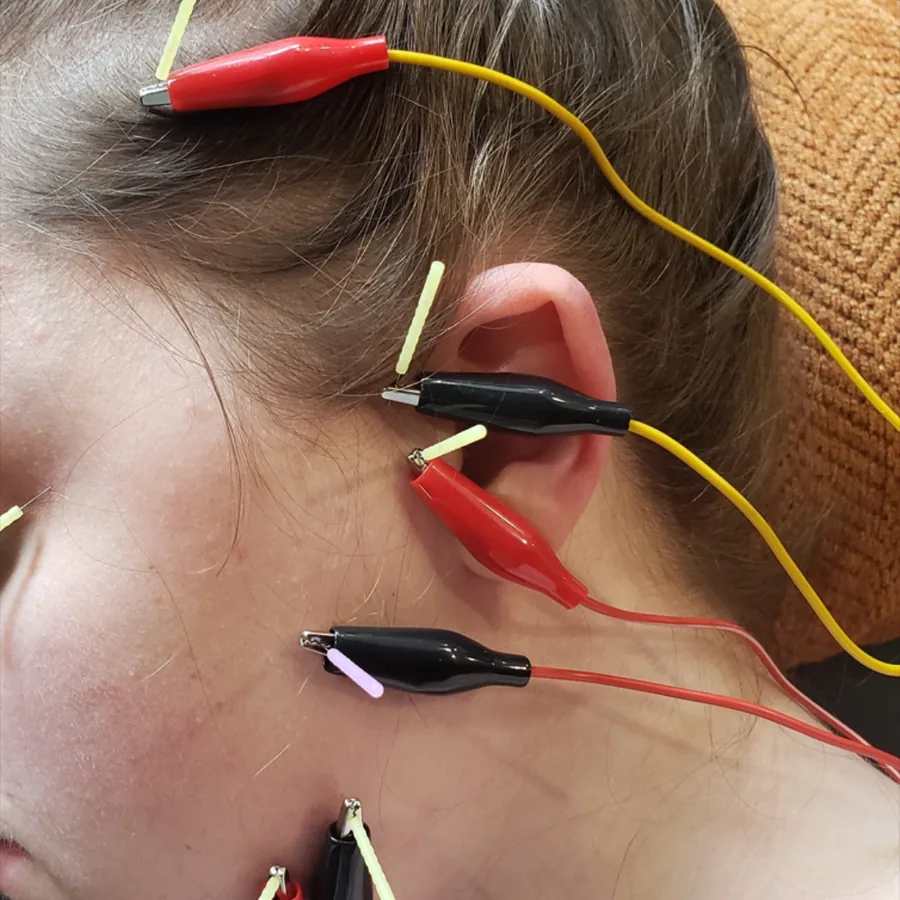
Dry Needling
Fine microfilament needles into the trigger point that is actually driving your pain — releasing knots ordinary hands-on work cannot reach.
Explore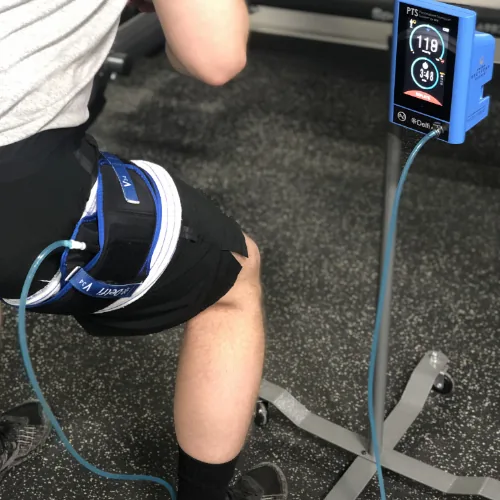
Blood Flow Restriction Therapy
Build strength and muscle size at light loads — one of the few practices in the Dallas area offering certified BFR inside a rehab plan.
ExploreWhat to expect
First visit
History, an examination of the knee, hip and ankle under load, the likely cause explained in plain language, and treatment in the same hour.
First weeks
The painful activity is dosed rather than stopped, hands-on work settles the irritable tissue, and strength work starts at a level the knee tolerates.
Later
Load builds toward what your life asks: stairs, squats, running, court sports or a long day on your feet, tested before discharge.
Your first four steps
How it works
No referral needed, no waiting list to join, and nothing charged before you know this is the right fit.
Free discovery visit
We talk first. What is going on, what you have already tried, and whether this is genuinely the right approach for your problem. No charge, no obligation.
Full examination
A thorough neuro-musculoskeletal examination to find the root cause — including ruling out anything that should be seen by a physician instead.
Findings & plan
We go through what was found and what it means, then build an advanced treatment plan around the goals you actually came in with.
Treat, load, teach
Hands-on treatment, loaded movement, and the self-mobilization and exercise you need so the change holds between visits.
In depth
What is actually going on
Written for people who want the reasoning, not just the summary.
The common causes, and how they differ
Knee pain has a handful of common sources, and they are treated differently.
- The kneecap (patellofemoral pain). Pain around or behind the kneecap on stairs, squats, or after sitting with the knee bent. It is the classic runner’s knee, but it is just as common in people who do not run.
- A tendon. Pain just below the kneecap (patellar tendon) or just above it (quadriceps tendon), worst with jumping, running or kneeling. Tendons respond to progressive load, not to rest.
- The joint itself. Stiffness after rest, aching after a long day, sometimes swelling: the pattern of knee arthritis. Strength around the joint is the most useful thing you can build.
- Meniscus and ligaments. Pain on the inside or outside of the knee after a twist, or a knee that feels unstable. Many settle with rehabilitation; some need a surgeon’s opinion, and the examination tells you which.
- Bursitis and the IT band. Pain on the front or outside of the knee from irritated soft tissue, usually driven by load and by the hip.
Why the hip and ankle get examined too
The knee sits between two joints that decide how much force reaches it. A hip that lacks strength lets the knee drift inward on every step and squat. An ankle that does not bend far enough sends the movement into the knee instead.
That is why a knee examination here includes the hip and ankle under load: a single-leg squat, a step-down, how you land, how your feet move. Treating only the knee when the hip is the driver is why so much knee pain comes back. More on that in hip and knee pain are connected.
What treatment looks like
The first job is to settle the knee without stopping you. The activity that hurts is usually dosed rather than banned, because complete rest costs the strength the knee needs.
Hands-on treatment comes next: joint mobilization where the knee or ankle is stiff, soft tissue and instrument-assisted work, and dry needling for trigger points in the quadriceps, hamstrings, calf and hip that are pulling the knee out of its easy path.
Then strength, which is what makes the result hold. Where a sore or arthritic knee will not tolerate heavy weight, blood flow restriction lets the thigh muscles work hard with light loads. As the knee settles, the load builds toward what your life actually asks of it. For arthritis specifically, see why strength beats a brace.
Imaging, injections and surgery
Most knee pain does not need a scan to start treatment. Imaging is for a knee that locks, gives way, swelled fast after an injury, or has not responded to a proper trial of therapy, and if yours is one of those you will be told at the first visit.
If a knee replacement or other operation is already on the table, strength before surgery and a plan for after it both matter. See knee replacement or strength first and post-surgical rehabilitation.
How to choose a physical therapist for knee pain in Dallas
Ask three things. How long will I spend with the licensed physical therapist each visit? Will you examine my hip and ankle, or only my knee? And how will we measure progress?
At Osteopractic Physical Therapy, every visit is 60 minutes, one-on-one with Dr. Brent Lockett, PT, DPT, at the clinic on North Central Expressway or at your home or gym. The hip and ankle are part of the examination, and strength and control are measured against your other leg.
Real Google reviews · Osteopractic Physical Therapy Dallas
Clients with the same problem
“I'm so grateful I was referred to Dr. Lockett, as his guidance and expertise really turned my situation around for the better. After seven knee surgeries I was quite weak and my functional capacity had never been lower; within weeks of…”
“I had been suffering pain in both knees for over a year. As a woman who was used to intense, frequent exercise, it was hard to give up things I enjoyed. Thanks…”
“I’ve been dealing with hip pain for years and honestly thought it was just something I’d have to live with. After working with this PT, I’m finally running completely pain-free for the first time in years. Not only did they get rid of my…”
Physical therapy FAQ · Dallas, TX
Knee Pain: 11 questions answered
Who is the best physical therapist for knee pain in Dallas?
Look for a full examination of the knee, hip and ankle, one-on-one time and measured progress. At Osteopractic Physical Therapy in North Dallas, Dr. Brent Lockett, PT, DPT spends the full 60-minute visit with you and combines manual therapy, dry needling and strength work, including blood flow restriction.
Can physical therapy fix knee pain without surgery?
Many knee problems settle with the right loading and hands-on treatment, including kneecap pain, tendon pain and much arthritic pain. Some do need a surgeon, and the examination is where you find out which applies to you.
Do I need an MRI for knee pain?
Usually not to start. Imaging is for a knee that locks, gives way, swelled quickly after an injury, or has not improved with a proper trial of therapy.
Should I rest my knee or keep exercising?
Usually keep moving, with the painful activity dosed rather than stopped. Complete rest costs the strength the knee needs. The examination sets how much is right for you now.
Why does my knee hurt going down stairs?
Going down stairs loads the kneecap and the front of the knee more than going up. It is common with patellofemoral pain, tendon pain and arthritis, and often improves as thigh and hip strength improve.
Can dry needling help knee pain?
When tight or guarding muscles around the knee or hip are part of the problem, yes. Dry needling releases trigger points in the quadriceps, hamstrings, calf and hip, and the movement gained is then trained with strength work.
What is blood flow restriction training for knee pain?
A cuff on the upper thigh partially limits blood flow while you exercise with light weights, so the muscles get stronger without loading a sore knee heavily.
Is knee pain coming from my hip?
Sometimes. A weak or stiff hip lets the knee drift inward and take extra load. That is why the hip and ankle are part of every knee examination here.
How long does knee pain take to improve?
That depends on the cause and how long you have had it. The typical plan is one to two visits a week until the result holds. You get an honest estimate after the examination.
Do I need a referral for knee pain physical therapy in Texas?
No. Texas allows direct access to physical therapy. If the examination finds something that needs a physician, you will be referred.
Can you treat my knee at home or at my gym?
Yes. Most clients are seen at the clinic on North Central Expressway, and mobile visits to your home, office or gym are available across Dallas.

Dr. Brent Lockett
Dr. Lockett treats busy executives, professionals and athletes in chronic pain at the North Dallas clinic and across Dallas and the surrounding areas. He holds a Diploma in Osteopractic and is certified in dry needling, spinal manipulation and blood flow restriction therapy. Read his full background.
Written by Dr. Brent Lockett
Keep reading

Why Your Knee Pain Might Be a Hip Problem
The knee is caught between the hip and the foot, and it takes the blame for what both of them fail to control.
Read the articleKnee Arthritis: Strength Beats a Brace
Knee arthritis is the condition where the gap between what the evidence says and what people are told is widest.
Read the articleRunner's Knee Is Preventable — Here's What Predicts It
It is a load problem, not a damage problem — which is exactly why it can be seen coming.
Read the article
Knee Replacement, or Strength First?
A replacement is an excellent operation for the right knee at the right time. The question worth asking is whether yours is either yet.
Read the articleAlso treated
Other conditions
Low Back Pain
The most common reason people call — and the one most often treated as a symptom rather than a pattern.
Read moreHeadaches & Migraines
Migraine disorder affects the central nervous system. Osteopractic therapy targets the muscles and joints caught up in it.
Read moreRunner's Knee
Rapidly becoming a more common issue every year — and, in most cases, preventable.
Read moreGet an honest answer about your knee pain
The free discovery visit exists so you can find out whether this approach fits your problem before you spend anything.