The short answer
The first six weeks after orthopedic surgery set the ceiling for the recovery: range that is lost early is harder to regain later, and muscle loss in the first two weeks is rapid. Protocols exist to protect the repair, and working fully within them is what produces good twelve-month outcomes. In Dallas, Dr. Brent Lockett, PT, DPT runs post-surgical rehab one-on-one at the North Dallas clinic or at home in the weeks you cannot drive.
- Muscle loss and range restriction in the first six weeks set the ceiling for the whole recovery.
- Arthrogenic inhibition switches muscle off reflexively after surgery — it is not a matter of effort.
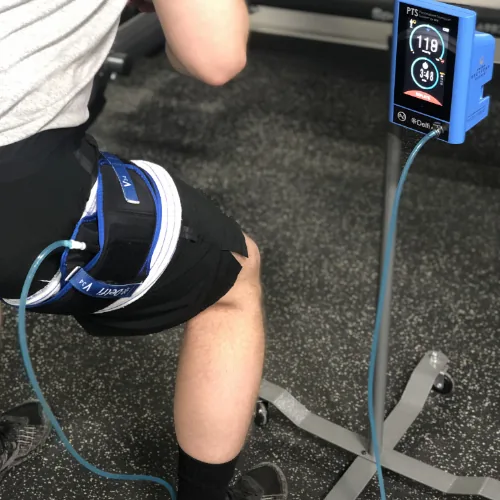
- Blood flow restriction allows strength training during the window when protocols prohibit heavy load.
- Arrange the rehabilitation before the operation, and book the first visit for soon after you come home.
Surgery repairs a structure. It does not restore strength, range or confidence, and those three are what determine whether you are pleased with the result a year later.
What happens to muscle immediately
Strength loss after surgery is rapid and larger than most people expect. Quadriceps loss after knee surgery can be measured within days.
Part of that is disuse. A larger part is arthrogenic muscle inhibition, where swelling and joint pain reflexively switch the muscle off regardless of effort.
That inhibition is why people cannot activate a quadriceps after knee surgery even when they try hard, and it is not a matter of willpower.
Addressing it early — swelling control, electrical stimulation, isometric work — is a large part of what the first weeks are for.
Why early range matters so much
Range lost in the first six weeks is considerably harder to regain afterward, because scar tissue matures and the capsule tightens.
Full extension after knee surgery is the clearest example: it is easier to keep than to recover, and losing it produces a limp that persists for months.
The same logic applies to the shoulder after most procedures, within whatever limits the protocol sets.
So the early sessions look unimpressive and they are doing the most consequential work in the whole recovery.

The protocol, and why it is not optional
Every procedure has a protocol specifying what is permitted at each stage, and it exists because repaired tissue has a healing timeline.
A repaired rotator cuff or a reconstructed ligament will fail if loaded before it is ready, and no amount of enthusiasm changes the biology.
So the aim is to work fully within the protocol rather than at the edges of it, and the difference between the two is the whole art of early rehabilitation.
Where a protocol seems unusually restrictive, the right response is a conversation with the surgeon rather than a quiet decision to ignore it.
Where blood flow restriction earns its place
Most protocols prohibit heavy loading in the early weeks, which is exactly when muscle is being lost fastest.
Blood flow restriction training produces strength and size gains with light weights, which protocols are far more likely to permit.
That means the muscle can be trained during the window when it would otherwise simply decline.
It is one of the more genuinely useful developments in post-surgical rehabilitation, and it requires proper equipment, appropriate pressures and screening rather than an improvised strap.
How the cuff is used and screened is on the blood flow restriction therapy page, and how early BFR can start after surgery covers the timing.
Swelling, which drives everything
Joint swelling inhibits muscle, restricts range and increases pain. Reducing it is not cosmetic.
Compression, elevation, cooling and gentle movement all help.
A joint that swells after every session is telling you the last session was too much, and it is the most reliable early feedback available.
Progress is usually smoother in people who take the swelling seriously in the first two weeks.
Weeks one and two
Protection, swelling control, and getting the muscle to fire.
Range within whatever the protocol permits, several times a day, in small doses.
Walking or weight bearing as permitted, with whatever aid is required, and resisting the temptation to abandon the aid early.
This is the least interesting two weeks and the one where the ceiling is set.
Weeks three to six
Range progressing toward full, and this is where most protocols allow the range targets to be pushed.
Loading beginning, in whatever form is permitted — often isometric, often blood flow restriction, sometimes light resistance.
Gait normalizing, which is worth deliberate attention rather than being left to happen.
Swelling reducing, though usually still present. Persistent swelling at six weeks is common and not a complication in itself.
Weeks six to twelve
The strength phase, where the load increases in earnest and the work starts feeling productive.
Single-leg or single-arm work, because symmetry is the goal and bilateral exercises hide deficits.
Return to most daily activities, and the beginning of task-specific work.
This is where progress becomes visible, which is why people mistakenly think this is where the work happens.
| Stage | Main goals | Typical work | A sign it is going well |
|---|---|---|---|
| Before surgery | Baseline and preparation | Strength work, the first exercises taught while nothing hurts, home set up | You know the protocol and your first appointment is booked |
| Weeks 1 to 2 | Protect the repair, control swelling, get the muscle firing | Swelling control, range the protocol allows, isometric work, safe walking or arm use | The muscle switches on and swelling settles between sessions |
| Weeks 3 to 6 | Range toward full, loading begins | Range work, isometrics, blood flow restriction or light resistance, normal walking pattern | Range targets met on time, no swelling after sessions |
| Weeks 6 to 12 | Strength | Progressive loading, single-leg or single-arm work, task-specific practice | Strength rising and the gap with the other side closing |
| Beyond 3 months | Back to sport and heavy work | Speed, jumping and sport drills; return decided by tests, not dates | Strength and hop tests match the other side |
How to read this table: the stages describe the usual order, and your surgeon’s protocol sets the exact timing for your operation, so it always wins over this table. The last column is what to check each week. More on the strength side is on the post-surgical rehabilitation page.
Why symmetry is the target rather than comfort
An operated limb that feels fine at three months is often still clearly weaker than the other side, and people cannot feel that difference.
Returning to sport or heavy work on a limb with that deficit is one of the clearest predictors of a second injury.
So the discharge criteria are numbers: strength close to the other side on testing, hop or load tests that match, and movement quality that holds under fatigue.
Measuring is the only way to know, which is why the assessment happens at the end as well as the beginning.
Beyond three months
Continued strength gains, which take considerably longer than people are told.
Sport-specific work, plyometrics and speed for those returning to sport, and these belong at the end rather than the middle.
Return to sport decided on criteria — strength symmetry, hop test performance, movement quality — rather than on a date.
Full recovery from a major procedure often takes many months, longer than most people expect. Ask your surgeon for the expected timeline at the start.
What the sessions actually contain early on
Far less than people expect, and that is deliberate. A first post-operative session is largely measurement, swelling management, and teaching two or three things to do at home several times a day.
The home program is the treatment in this phase. What happens in a clinic once or twice a week is a fraction of the total, and the sessions exist mainly to check the range, adjust the dose and catch problems early.
That is worth knowing because people sometimes feel short-changed by an early appointment that involved very little.
By week six the balance reverses, and the sessions become the harder part of the week.
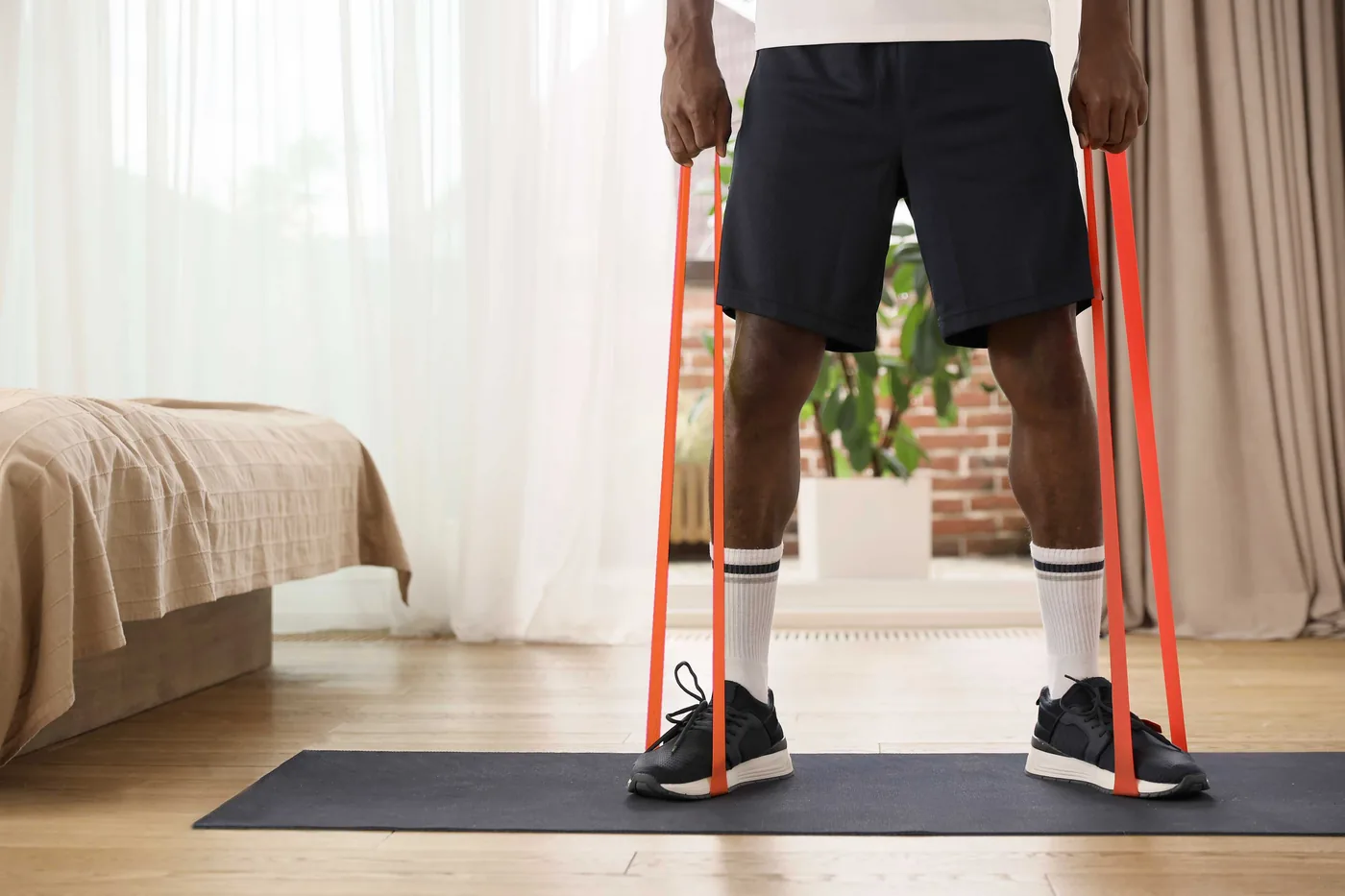
In the weeks you cannot drive, these sessions can happen at home through mobile physical therapy.
What predicts a good outcome
Strength before surgery, which is why prehabilitation matters and is so often skipped.
Adherence in the first six weeks, particularly to the unglamorous parts.
Achieving full range early.
And realistic expectations, which sound like a soft factor and consistently show up in the outcome data.
What derails it
Starting rehabilitation late, because nobody arranged it before the surgery.
Doing too much in weeks two and three, which produces swelling that then costs a week or two.
Stopping at three months when things feel normal, leaving a strength deficit that shows up as a reinjury later.
And, occasionally, a protocol followed so conservatively that range is lost. Both extremes exist and the second is less discussed.
Driving, work and the practical questions
Driving depends on the procedure, the side, whether it is an automatic, and whether you could perform an emergency stop. It is a question for the surgeon rather than a general rule, and insurers occasionally have views of their own.
Desk work usually returns well before manual work for lower limb procedures, with elevation and frequent movement. Your surgeon sets the date.
Manual work is usually months rather than weeks, and it needs a staged return rather than a single date.
Asking about all three before the operation avoids a great deal of improvising afterward, and employers respond better to a plan than to a series of updates.
Arranging it properly
Book the first appointment before the surgery, for soon after you come home, when arranging things is easy.
Get the protocol from the surgeon in writing, and make sure whoever is doing the rehabilitation has read it.
Set the house up in advance: a firm chair with arms, a clear route to the bathroom, everything at waist height.
And do six weeks of prehabilitation if there is time, because it is the cheapest improvement available to the eventual result.
Pain and medication in the early weeks
Pain control in the first two weeks is not indulgence. Pain limits movement, and movement is what preserves range.
That is a conversation with the surgical team, and it is worth having a plan rather than improvising at day three.
Sleep is disrupted after almost every procedure and it affects both pain and recovery, so it is worth raising rather than enduring.
As pain reduces, the medication should reduce with it, and any difficulty doing that is worth mentioning early rather than late.
What to ask before the operation
What is the protocol, and when can I start each phase?
What range should I have at two weeks, six weeks and twelve?
When can I drive, work, and return to my sport?
What would tell you the recovery is not going to plan?
Asking these before rather than after turns the first six weeks from a period of uncertainty into a plan you are executing.
Questions people ask
How soon after surgery should physical therapy start?
Usually soon after you are home, as your surgeon allows. Range and strength are lost fastest in the first weeks, so the first visit is worth booking before the operation.
Why can I not tighten my thigh muscle after knee surgery?
Swelling and joint pain switch the muscle off by reflex, regardless of effort. Swelling control, isometric work and early activation are a large part of what the first two weeks are for.
Is it normal to still have swelling six weeks after surgery?
Yes. Some swelling at six weeks is common and not a complication in itself. A joint that swells after every session is a sign the last session was too much.
When can I return to sport after surgery?
When strength, hop and movement tests match the other side, not on a set date. For major procedures that often takes many months, and your surgeon gives the expected timeline.
Where can I get post-surgical physical therapy in Dallas?
Dr. Brent Lockett, PT, DPT provides one-on-one post-surgical rehabilitation at 10670 North Central Expressway, Suite 110, or at your home while you cannot drive. Call (214) 600-7762.