The short answer
After rotator cuff surgery, rehab moves through protection in a sling, passive range, active range and then strength, each step opened by your surgeon’s protocol. Choose a clinic that follows that protocol, gives you one clinician for the whole visit and measures as it goes. In Dallas, Dr. Brent Lockett, PT, DPT does this in 60-minute one-on-one visits at the North Dallas clinic, or at your home while you cannot drive.
- Rotator cuff rehab runs in a fixed order: protection in a sling, passive range, active range, then strength. Your surgeon’s protocol sets when each stage opens.
- The repaired tendon must not be loaded before it is ready; the first three months are mostly protection and full return typically takes six to twelve months.
- Protection and stiffness pull in opposite directions, so passive range starts as early as the protocol allows and is measured every visit.
- The shoulder blade, upper back and neck are part of the plan, and blood flow restriction can keep the arm training when screening and protocol allow.
- At our North Dallas clinic every visit is 60 minutes with Dr. Lockett, with home visits (upcharge) while you cannot drive. Packages: 6 visits $840, 12 visits $1,560.
The repair is done, the arm is in a sling, and the sheet from the surgery center says “physical therapy as directed.” What it does not say is where, with whom, or why the first weeks feel as if almost nothing is happening. Rotator cuff rehab is longer and stricter than most people expect, and it rewards the people who understand why.
Below: the four stages and what opens each one, the questions to ask a clinic, sleeping, home visits, blood flow restriction, and when to call the surgeon.
Where to do rotator cuff rehab in Dallas: what actually matters
Surgery reattaches the tendon. It does not restore range, strength or trust in the arm, and those decide whether you are pleased with the shoulder a year later. Being close to home is not the test. These four things are:
- The protocol is read and followed. Your surgeon’s protocol says what the arm may do at each stage, because the repair has a healing timeline. The clinic should work fully within it, not at the edges of it.
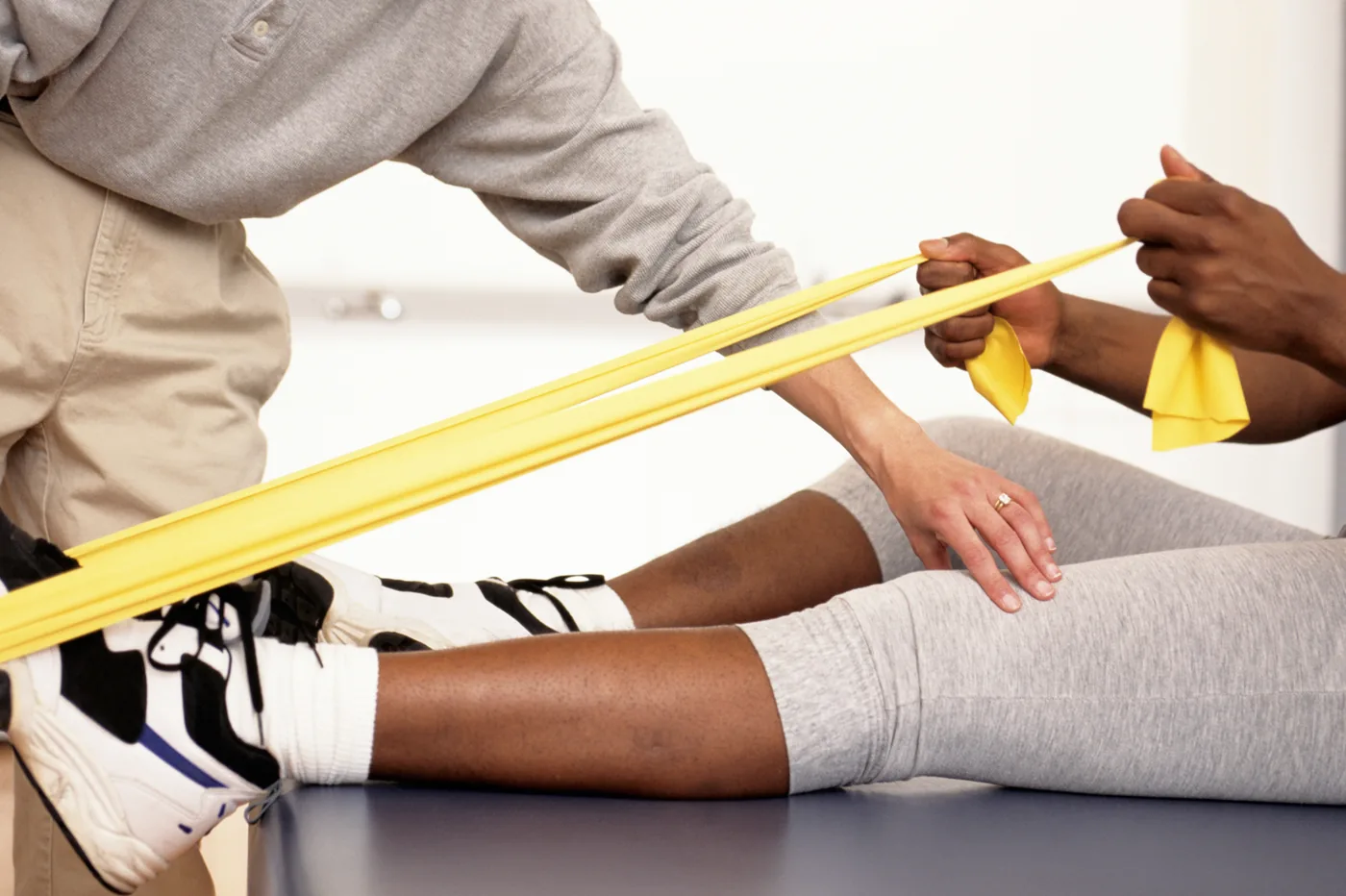
- One clinician for the whole visit. Early cuff rehab is careful hands-on range work and close watching. That does not happen when you are handed to an aide with a sheet of exercises.
- The whole chain, not just the joint. The shoulder blade, the upper back, the ribs and the neck all carry part of the load. A plan that only looks at the repaired tendon leaves half the problem in place.
- A finish line made of measurements. Range and strength compared with your other side, and the reaching, lifting or throwing your week asks for, tested before discharge.
That is how post-surgical rehabilitation in Dallas is run at our clinic, and rotator cuff repair is one of the operations on that page. For the questions that apply to any problem, see how to choose a physical therapist in Dallas.
Why the repair has to be protected first
A repaired rotator cuff will fail if it is loaded before it is ready, and no amount of enthusiasm changes the biology. The tendon has been stitched back to where it belongs, and it has to heal there before the muscle can be asked to pull on it. That is the reason for the sling, and the reason the first months feel slow.
Retear rates are not trivial, particularly for large tears and older tendons. Adherence to the protocol is one of the few things in that equation that is within your control. In practice that means:
- The sling is part of the treatment, not an inconvenience. Wear it as your protocol says, for as long as it says.
- The arm is moved, but not used. Early on, range comes from someone or something else moving the arm, not from the repaired muscle lifting it.
- Feeling good is not a green light. As pain settles the arm often feels ready long before the tendon is. Reaching for a high shelf or lifting a bag in those weeks is the common way a repair is put at risk.
If you are still deciding whether to have the operation, that is a different question, covered in a rotator cuff tear on the scan: surgery or not?
The four stages of rotator cuff rehab, and what opens each one
Rehab after a cuff repair runs in a set order: protection, then passive range, then active range, then strength and the demands of your life. The order comes from the biology. The timing comes from your surgeon’s protocol, which varies with the size of the tear, the repair and the surgeon’s preference.
| Stage | When (your protocol sets it) | What rehab works on | What moves you on |
|---|---|---|---|
| Before surgery | The weeks before the operation | Baseline range and strength on both sides, the first exercises taught while nothing is sore, home and sleep set-up | You have the protocol in writing and the first visit is booked |
| 1. Protection | The first weeks, with the arm in a sling for several weeks | Pain and swelling control, elbow, wrist and hand kept moving, neck and upper back kept mobile, safe dressing, washing and sleeping | Your surgeon allows the next step; the shoulder settles between sessions |
| 2. Passive range | From early on, as the protocol allows | The arm moved for you, within the limits the protocol sets, several times a day at home | Range gaining on the targets your surgeon gives, without flare-ups |
| 3. Active range | When your surgeon allows the repaired muscle to lift the arm | Lifting the arm yourself, shoulder blade control, gentle muscle activation | The arm rises smoothly without the shoulder hitching up |
| 4. Strength and return | After the protection phase; the first three months are mostly protection, and full return typically takes six to twelve months | Progressive loading of the cuff and shoulder blade muscles, then reaching, carrying, lifting, throwing or your sport | Strength close to the other side on testing, and your surgeon’s clearance |
How to read this table: the order is fixed, the timing is not. The protocol always wins over this table, so if your surgeon’s sheet says something different, follow the sheet. The right-hand column is what to check with your therapist each week, and it is what moves you on, not the calendar alone.

The early phase is described for every operation in post-surgical rehab: the first six weeks. In that phase the home program is the treatment, and the visits exist to check the range, adjust the dose and catch problems early.
Stiffness versus protection: the balance in the first months
Rotator cuff rehab has two ways to go wrong, and they pull in opposite directions. Load the tendon too early and the repair is at risk. Protect the shoulder so carefully that it never moves and it stiffens, because range lost in the first weeks is harder to regain once scar tissue matures and the joint capsule tightens. A protocol followed so conservatively that range is lost is less discussed than the other mistake, and it happens.
Post-surgical stiffness behaves much like a frozen shoulder: a period with the arm immobilized is one of the things associated with it. The answer is sustained range work, mobilization and patience measured in months, with strength added once the range is there. That is why passive range starts as early as your protocol allows, and why it is measured every visit.
Later, some shoulders stay stiff despite good home work. Joint mobilization, soft tissue and instrument-assisted work around the scar, and dry needling of muscles that have been guarding since the operation are used where the examination finds the restriction, and only once your surgeon has cleared the area to be treated. Where the shoulder is still too sore to be touched, PEMF can be part of the session: it is FDA cleared for post-operative pain and swelling in superficial soft tissue, and it is an adjunct, never the treatment on its own.
If the stiffness looks like more than the usual post-operative kind, frozen shoulder stages explains what a stiff, painful shoulder goes through and why hard stretching in the painful phase backfires.
The shoulder blade, the upper back and the neck
The shoulder is a chain, not a single joint. It depends on the shoulder blade gliding over a mobile upper back and rib cage. When the upper back stiffens — and weeks in a sling, hunched to protect the arm, will stiffen it — the shoulder has to make up the difference at the end of its range, which is the last thing a healing repair needs.
So the plan does not stop at the operated tendon. Upper back and rib mobility, shoulder blade control, rotator cuff capacity and the neck all get assessed, and much of that work can start while the repaired tendon is still being protected. Rotator cuff and shoulder blade strength come later, in the order the protocol allows. The full picture is on the shoulder pain treatment page, and shoulder mobility vs stability explains how a stiff shoulder and a loose one are told apart.
Sleeping after rotator cuff surgery
Sleep is disrupted after almost every operation, and less sleep means more pain the next day, so raise it early rather than endure it.
- Follow the sling instructions for the night. Whether the sling stays on in bed is part of your protocol; ask if it is not written down.
- Support the arm. The principle we use for any painful shoulder applies: on your back, a pillow or folded towel under the upper arm so the shoulder does not drop backward toward the mattress, and a second pillow so the forearm rests slightly in front of the body.
- Do not lie on the operated side. Ask your surgeon when side lying is allowed.
- Set the bed up before you are tired. Arranging pillows at midnight in pain is not when good decisions get made.
- Have a pain plan for the nights, agreed with your surgical team before you need it.
The pillow set-up and why shoulders hurt most at night are explained in why your shoulder hurts most at night. At a home visit, the bed you actually sleep in is checked, which settles in a minute what a description often does not.
Seven questions to ask a clinic before you book
Ask these on the phone or at a first conversation. A good clinic answers all seven clearly, and the answers tell you more than the website does.
| Question | Why it matters after a cuff repair | How it works here |
|---|---|---|
| 1. Will you follow my surgeon’s protocol? | A repaired tendon fails if it is loaded before it is ready | Range, sling and loading restrictions are followed, and progress is reported back if your surgeon wants it |
| 2. Who am I with, and for how long? | Early range work is hands-on and has to be watched closely | 60 minutes, one-on-one with Dr. Lockett; nobody else runs part of your session |
| 3. Do you treat the upper back, shoulder blade and neck too? | Weeks in a sling stiffen the chain the shoulder depends on | Yes, they are assessed and treated as part of the shoulder plan |
| 4. What do you measure? | Range and strength change too slowly to feel week to week | Range, strength compared with your other side and control, measured as you go |
| 5. How do you keep the arm strong while the repair is protected? | Muscle is lost fastest when heavy loading is off limits | Certified blood flow restriction training on the upper arm, when your protocol and screening allow it |
| 6. Can you see me at home while I cannot drive? | With the arm in a sling, getting to a clinic is often the hardest part of the week | Yes, across Dallas and the surrounding areas, for an upcharge |
| 7. What does it cost, and how is it paid? | Cuff rehab runs for months, so know the terms before you start | Out of network with a superbill after every session; packages of 6 visits for $840 and 12 for $1,560 |
How to read this table: the middle column is the reason to ask, whichever clinic you call. The right-hand column is what our own pages state, so you can hold us to it. If a clinic cannot answer questions 1 and 4 clearly, keep looking.
Home visits first, the clinic later
With one arm in a sling, getting in and out of a car, fastening a seat belt and sitting through traffic on Central Expressway is a poor start to a session, and you may not be allowed to drive at all. When you can drive depends on the operation, the car and whether you could perform an emergency stop, and it is a question for your surgeon, not a general rule.
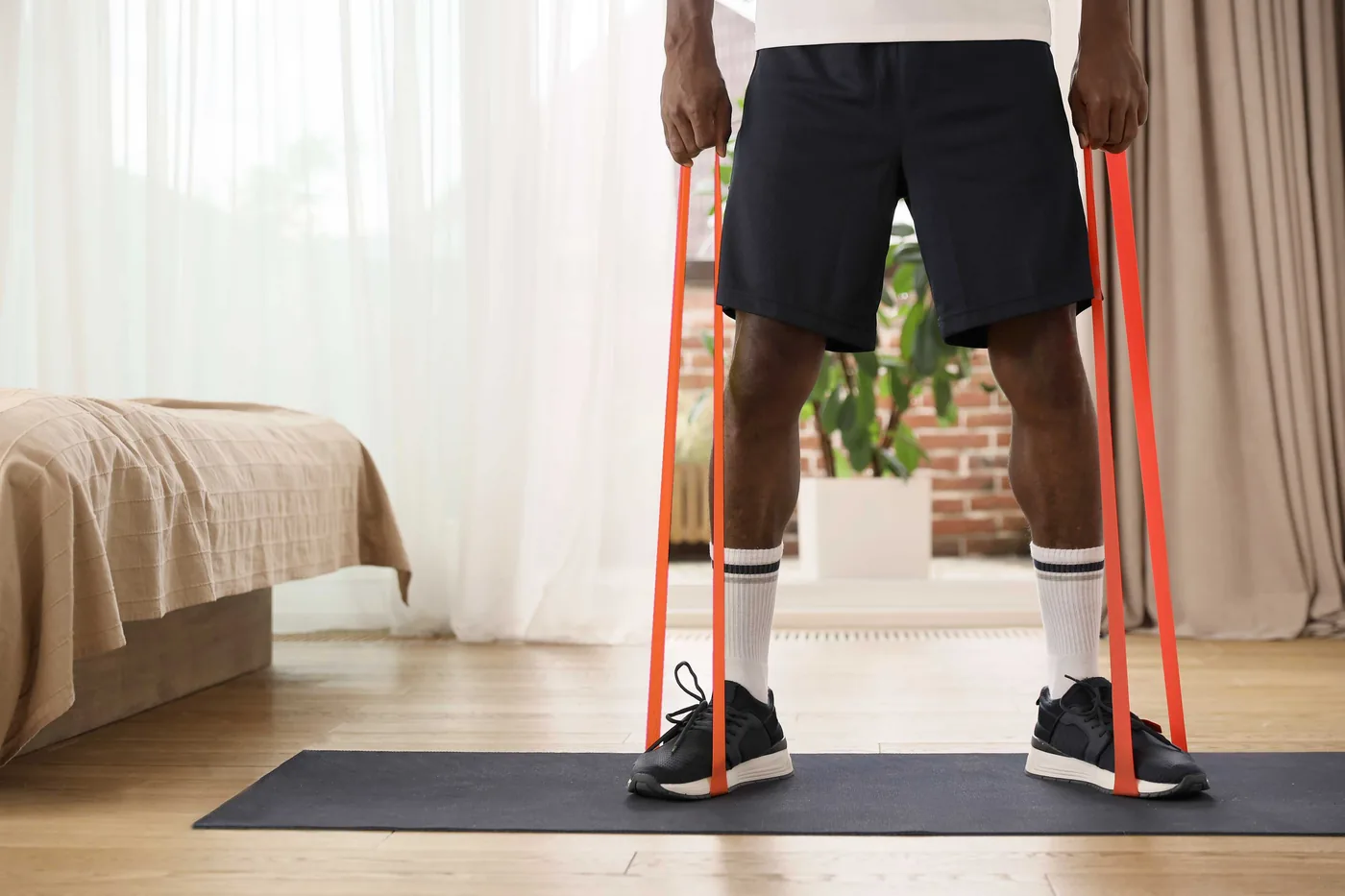
Mobile visits bring the full 60-minute session to your home in Dallas and the surrounding areas, including Preston Hollow, the Park Cities, North Dallas, Uptown, Lakewood, Lake Highlands, Addison, Richardson, Plano and Farmers Branch. The early stages suit a living room: passive range, swelling and pain control and the first activation work need no equipment. Dressing, washing, the bed and the chair you rest in are practiced where they are.
Two things to know. Home visits carry an upcharge over clinic visits; call (214) 600-7762 for the price for your location. And once the plan moves to heavier loading and strength testing, sessions usually move to the clinic, where that equipment is. More on the mobile physical therapy page.
Where blood flow restriction fits after a cuff repair
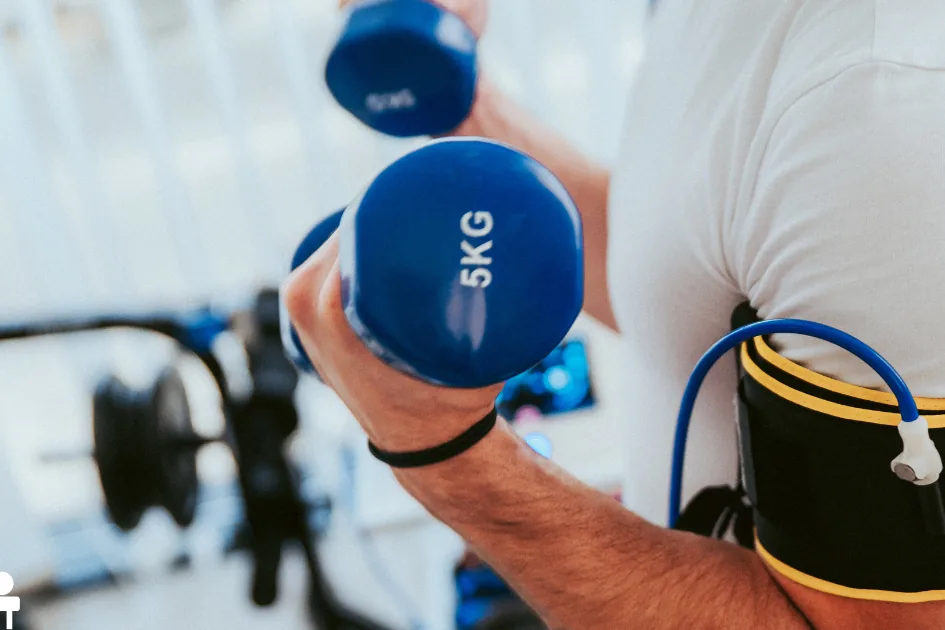
The bind after any repair is that muscle needs heavy load to get strong, and the repair cannot take heavy load yet. Blood flow restriction, or BFR, is one of the few tools that addresses that directly. A cuff on the upper arm partially limits blood flow while you exercise with light weights, and the muscle responds as if the load were much heavier. Cuffs go on arms as well as legs, which is what makes it useful after shoulder surgery.
Treatment effects seen after 12 to 16 weeks of traditional strengthening can be observed as soon as 2 weeks with BFR. Dr. Lockett is certified in it, and we are one of the few therapy providers offering BFR in the Dallas area.
Three limits apply after a cuff repair:
- When it starts, and which exercises, is your surgeon’s decision. The repaired tendon is not asked to lift anything the protocol has not allowed, cuff or no cuff. It starts only once the incision is healing, there is no sign of infection and swelling allows a cuff.
- Screening comes first. A history of blood clots, certain vascular or cardiac conditions and uncontrolled blood pressure can rule it out. If your history says no, the plan is built another way.
- It does not speed up healing. The tendon heals on its own timeline. BFR protects the muscle you will rebuild from; it does not let you skip a stage.
The timing question has its own article, how early BFR can start after surgery, and the method and screening are on the blood flow restriction therapy page.
When to call your surgeon, not your therapist
Some things after a cuff repair are not a therapy problem, and the right move is to stop and call:
- A wound that is red, hot or draining, or a fever: call your surgeon.
- A sudden change in the arm, such as a new loss of the movement you had, after a fall, a catch or a lift: call your surgeon before the next session.
- Calf pain and swelling: urgent medical care.
- Sudden shortness of breath, or chest pain: an emergency.
Ordinary soreness after a session that settles by the next day is part of the work. A shoulder that is clearly worse after every session is telling us the dose was too much, and the plan is adjusted.
What we do after rotator cuff surgery, and what we do not
At Osteopractic Physical Therapy & Pain Relief nobody is handed to an aide. Every visit is 60 minutes, one-on-one with Dr. Brent Lockett, PT, DPT, who holds a Diploma in Osteopractic from post-doctorate residency training and certifications in dry needling, spinal manipulation and blood flow restriction therapy. The practice holds a 5.0 rating from 81 Google reviews, and you can read them here.
What we do:
- Review your surgery, protocol and goals at the first visit, measure both shoulders, address pain and swelling, and teach the first home exercises.
- Follow the protocol’s limits on the sling, range and loading, and report progress to your surgeon if they want it.
- Treat the upper back, shoulder blade and neck alongside the shoulder.
- Use blood flow restriction where heavy load is not yet allowed, and hands-on work for stiffness and scar tissue once the area is cleared.
- Test against your other side before each step up and before discharge, then send you off with a program to keep it.
- Come to your home in the weeks you cannot drive.
What we do not do:
- Override or speed up the protocol. Where a protocol seems unusually restrictive, the answer is a conversation with your surgeon.
- Start before you are cleared. If your surgeon has said no therapy yet, we start when they clear it.
- Promise a date. A package is a way to pay for visits, not a promised date for overhead lifting or your sport.
- Bill in network. This is an out-of-network practice.
Cost, insurance, referral and booking
- Free discovery visit: No charge — a conversation about your surgery, your protocol and whether this approach fits
- 6-visit pain/movement plan: $840 — six 60-minute, one-on-one visits, designed to reduce pain, restore movement and build strength
- 12-visit performance package: $1,560 — twelve 60-minute visits, for ongoing wellness, mobility and preventative care
- Single sessions and home visits: see sessions & packages; home visits carry an upcharge, call for the price
The typical plan after surgery is one to two visits a week until strength, range and your own goals are tested and back, and you get an honest estimate after the first visit, not before it. How many physical therapy visits will I need explains how that estimate is made.
The practice is an out-of-network provider: you receive a superbill after every session to file with your insurance for potential reimbursement.
Texas allows up to 30 days of treatment without a referral, so you can book directly, and continuing past that needs one. After surgery, your surgeon’s protocol and clearance still guide the plan; the full rule is in do you need a referral for physical therapy in Texas.
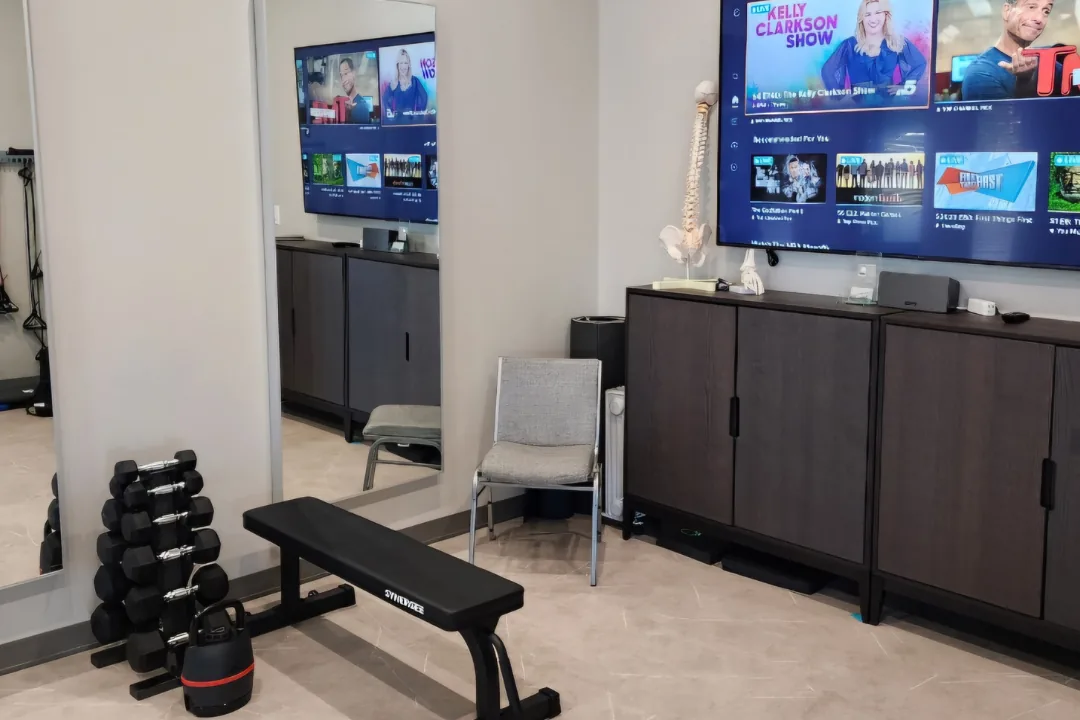
The clinic is at 10670 North Central Expressway, Suite 110, Dallas, TX 75231, in North Dallas near Preston Hollow and the Park Cities. Call (214) 600-7762 or book a free discovery visit, ideally before the operation, and bring your surgeon’s protocol.
Questions people ask
Where can I get physical therapy after rotator cuff surgery in Dallas?
Osteopractic Physical Therapy & Pain Relief, at 10670 North Central Expressway, Suite 110, in North Dallas. Every visit is 60 minutes one-on-one with Dr. Brent Lockett, PT, DPT, inside your surgeon’s protocol, at the clinic or at your home. Call (214) 600-7762.
What are the stages of rehab after rotator cuff surgery?
Protection in a sling, then passive range (the arm moved for you), then active range (you lift it), then strength and the demands of your work or sport. Your surgeon’s protocol decides when each stage starts.
How long does recovery from rotator cuff surgery take?
Longer than most people expect. The first three months are mostly protection, and full return typically takes six to twelve months. Your surgeon gives the expected timeline for your repair.
How soon after rotator cuff surgery should physical therapy start?
Usually soon after you are home, as your surgeon allows. Range is easier to keep than to recover, so the first visit is worth booking before the operation.
Why is rotator cuff rehab so slow?
The tendon has been reattached and has to heal before the muscle can pull on it. A repaired cuff loaded before it is ready can fail, so the early stages protect it while keeping the shoulder from stiffening.
How should I sleep after rotator cuff surgery?
Follow your protocol on the sling at night, stay off the operated side until your surgeon allows it, and support the arm: a pillow under the upper arm and another under the forearm when lying on your back.
Can I do rotator cuff rehab at home?
Yes. Mobile visits bring the full 60-minute session to your home across Dallas and the surrounding areas, which helps while you cannot drive. Home visits carry an upcharge, and later sessions usually move to the clinic for loading.
Can blood flow restriction help after rotator cuff surgery?
Cuffs go on the upper arm, so it can keep the arm training at light weights while the repair is protected. When it starts, and which exercises, is your surgeon’s decision, and screening comes first.
Does insurance pay for rotator cuff rehab at your clinic?
The practice is out-of-network. You receive a superbill after every session to file with your insurance for potential reimbursement. A 6 visit plan is $840 and a 12 visit package is $1,560.
Do I need a referral for physical therapy after shoulder surgery in Texas?
Texas allows up to 30 days of treatment without a referral, so you can book directly. After surgery, your surgeon’s protocol and clearance still guide the plan.