The short answer
Shoulder pain is worst at night for three reasons: lying on that side compresses the tendons under the bony roof of the shoulder, the arm stops making the small movements that keep it comfortable by day, and nothing distracts you. Sleeping on your back with a pillow under the upper arm, or on the good side hugging a pillow, helps most people within a week. In Dallas, Dr. Brent Lockett, PT, DPT treats the cause too.
- Side lying compresses the subacromial space; back lying with the upper arm supported relieves most people.
- Sleeping with the arm overhead or under the pillow is the most common single error.
- Loading the shoulder during the day reduces night pain faster than resting it.
- Unrelenting night pain in every position, unrelieved by movement, needs a physician rather than a pillow.
Almost every shoulder patient reports it. Fine during the day, unbearable at two in the morning, and worse on the side you sleep on.
There are three separate reasons for that, and each of them suggests something you can change.
Reason one: mechanical compression
Lying on the affected shoulder pushes the head of the humerus up into the space beneath the acromion, compressing the tendons and the bursa that live there.
Hours of that on an already irritable tendon is enough to wake anyone.
It is the most straightforward of the three and the easiest to fix, because you can simply stop doing it — with some help from pillows.
Reason two: loss of movement variation
During the day the shoulder moves constantly, in tiny amounts, without your noticing. That variation keeps circulation moving and stops any one structure from being loaded continuously.
Asleep, that stops. A position held for two or three hours loads the same structures the entire time.
This is the same mechanism behind waking with a locked neck, and it explains why the pain often eases within twenty minutes of getting up.
Reason three: nothing else competing
Pain that is easily ignored during a busy day is unavoidable in a dark, quiet room. This is a genuine effect and it is not imaginary.
Pain thresholds also drop with poor sleep, so a bad night makes the next night worse. That loop is worth breaking deliberately.
It is one of the reasons treating night pain early tends to accelerate everything else.
The position that works for most people
On your back, with a pillow or folded towel under the upper arm so the shoulder is not dropping backward toward the mattress. That small support is the part people leave out and it is the part that matters.
A second pillow under the forearm keeps the arm slightly forward of the body, which is the shoulder's comfortable resting position.
For side sleepers who cannot manage back sleeping: lie on the unaffected side, with a substantial pillow hugged in front so the top arm rests on it rather than dropping across the body.
That second point matters. A top arm allowed to fall forward pulls the shoulder into internal rotation for hours.

What to avoid
Sleeping with the arm overhead or under the pillow. This narrows the subacromial space and tensions the nerves running through the front of the shoulder.
Lying directly on the painful shoulder, obviously, though people do it in their sleep and wake up having done it.
A mattress so soft the shoulder sinks and the arm ends up higher than the trunk.
The overhead position is the most common single error and the most rewarding to correct.
Making the change stick
Most people roll onto the painful side during the night regardless of intention. A pillow wedged behind the back makes rolling less likely and is more effective than willpower.
Give any change a week. The first two nights in an unfamiliar position are worse regardless of whether the position is right.
If a change makes no difference at all after a week, that is useful information — it suggests the pain is less positional than assumed, which points elsewhere.
What night pain tells a clinician
Positional night pain that eases when you move and settles when you find a comfortable position is typical of rotator cuff problems and of bursitis. It is reassuring.
Severe night pain with progressive loss of passive range points toward a frozen shoulder, particularly in the freezing stage.
Night pain that is unrelenting, present in every position, not eased by movement, and accompanied by weight loss, fever or a history of cancer is a different question entirely and belongs with a physician promptly.
So the question I ask is not just whether it hurts at night, but whether any position helps. The answer directs the rest of the examination.
| Night pain pattern | What it usually points to | What to do |
|---|---|---|
| Eases when you move and settles in a better position | Rotator cuff tendon or bursa irritation | Change the sleeping setup; load the shoulder during the day |
| Severe, with the arm stiff even when someone else moves it | Frozen shoulder, often the freezing stage | Get the stage identified; no hard stretching |
| Worse with the arm overhead or under the pillow | Narrowing under the bony roof of the shoulder | Keep the arm below shoulder height, supported on a pillow |
| Unchanged after a week of better positioning | Less positional than it seemed; the neck is one possibility | Have the neck and shoulder examined |
| Unrelenting in every position, with weight loss, fever or a cancer history | Not a mechanical shoulder problem | See a physician promptly |
How to read this table: the question that sorts it is whether any position helps. If one does, the pain is mechanical and the first rows apply. If nothing changes it, or it comes with the symptoms in the last row, it needs a physician rather than a pillow. The stiff-shoulder row is covered in frozen shoulder stages.
What else reduces it
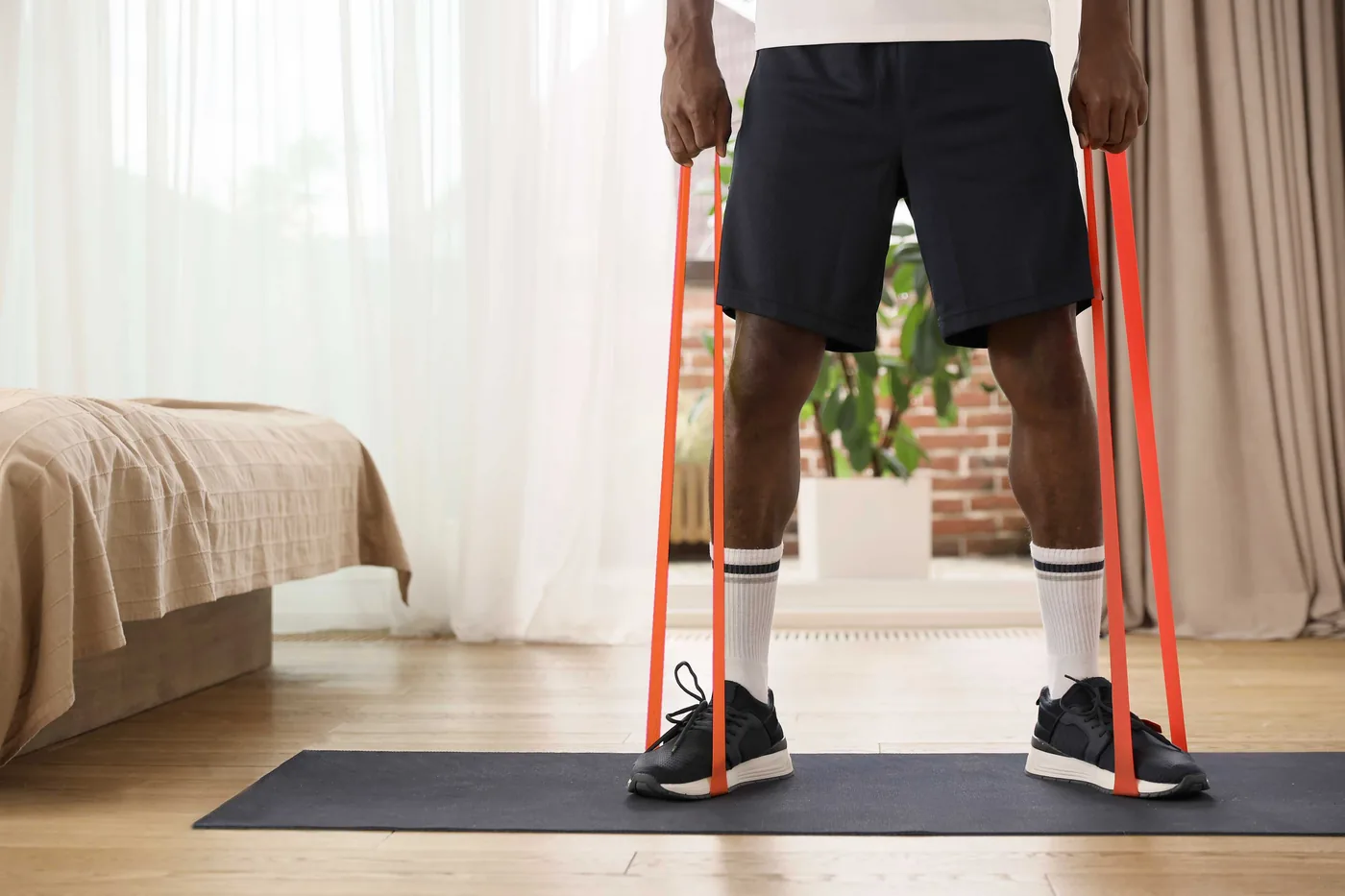
Loading the shoulder during the day. This sounds contradictory and it is the most reliable thing on the list — shoulders that are being strengthened stop hurting at night sooner than shoulders that are being rested.
Isometric holds in the evening. Thirty seconds of external rotation against a doorframe, five times, often reduces pain for several hours and is a reasonable thing to do before bed.
Heat before sleeping for muscular pain; some people prefer ice for an acutely inflamed bursa. Try both and use whichever works for you, because the evidence does not favor one strongly.
Timing of anti-inflammatory medication, if your physician has prescribed it, so that its effect covers the early hours.
Why loading beats rest is covered in why shoulder impingement is a description, not a diagnosis.
How quickly it should change
Positioning changes often help within a few nights. That is the fastest win available in most shoulder presentations.
The underlying problem takes considerably longer — typically twelve weeks of loading — but the night pain usually improves well before the daytime pain resolves.
If four weeks of appropriate positioning and loading has changed nothing about the nights, that warrants a review rather than persistence.
Why the pain often peaks between two and four in the morning
Partly position: by that point you have been in one arrangement for hours, and whatever compression exists has had time to accumulate.
Partly physiology: the body's own anti-inflammatory hormone output follows a daily rhythm and reaches its low point in the early hours.
And partly sleep architecture, since lighter sleep toward morning makes you more likely to register discomfort that earlier deep sleep concealed.
The practical response is not to lie there. Get up, move the arm gently through its range for a minute or two, reset the pillows, and go back. That usually buys another stretch of sleep, and the movement itself is not doing any harm.
The sleep side of it
Chronic shoulder pain and poor sleep sustain each other, and the research on this is not subtle: less sleep reliably means more pain the following day.
So the goal is not stoicism. Getting a run of decent nights is a legitimate treatment objective and it makes everything else work better.
That includes being willing to ask your physician about short-term pain relief for the nights, if positioning alone is not enough.
Pillows and beds, without the marketing
No pillow is designed for shoulders, whatever the packaging says. What matters is the height under your head and the support under your arm, and both can be achieved with pillows you already own.
For back sleeping: a medium pillow under the head, plus one folded towel or small cushion under the upper arm on the painful side.
For side sleeping on the good side: a firm pillow that fills the gap between shoulder and head, and a large pillow to hold in front of you.
A very firm mattress pushes the shoulder up into the joint when side lying; a very soft one lets it sink. Middling is better than either, and a mattress topper is a cheaper experiment than a mattress.
Getting through the first two weeks
Expect it to take a few nights. People abandon a good position on night two because it felt strange, which is exactly when it should feel strange.
Set the bed up before you are tired. Arranging pillows at midnight in pain is not when good decisions get made.
If you wake on the painful side, reposition without treating it as a failure. Most people roll at some point for the first week and roll less as the shoulder settles.
Keep a rough note of how many times you woke. It is a better measure of progress than a pain score and it improves earlier than anything else you can track.
Two weeks of that record is also the most useful thing you can bring to a first appointment. It shows whether the pain is genuinely positional, which is the question the rest of the examination is built around.
What I check in the clinic
Which positions provoke and which relieve, in detail. That map is diagnostic.
Passive range, because a restriction there changes the working diagnosis to a frozen shoulder.
Cuff strength, which is what the loading plan will be built on.
The neck, because a proportion of shoulder pain originates there and behaves differently at night.
And your actual bed setup, which patients rarely think to describe and which frequently contains the answer.
It is worth photographing your bed as you actually leave it and bringing that. Descriptions of pillow arrangements are unreliable, and a photograph settles in ten seconds what five minutes of questions will not.
From there the plan usually has two halves: a positioning change you make tonight, and a loading program that changes why the shoulder is irritable in the first place. The first buys sleep while the second does the work.
The clinic’s shoulder pain page covers the assessment. Dr. Lockett treats shoulder pain at 10670 North Central Expressway, Suite 110, in North Dallas, or at your home, where your real bed setup can be checked (home visits carry an upcharge).
Questions people ask
Why does my shoulder hurt more at night?
Lying on it compresses the tendons and bursa under the bony roof of the shoulder, the arm stops moving for hours, and nothing distracts you. Poor sleep then lowers your pain threshold the next night.
What is the best sleeping position for shoulder pain?
On your back with a pillow under the upper arm and another under the forearm, or on the good side hugging a large pillow so the top arm rests on it instead of falling forward.
Should I sleep with my arm above my head?
No. Sleeping with the arm overhead or under the pillow narrows the space under the bony roof of the shoulder and is the most common single cause of avoidable night pain.
How long until shoulder pain at night improves?
Positioning changes often help within a few nights. The underlying problem usually takes about twelve weeks of loading, but the nights improve well before the daytime pain does.
When is shoulder pain at night serious?
When it is unrelenting in every position, is not eased by moving, and comes with weight loss, fever or a history of cancer. That needs a physician promptly.
Where can I get shoulder pain at night treated in Dallas?
Dr. Brent Lockett, PT, DPT assesses and treats shoulder pain one-on-one at 10670 North Central Expressway, Suite 110, in North Dallas. Call (214) 600-7762.