The short answer
After ACL reconstruction, choose a clinic that follows your surgeon’s protocol, gives you one clinician for the whole visit, keeps the thigh muscle working while heavy loading is off limits, and decides the return to sport by testing, not by date. In North Dallas, Dr. Brent Lockett, PT, DPT does this in 60-minute one-on-one visits at 10670 North Central Expressway, or at your home while you cannot drive.
- Choose ACL rehab on four things: the surgeon’s protocol is followed, one clinician for the whole visit, a way to keep the thigh strong early, and a return decided by tests.
- Start before the operation: a baseline, the first exercises and the first post-surgery visit booked for soon after you come home.
- The early weeks are about swelling, full extension and getting the quadriceps to fire; the windows in any timeline give way to your surgeon’s protocol.
- Blood flow restriction lets the thigh train at light weights while the graft is protected, when your surgeon and your screening allow it.
- At our North Dallas clinic every visit is 60 minutes with Dr. Lockett, with home visits (upcharge) while you cannot drive. Packages: 6 visits $840, 12 visits $1,560.
Your ACL reconstruction has a date. The surgeon has explained the graft, somebody has handed you a sheet about ice and crutches, and at some point the phrase “you will need physical therapy” went past without anyone saying where. The choice is yours, and it deserves more thought than the nearest address, because you will spend far more hours in rehab than you spent choosing the surgeon.
Below: what to look for in a clinic after ACL surgery, seven questions to ask before you book, the stages you will go through and what moves you from one to the next, where blood flow restriction and home visits fit, and what our North Dallas clinic does and does not do.
What matters when you choose ACL rehab in North Dallas
Surgery repairs a structure. It does not restore strength, range or confidence, and those three decide whether you are pleased with the knee a year later. After a ligament reconstruction the rebuilding is long and structured, so a clinic that is merely close to home is not the test. These four things are:
- The protocol is read and followed. Your surgeon’s protocol says what is permitted at each stage, because the graft has a healing timeline. The clinic should work fully within it, not at the edges of it.
- One clinician, for the whole visit. Early rehab is mostly measuring, adjusting the dose and catching problems. That does not happen when you are passed to an aide between exercises.
- A way to keep the thigh strong early. Muscle is lost fastest in the weeks when heavy loading is not allowed. Ask what the clinic does about that gap.
- A finish line made of tests. The end of ACL rehab is not the day the knee stops hurting. It is the day strength, control and the things your sport asks of the knee have been tested and are back.
That is how post-surgical rehabilitation in Dallas is run at our clinic, and ACL reconstruction is one of the operations it is built for. If you are comparing clinics more generally, how to choose a physical therapist in Dallas covers the questions that apply to any problem.
Seven questions to ask before you book ACL rehab
Ask these on the phone or at a first conversation. A good clinic answers all seven without hesitating, and the answers tell you more than the website does.
| Question | Why it matters after ACL reconstruction | How it works here |
|---|---|---|
| 1. Will you follow my surgeon’s protocol? | A reconstructed ligament will fail if it is loaded before it is ready | Range, weight-bearing and loading restrictions are followed, and progress is reported back if your surgeon wants it |
| 2. Who am I with, and for how long? | Swelling, range and a muscle that will not fire need checking every visit | 60 minutes, one-on-one with Dr. Lockett; nobody else runs part of your session |
| 3. How do you keep my thigh strong before heavy weights are allowed? | Muscle loss is fastest when the protocol prohibits heavy loading | Certified blood flow restriction training, when your protocol and your screening allow it |
| 4. What do you measure? | An operated leg that feels fine is often still weaker than the other, and you cannot feel the difference | Range, strength compared with your other side and control, measured as you go |
| 5. How do you decide I can run, jump and play again? | Going back on a leg with a strength deficit is one of the clearest predictors of a second injury | By tests, within your surgeon’s clearance: strength side to side, single-leg control, landing and change of direction |
| 6. Can you see me at home in the first weeks? | Early on, getting to a clinic is often the hardest part of the week | Yes, across Dallas and the surrounding areas, for an upcharge |
| 7. What does it cost, and how is it paid? | ACL rehab runs for months, so know the terms before you start | Out of network with a superbill after every session; packages of 6 visits for $840 and 12 for $1,560 |
How to read this table: the middle column is the reason to ask, whichever clinic you call. The right-hand column is what our own pages state, so you can hold us to it. If a clinic cannot answer questions 1 and 5 clearly, keep looking.
Start before the operation if you can
If your surgery is scheduled, the best time to begin is before it. A visit or two beforehand records your baseline, builds strength while the knee still allows it, and teaches the first exercises while nothing is sore. Strength built before the operation is strength you do not have to rebuild afterward.
It also settles the practical side while arranging things is still easy:
- Get the protocol in writing from your surgeon, and make sure whoever does your rehab has read it.
- Book the first visit now, for soon after you come home, as your surgeon allows.
- Ask about driving and work. Driving depends on the side, the car and whether you could perform an emergency stop. It is a question for the surgeon, not a general rule.
- Set the house up: a firm chair with arms, a clear route to the bathroom, everything at waist height.
- Ask about blood flow restriction: whether it is permitted, and from which week.
Still deciding whether to have the operation at all? That is a conversation for you and your surgeon, and physical therapy before orthopedic surgery explains where a trial of therapy fits. Whether the ligament is reconstructed or managed without surgery, the rehabilitation is long and structured either way.
The stages of ACL rehab, and what moves you forward
The work changes as the knee heals: protecting and calming the joint first, then range, then strength and control, then whatever your sport asks. The order comes from your surgeon’s protocol. The pace comes from how your knee responds, measured at every visit.
| Stage | Usual window on our post-surgical timeline | What rehab works on | What moves you on |
|---|---|---|---|
| Before surgery | The weeks before the operation | Baseline measurements, strength work, the first exercises taught while nothing hurts, home set up | You know the protocol and your first appointment is booked |
| Protect and switch on | Weeks 1 to 2 | Swelling and pain control, the range the protocol allows, getting the quadriceps to fire, safe walking with whatever aid is required | The muscle switches on and swelling settles between sessions |
| Range and first loading | Weeks 3 to 6 | Range toward full, isometrics, blood flow restriction or light resistance, a normal walking pattern | Range targets met on time, no swelling after sessions |
| Strength | Weeks 6 to 12 | Progressive loading, single-leg work, task-specific practice | Strength rising and the gap with the other leg closing |
| Back to sport | Beyond 3 months, and often for many months | Speed, jumping and sport drills, with landing, stopping and cutting tested | Strength and hop tests match the other side, and your surgeon has cleared the return |
How to read this table: the windows are the ones on our general post-surgical timeline, not an ACL rulebook. Timing varies by procedure, fixation and surgeon preference, so your surgeon’s protocol always wins over this table. The right-hand column is what to check each week, and it is what moves you on.
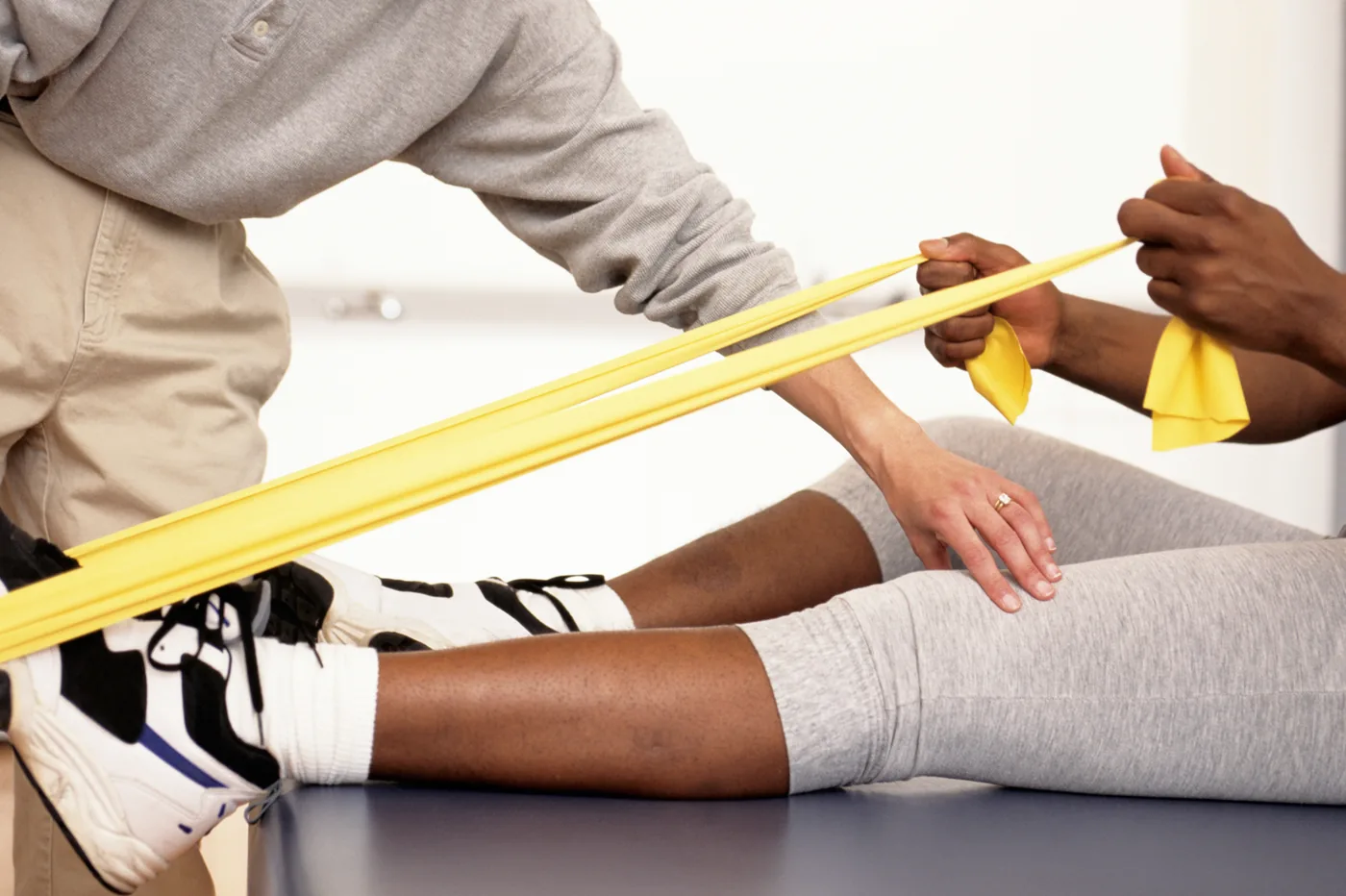
The early phase is covered for every operation in post-surgical rehab: the first six weeks. One thing to expect: the first sessions contain less than you think. In that phase the home program is the treatment, a few things done several times a day, and the visits exist to check the range, adjust the dose and catch problems early.
The first weeks: swelling, a straight knee and a thigh that fires
Three things decide how the early weeks go, and none of them looks impressive.
- Swelling. Joint swelling switches the muscle off, restricts range and increases pain, so reducing it is not cosmetic. A knee that swells after every session is telling you the last session was too much.
- Full extension. Getting the knee fully straight is easier to keep than to recover, and losing it produces a limp that persists for months. It is worked on within whatever your protocol permits.
- The quadriceps. Swelling and joint pain switch the thigh muscle off by reflex, however hard you try. It is not a matter of willpower, and getting it working again is a large part of what the first weeks are for.
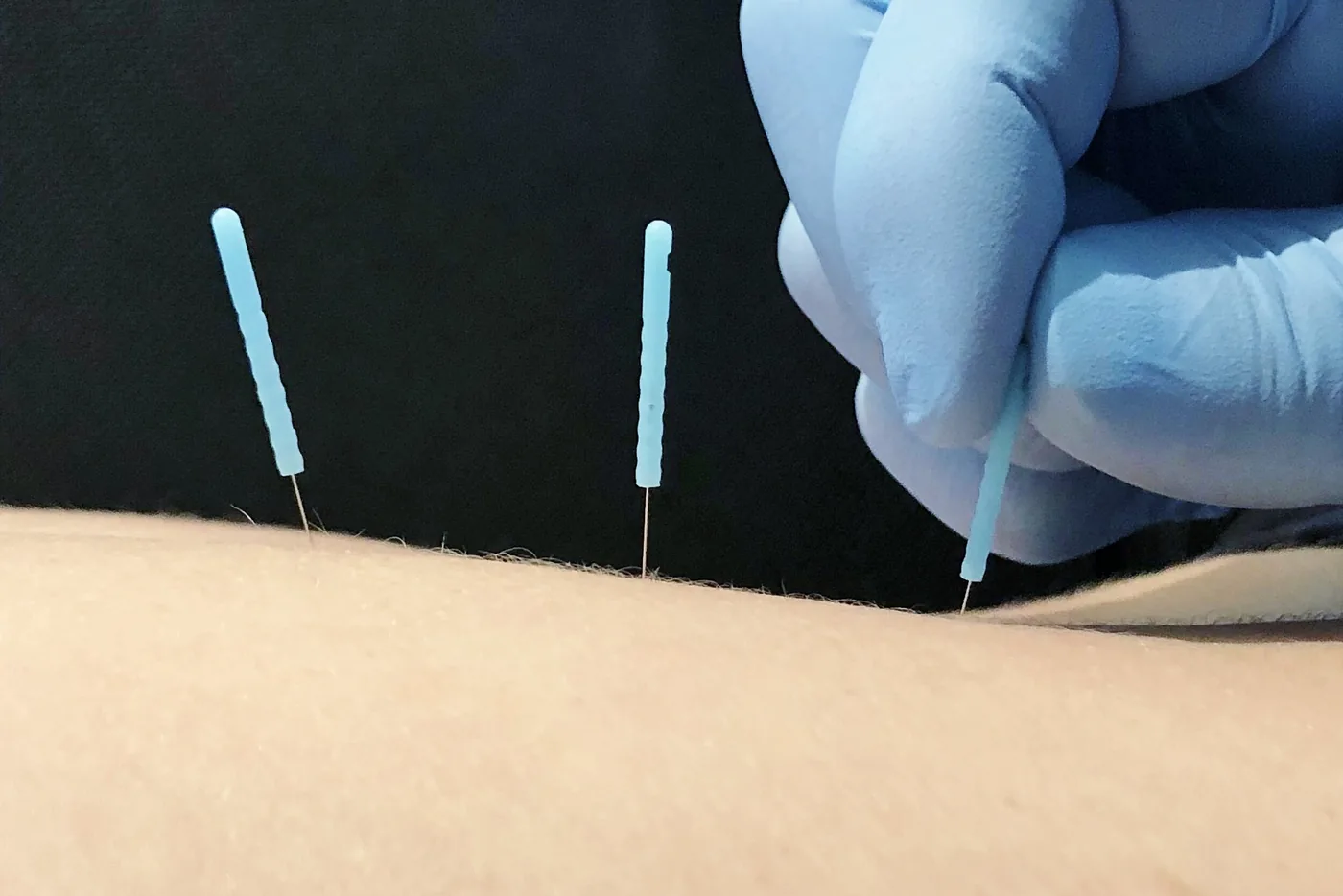
Walking is made safe with whatever aid your protocol requires, and the temptation to drop the aid early is worth resisting. Later, some knees stay stiff despite good exercise. Joint mobilization, soft tissue work around the scar and dry needling of muscles that have been guarding since the operation are used where the examination says the restriction is, and only once your surgeon has cleared the area to be treated.
Know what is not a therapy problem. A wound that is red, hot or draining, or a fever, means call your surgeon. Calf pain and swelling need urgent medical care, and sudden shortness of breath is an emergency.
Where blood flow restriction fits after ACL surgery
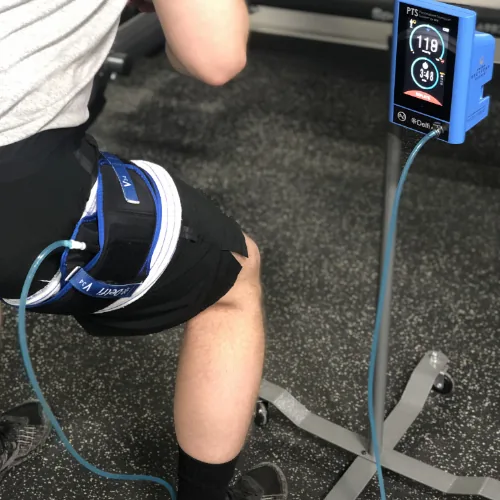
The bind after an ACL reconstruction is that the quadriceps needs heavy load to get strong, and the graft cannot take heavy load yet. Blood flow restriction, or BFR, is one of the few tools that addresses that directly. A cuff at the top of the thigh partially limits blood flow while you exercise with light weight, and the muscle responds as if the load were much heavier.
Treatment effects seen after 12 to 16 weeks of traditional strengthening can be observed as soon as 2 weeks with BFR. Dr. Lockett is certified in it, and we are one of the few therapy providers offering BFR in the Dallas area. The cover photo of this article shows the thigh cuff and the unit that sets the pressure.
Three limits apply, and a clinic that skips any of them is not doing it properly:
- When it starts is your surgeon’s decision. Some protocols permit it within days; others specify a number of weeks. It starts only once the incision is healing, there is no sign of infection and swelling allows a cuff.
- Screening comes first. A history of blood clots, certain vascular or cardiac conditions and uncontrolled blood pressure can rule it out. If your history says no, the plan is built another way.
- It does not speed up healing. A graft heals on its own timeline. BFR protects the muscle you will rebuild from; it does not let you skip a stage.
The timing question has its own article, how early BFR can start after surgery, and the method, the screening and what a set feels like are on the blood flow restriction therapy page.
Home visits while you cannot drive
In the early weeks after a lower-limb operation, getting in and out of a car is often the hardest part, and after a right-side operation you may not be allowed to drive at all. A drive down Central Expressway with the leg bent in a passenger seat is not how anyone wants to start a session.
Mobile visits bring the full 60-minute session to your home in Dallas and the surrounding areas, including Preston Hollow, the Park Cities, Lake Highlands, Lakewood, Uptown, Richardson and Plano. The early work suits a living room: range, swelling management and getting a muscle to fire need no equipment. The stairs, the bed, the shower and the chair you actually have to manage are assessed and practiced where they are.
Two things to know. Home visits carry an upcharge over clinic visits; call (214) 600-7762 for the price for your location. And they are for the early phase: once the plan needs heavier loading and testing, sessions move to the clinic, where that equipment is. Plenty of plans use both. More on the mobile physical therapy page.
Returning to sport: tests, not a date
This is the stage where the choice of clinic matters most, because it is the stage that is easiest to cut short. An operated knee that feels fine at three months is often still clearly weaker than the other side, and people cannot feel that difference. Stopping when things feel normal leaves a strength deficit that shows up as a reinjury later.
So the criteria are measured, and a season opener is a reason to plan, not a test result:
- Range of motion at the knee and across the whole chain.
- Strength side to side: quadriceps, hamstrings, calf and hip, compared with your other leg, not with a chart.
- Single-leg control: balance, single-leg squats and hops, watching for the knee collapsing inward.
- Landing, stopping and changing direction for basketball, pickleball, tennis and field sports.
- Confidence: which movements you trust and which you hesitate on.
We do not apply one side-to-side percentage or week count to everyone. Each step up, from running to cutting to practice to competition, has to be earned at the step before, and after surgery every step also sits inside your surgeon’s clearance. Full recovery from a major procedure often takes many months, longer than most people expect, so ask your surgeon for the expected timeline at the start.
The tests are set out in return to sport after an injury: the tests that say you are ready. Late-stage sessions can also take place at your gym, on the equipment you train with; see sports performance therapy.
What we do after ACL surgery, and what we do not
At Osteopractic Physical Therapy & Pain Relief nobody is handed to an aide. Every visit is 60 minutes, one-on-one with Dr. Brent Lockett, PT, DPT, who holds a Diploma in Osteopractic from post-doctorate residency training and certifications in dry needling, spinal manipulation and blood flow restriction therapy. The practice holds a 5.0 rating from 81 Google reviews, and you can read them here.
What we do:
- Review your surgery, protocol and goals at the first visit, measure range and strength, address swelling and pain, and teach the first home exercises.
- Follow the protocol’s limits on range, weight-bearing and loading, and report progress to your surgeon if they want it.
- Use blood flow restriction where heavy load is not yet allowed, and hands-on work for stiffness and scar tissue.
- Test against your other side before each step up and before discharge, then send you off with a program to keep it.
- Come to your home in the weeks you cannot drive.

What we do not do:
- Override or speed up the protocol. Where a protocol seems unusually restrictive, the right response is a conversation with the surgeon, not a quiet decision to ignore it.
- Start before you are cleared. If your surgeon has said no therapy yet, we start when they clear it.
- Promise a return date. A package is a way to pay for visits, not a promised date on the field.
- Diagnose a fresh injury that needs imaging. A knee that gave way with a pop and swelled fast needs a physician first; our knee pain treatment page explains which knees start where.
- Bill in network. This is an out-of-network practice.
Cost, insurance, referral and booking
- Free discovery visit: No charge — a conversation about your surgery, your protocol and whether this approach fits
- 6-visit pain/movement plan: $840 — six 60-minute, one-on-one visits, designed to reduce pain, restore movement and build strength
- 12-visit performance package: $1,560 — twelve 60-minute visits, for ongoing wellness, mobility and preventative care
- Single sessions: see sessions & packages
The typical plan after surgery is one to two visits a week until strength, range and your own goals are tested and back, and you get an honest estimate after the first visit, not before it. After surgery the plan runs longer than for most problems, with the early weeks mattering most; how many physical therapy visits will I need explains why.
The practice is an out-of-network provider: you receive a superbill after every session to file with your insurance for potential reimbursement.
Texas allows up to 30 days of treatment without a referral, so you can book directly, and continuing past that needs one. After surgery, your surgeon’s protocol and clearance still guide the plan. The full rule is in do you need a referral for physical therapy in Texas.
The clinic is at 10670 North Central Expressway, Suite 110, Dallas, TX 75231, in North Dallas near Preston Hollow and the Park Cities. Call (214) 600-7762 or book a free discovery visit, ideally before the operation, and bring your surgeon’s protocol.
Questions people ask
Where should I do physical therapy after ACL surgery in North Dallas?
Choose a clinic that follows your surgeon’s protocol, gives you one clinician for the whole visit, and tests the knee before each step back to sport. Osteopractic Physical Therapy & Pain Relief, at 10670 North Central Expressway, Suite 110, does this in 60-minute one-on-one visits with Dr. Brent Lockett, PT, DPT. Call (214) 600-7762.
How soon after ACL surgery should physical therapy start?
Usually soon after you are home, as your surgeon allows. Range and strength are lost fastest in the first weeks, so the first visit is worth booking before the operation. Your surgeon decides the start date; we plan around it.
Do you follow my surgeon’s ACL protocol?
Yes. Range limits, weight-bearing and loading restrictions are followed, and progress can be reported back to your surgeon.
Can I do ACL rehab at home in the first weeks?
Yes. Mobile visits bring the full 60-minute session to your home across Dallas and the surrounding areas, which helps in the weeks you cannot drive. Home visits carry an upcharge over clinic visits.
Can blood flow restriction help after ACL surgery?
Post-surgical rehabilitation is one of the clearest uses for it, because it lets you train meaningfully during the weeks you would otherwise be losing muscle. When it starts is your surgeon’s decision, and screening comes first.
Why can I not tighten my thigh muscle after knee surgery?
Swelling and joint pain switch the muscle off by reflex, regardless of effort. Swelling control and early activation work are a large part of what the first weeks are for.
When can I return to sport after ACL surgery?
When strength, hop and movement tests match the other side and your surgeon has cleared it, not on a set date. For a major procedure that often takes many months, and your surgeon gives the expected timeline.
Should I start physical therapy before my ACL surgery?
Yes, and it is worth it. A visit beforehand records your baseline, builds strength while you can, and teaches the first exercises before anything is sore.
Does insurance pay for ACL rehab at your clinic?
The practice is out-of-network. You receive a superbill at the end of every session to file with your insurance for potential reimbursement. A 6 visit plan is $840 and a 12 visit package is $1,560.
Do I need a referral for physical therapy after ACL surgery in Texas?
Texas allows up to 30 days of treatment without a referral, so you can book directly. After surgery, your surgeon’s protocol and clearance still guide the plan.