The short answer
If you threw your back out, keep moving gently: short, frequent walks, heat rather than ice for most people, and no total bed rest. Stop testing it. Get urgent care for bladder or bowel changes, groin numbness or leg weakness that keeps getting worse. In Dallas you can book physical therapy without a referral: call (214) 600-7762 for the earliest available times at our North Dallas clinic.
- A thrown-out back is usually irritated tissue plus muscle guarding, not a disc “out of place”; the trigger is trivial, the cause usually is not.
- For the first 72 hours: walk little and often, heat rather than ice for most people, change position often, and stop testing it. Avoid total bed rest.
- Bladder or bowel changes, groin numbness or leg weakness that keeps getting worse mean the emergency department the same day.
- Imaging is usually not needed to start, and in Texas neither is a referral: up to 30 consecutive calendar days of treatment without one.
- In Dallas, call (214) 600-7762 or use the contact page for the earliest available times.
It happens on an ordinary day. You bend to pick up a sock, lift a suitcase out of the trunk, reach into the back seat for a bag, or sneeze at the wrong moment, and your low back seizes. Standing up straight takes three tries, and you are already wondering whether it is a disc and how quickly anyone can see you.
Here is what we tell people who call our North Dallas clinic in that state: what to do in the first 72 hours, what is normal, the few signs that mean a physician rather than a therapist, and how to get physical therapy in Dallas without waiting for a referral.
What "throwing your back out" usually means
“Threw my back out” is not a diagnosis, and nothing actually came out of place. Discs do not slip in and out. What usually happens is two things at once: some genuinely irritated tissue in the low back, and a nervous system that responds by switching the surrounding muscles on hard to guard the area. That guarding is what makes you stiff, bent and afraid to move.
The trigger is usually trivial; the cause usually is not. A back that “goes” doing something small is one of the common signs listed on our low back pain treatment page. The sock was the last straw. Almost every episode we see followed a change in the weeks before: a house move, a new job, a training block, poor sleep.

You are not protecting a broken spine. You are calming an irritated area and a guarding reflex, and both respond to gentle movement better than to stillness.
The first 72 hours: what to do and what to avoid
The first few days are when most people make the episode longer without meaning to: they lie down and wait, or they keep bending forward to check whether it still hurts. Here is what to do instead.
| Do this | Instead of this | Why it matters |
|---|---|---|
| Short, frequent walks: around the house, then the block | Lying in bed until it eases | Walking is well tolerated by almost every acute back; total rest tends to make the episode last longer |
| Heat on the low back | Ice by default | Most of the stiffness is muscle guarding, which heat eases for most people |
| Change position often; get up every 20 to 30 minutes | Hours on the couch or at a desk | Sitting is worse than walking for most acute backs; it is the not-moving that hurts |
| Stop testing it | Bending forward again and again to see how bad it is | Each test loads already irritable tissue and tells you nothing new |
| Pillow between the knees on your side, or under the knees on your back | Sleeping in whatever position you land in | A neutral spine overnight makes the first hour of the morning easier |
| Write down what makes it worse, with times | Trying to remember it later | That list is the most useful thing you can bring to a first appointment |
How to read this table: the left column is the plan, and the middle column is what most people do by instinct. If you only do two things, walk little and often, and stop testing it. More on flares in why low back pain keeps coming back.
Keep moving within comfort, in small amounts and often. For medication, ask your physician or pharmacist what is safe for you; it does not change why the back went.
What is normal in the first few days
A back that has just gone out can feel alarming while being entirely ordinary. None of these on its own is a reason to panic:
- Severe, sudden pain, often on a morning after an unremarkable day.
- Guarded, careful movement, because the muscles have locked the area down.
- The first hour of the day is the hardest, and it loosens once you have been moving.
- Sitting is worse than walking, and getting up from a chair or out of the car is the worst moment of all.
- Pain on one side that shifts depending on your position.
- A sneeze or cough that hurts. That tends to point toward a disc rather than a muscle, which is useful information, not an emergency.
Pain that travels below the knee, or tingling and numbness in the leg, is a different picture: it suggests an irritated nerve root, and it changes how the plan proceeds. Leg-dominant pain has its own guide: sciatica treatment.
Red flags: when it is not a therapy problem
Most backs that go out are mechanical and settle. A small number are not, and these need a physician, not an appointment next week:
| What you notice | What it usually means | What to do |
|---|---|---|
| Severe, guarded, one-sided pain; worst first thing and when sitting | An ordinary acute back: irritated tissue plus muscle guarding | Walk little and often, heat, stop testing it; book if it is not settling |
| Pain, tingling or numbness traveling below the knee | Nerve root irritation from a disc, a joint or a muscle the nerve runs past | Get it examined, with a neurological screen |
| No meaningful change after three to four weeks | The working diagnosis deserves revisiting | An examination, not more of the same treatment |
| Unexplained weight loss, fever, a history of cancer, night pain that does not change with position, or a fall with osteoporosis | Something other than a mechanical back may be involved | See a physician first |
| Loss of bladder or bowel control, numbness in the groin or inner thighs, or leg weakness that keeps getting worse | A medical emergency | Emergency department the same day |
How to read this table: read it from the bottom up. If anything in the last two rows applies to you, stop reading and get medical care. If you are in the top three rows, you are in the large group whose back is mechanical, and the question is only how quickly you want it examined.
Those questions are part of every first visit here. Differential diagnosis is part of Dr. Brent Lockett’s post-doctorate osteopractic training, so “this is not a therapy problem” is an answer you can be given at the first visit.
Do you need an X-ray or MRI first?
Usually not. Imaging findings and back pain correlate poorly: plenty of people with no pain at all have disc bulges and wear on a scan, and the rates rise with age. A report full of those words is often describing a spine of your age rather than the reason you cannot stand up straight today.
So a scan rarely changes the plan for an ordinary acute back. Imaging earns its place when the history or the examination points beyond a mechanical problem, or when a decision genuinely depends on the result. The examination tells us whether that applies to you. If you already have a scan, bring the report.
The full picture is in what an MRI changes for back pain, and the question most people ask next, whether it is a disc or a muscle, is answered in disc or muscle back pain: how the examination tells them apart.
Can you get physical therapy this week in Dallas?
In Texas you do not have to see a physician first. Under Texas Occupations Code section 453.301, a physical therapist who meets the state’s conditions may treat you without a referral for up to 30 consecutive calendar days; continuing past that requires a referral. Your insurer and Medicare may have their own rules. The full rule is in do you need a referral for physical therapy in Texas.
With no referral to wait for, how soon you are seen comes down to the calendar. Sessions are by appointment. Call (214) 600-7762 or send a request through the contact page, and you hear back with the earliest available times. If you are not sure physical therapy is the right next step, choose the free discovery visit on the form: a no-cost, no-obligation conversation before anything is booked.

Waiting has a cost of its own. Problems seen at three weeks take fewer sessions than the same problems seen at three months, because by then there is deconditioning and avoidance on top of the original issue. Most acute backs do settle; the point of being seen early is to find out why yours went, while the answer is easy to act on.
What a first visit for an acute back looks like
Every visit is 60 minutes, one-on-one with Dr. Lockett, never handed to an aide. For a back that has just gone out, the hour usually runs like this:
- History and screening. What you were doing, what has changed in the last few weeks, what makes it better and worse, and the red-flag questions.
- A full neuro-musculoskeletal examination, including nerve testing if there is anything at all in the leg, and repeated movement testing, which is what separates a disc-driven back from a muscle or joint driven one.
- Findings explained in plain language, so you leave knowing what is going on rather than with a label.
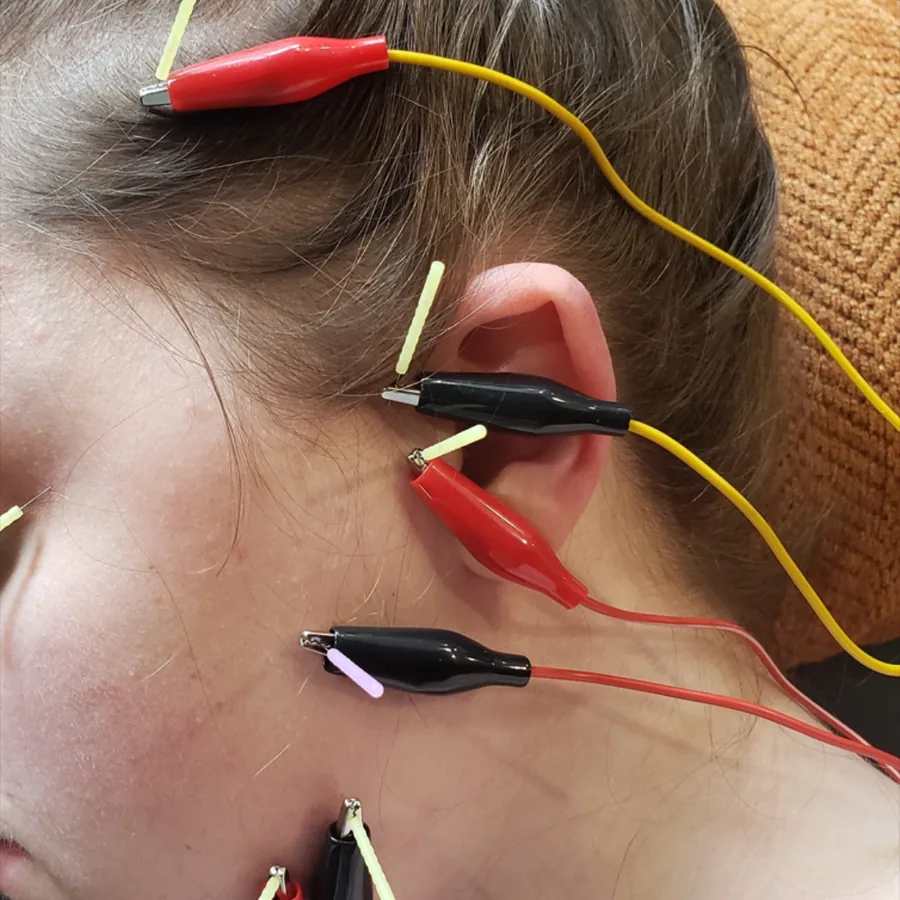
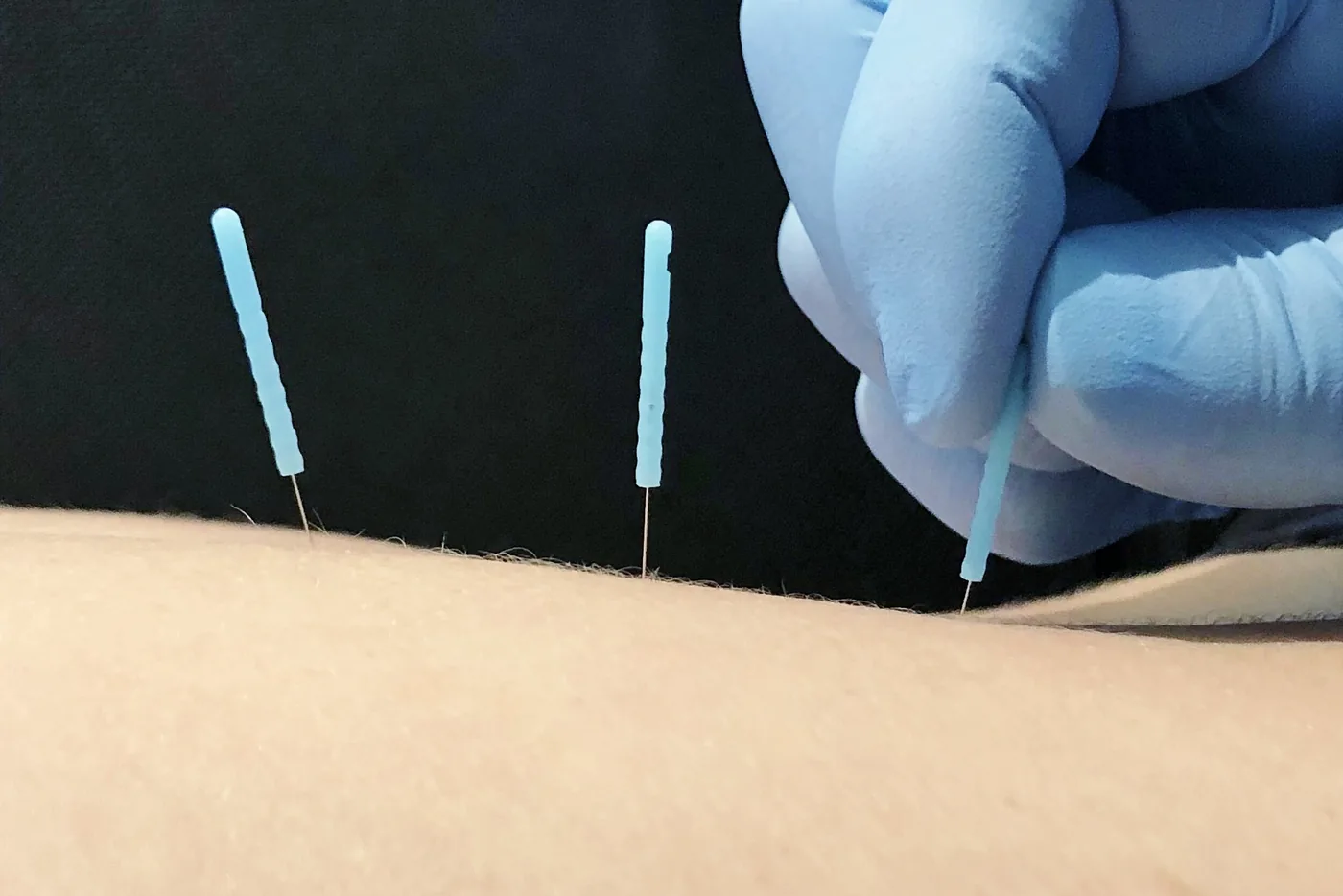
- Hands-on treatment the same hour. Where the examination supports it: spinal manipulation to restore a segment that has stopped moving, and dry needling or cupping for muscles that are guarding hard, most often the quadratus lumborum and the glutes.
- Movement you can do at home, chosen for how your back behaved in the examination, so the next three days are spent loading it, not guarding it.

Manipulation is performed in the middle of your available range, with momentum rather than force, and only after screening. If a segment is not a good candidate, you will be told and it will be treated another way.
Why the back went, and how to stop the next one
Rest and time calm almost every thrown-out back, which is why it seems to get better on its own and why it so often comes back. Rest does not change the pattern that loaded the tissue or restore the capacity you lost while being careful, so the next sock or suitcase starts it again.
So the second half of the plan is capacity. We look at where the load is concentrating, what your hips and mid-back are contributing, and how much your back can actually tolerate. A back that fails at a suitcase has a capacity problem, and the solution is graded loading until daily demands feel easy.
The typical client is seen one to two visits a week, and the plan runs until the result holds on its own. Most clients notice a change in the first two or three visits. You leave with self-mobilization and a specific program, so a bad week does not become another episode. If lifting set it off, read what “lift with your legs” really means; if the desk did, back pain from sitting all day.
Getting seen in Dallas: clinic, home or video
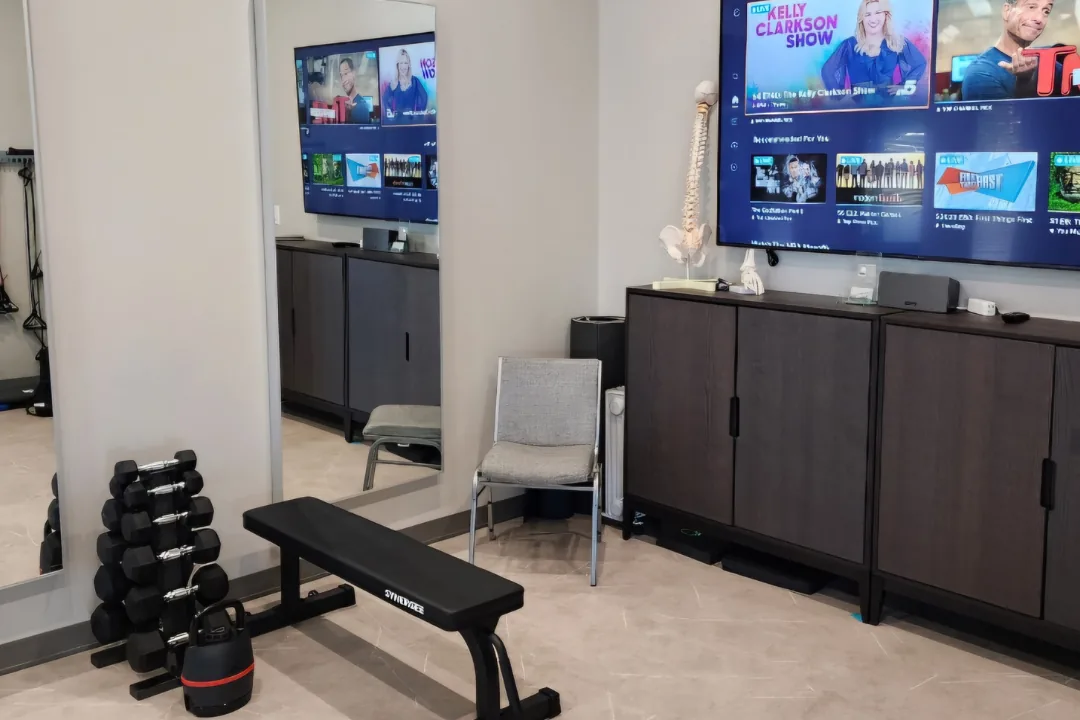
Most clients come to the clinic at 10670 North Central Expressway, Suite 110, in North Dallas, near the Park Cities and Preston Hollow. A fresh back dislikes a long car ride, so adjust the seat before you set off.
If getting in and out of a car is the hard part, visits at your home or office are available across Dallas and the surrounding areas, including Lakewood, Lake Highlands, Uptown, Richardson and Plano, for an upcharge, and the chair, bed and desk that may be part of the story are right there. Details are on the mobile physical therapy page. Telehealth sessions are offered too, useful for checking your movement plan between visits.
For a known back that flares up again, a shorter 30-minute dry needling session exists; a back that has never been examined gets the full 60-minute visit first.
Cost, insurance and how to book
- Free discovery visit: No charge — a short conversation about your back and whether this approach fits
- 6-visit pain/movement plan: $840 — six 60-minute, one-on-one visits
- 12-visit performance package: $1,560 — twelve 60-minute visits, for ongoing wellness, mobility and preventative care
- Single sessions: see sessions & packages
The practice is an out-of-network provider. You receive a superbill after every session to file with your insurance for potential reimbursement under your out-of-network benefits, and the cost is known before anything starts.
To book, call (214) 600-7762 or use the contact page. Tell us when it went, what you were doing, and whether anything travels into the leg. If your care relates to a work injury or a legal claim, or you are on Medicare, say so at first contact, because those cases have their own paperwork.
Questions people ask
Where can I get physical therapy this week in Dallas if I threw my back out?
Osteopractic Physical Therapy & Pain Relief at 10670 North Central Expressway, Suite 110, sees acute back pain by appointment with Dr. Brent Lockett, PT, DPT. No referral is needed to start, so it comes down to the calendar: call (214) 600-7762 or send a request through the contact page for the earliest available times.
Should I rest or keep moving after I throw my back out?
Keep moving within comfort, in small amounts and often. Walking is well tolerated by almost every acute back. Total rest tends to make the episode last longer.
Should I use ice or heat on a thrown-out back?
Heat rather than ice for most people, because the stiffness is largely muscle guarding.
Do I need an MRI after throwing my back out?
Usually not. Disc bulges and wear show up on scans of many people with no pain, so imaging rarely changes the plan for an ordinary acute back. It earns its place when the history or examination points beyond a mechanical problem.
Do I need a doctor's referral for physical therapy in Texas?
Not to start. Texas allows a qualifying physical therapist to treat you for up to 30 consecutive calendar days without a referral. Continuing past that requires one, and your insurer or Medicare may have separate rules.
When is a thrown-out back an emergency?
Loss of bladder or bowel control, numbness in the groin or inner thighs, or leg weakness that keeps getting worse need the emergency department the same day. Fever, unexplained weight loss or a history of cancer mean a physician first.
How do I sleep with a thrown-out back?
On your side with a pillow between the knees, or on your back with a pillow under the knees. Both keep the spine in a comfortable neutral overnight.
Can you treat a thrown-out back at home in Dallas?
Yes. Visits at your home or office are available across Dallas and the surrounding areas for an upcharge, which helps when getting in and out of a car is the hard part. Most clients come to the North Dallas clinic.