The short answer
After a car accident, a physician, urgent care or emergency room comes first: neck pain after a significant impact needs a fracture and other injuries ruled out before anyone treats it. Once you are cleared, physical therapy treats the stiffness, guarding and headaches that remain. In Dallas, Dr. Brent Lockett, PT, DPT examines whiplash one-on-one in 60-minute visits, with its own screening, hands-on treatment and gradual loading. Call (214) 600-7762.
- After a significant impact, a physician, urgent care or emergency room comes first: a fracture and other injuries are ruled out before anyone treats the neck.
- A sudden severe headache, vision, speech or balance changes, worsening weakness or numbness, or loss of bladder control mean an emergency room, not an appointment.
- In the first days, keep the neck moving gently, use ice or heat for comfort, and do not let anyone thrust on your neck until it has been cleared.
- Physical therapy starts once you are cleared: an examination with a neurological screen, upper back work, mobilization, dry needling and gradual loading.
- The practice is out of network and provides a superbill; questions about an accident claim go to your insurer or attorney.
Two days ago somebody ran into the back of your car on Central Expressway, or you braked hard on LBJ and the car behind did not. You exchanged details, drove home, and now your neck will not turn far enough to check a blind spot. There may be a headache at the base of your skull that was not there last week.
This article is for that situation: who should see you first, the signs that mean an emergency room and not an appointment, what to do in the first days, when physical therapy starts, what it involves at our North Dallas clinic, and what we can and cannot tell you about insurance and claims.
Who treats whiplash after a car accident: the short version
Whiplash is seen by more than one kind of clinician, and the order matters more than the choice. The word describes how the neck was injured, with the head thrown one way and then the other, and it says nothing about which joint, muscle or nerve is now causing the pain. Somebody has to rule out the serious injuries first. Then somebody has to find out what is left and treat it.
| Who | What they do for your neck | When |
|---|---|---|
| Emergency room | Rules out a fracture, instability, a head injury and artery or spinal cord problems; orders imaging when it is needed | The same day, if the impact was significant or any warning sign in the next section applies |
| Your physician or urgent care | Examines you, decides whether imaging is needed, and handles medication | Before any hands-on treatment, when the neck hurts after a collision |
| Physical therapist | Examines the neck and upper back with a neurological screen, treats the stiff joints and guarding muscles by hand, then rebuilds strength | Once the serious injuries have been ruled out |
| Chiropractor | Restores movement to a stiff joint with an adjustment | Only after screening; a recently injured neck should not be thrust on until it has been cleared |
| Massage therapist | Eases muscle tension for a short time | For comfort between active treatment, not as the plan |
How to read this table: go down it in order. The top two rows answer “is anything seriously injured?” and the rows below answer “why does it still hurt, and what fixes it?” Skipping the first question is the one real mistake you can make after a collision.
Our own page on neck pain treatment in Dallas puts neck pain after a significant impact or whiplash at the top of its list of reasons to seek urgent medical care. That is the starting point for everything below.
Go to the ER or a physician first if you notice any of these
Most necks that hurt after a collision turn out to be a mechanical problem. A small number are not, and they are identified by specific signs, not by how much it hurts. Call 911 or go to an emergency room if you have:
- a sudden, severe headache or neck pain unlike anything you have had before, with visual changes, dizziness, difficulty speaking or swallowing, unsteadiness or numbness around the face;
- a headache that follows a blow to the head;
- weakness or numbness in the arms or legs that is getting worse;
- symptoms in both arms, or in the legs as well, with clumsy hands or a change in how you walk;
- loss of coordination, or loss of bladder or bowel control;
- arm symptoms with chest discomfort, breathlessness or sweating.
And see a physician before any hands-on treatment if the impact was significant, even when none of those apply. A recently injured neck can have a fracture or an unstable joint, and both have to be ruled out before anyone treats it. Neck pain with fever and a stiff neck, or with unexplained weight loss, also belongs with a physician.
Severity is a poor guide here. An ordinary muscle spasm can be among the worst pain a person has, and a serious injury can present mildly. The full list, sorted by how fast to act, is in warning signs: the symptoms that mean see someone, not wait.
The first days after the collision: what to do
Once the warning signs are ruled out, the first days are about keeping the neck moving without provoking it. This is general guidance for a neck that has been checked; it does not replace an examination.
| Do this | Why it matters |
|---|---|
| Get checked first if the impact was significant or a warning sign applies | A fracture or an unstable joint has to be ruled out before anyone treats the neck |
| Keep the neck moving gently: easy turning and nodding within comfort, and a walk | Complete rest tends to stiffen a neck further |
| Ice or heat, whichever lets you move: 15 to 20 minutes at a time | Ice eases pain in the first day or two after an acute injury; heat helps guarding and stiffness. Never use either on skin that has gone numb |
| Sleep with the neck neutral | A pillow that is neither so flat that the neck bends toward the bed nor so thick that it bends the other way |
| Change position often at your desk, and put the main screen straight in front of you | Time held in one position is what an irritable neck tolerates least |
| Do not let anyone thrust or “crack” your neck yet | Recent significant neck trauma rules out neck manipulation until imaging or a physician has cleared it |
| Write down what you notice, with dates | Where it hurts, what makes it better or worse, and anything new: headache, dizziness, tingling in an arm |
How to read this table: the first row comes before all the others. If you only do two of the rest, keep the neck moving gently and write down what changes, because a symptom that is spreading or new is the thing a physician or therapist most needs to hear about.
For medication, ask your physician or pharmacist what is safe for you. And if you cannot turn your head far enough to see traffic beside you, let someone else drive until you can. More on the temperature question in ice or heat: which to use, when.
What whiplash usually leaves behind
After the serious injuries have been ruled out, what remains is usually one or more of four patterns. Each one changes the examination.
- Stiffness and guarding. The joints of the neck and upper back stop moving freely and the muscles around them switch on hard to protect the area. Turning to reverse the car becomes a whole-body movement.
- Headaches from the neck. The upper neck joints and the small muscles at the base of the skull refer pain into the head, and headaches that follow a neck injury or whiplash are one of the patterns we see. They usually start at the base of the skull and stay on one side. See headaches that start in your neck.
- Pain, tingling or numbness into the arm. This is either a nerve root or referral from a muscle, and the two behave differently: a nerve follows a defined strip, often below the elbow, and a muscle spreads over a vaguer region. The tests that separate them are in neck pain that travels into the arm.
- A vague, off-balance dizziness. The neck is full of position sensors that feed the balance system, and neck-related dizziness tends to follow whiplash or a period of neck stiffness. New dizziness after a collision is something a physician hears about first; what physical therapy does for it afterward is in vertigo and balance physical therapy.
None of these is a diagnosis you can make from a list. They are the reason the first visit is an examination and not a routine.
When physical therapy starts, and what the first visit examines
Physical therapy starts once the injuries that need a physician have been ruled out. There is no reason to wait for the pain to go first: problems seen at three weeks take fewer sessions than the same problems seen at three months, because by then there is deconditioning and avoidance on top of the original issue.
Tell us about the accident when you first call or write. Whiplash has its own considerations and its own screening, and it changes what is examined and how early loading is introduced.

Every visit is 60 minutes, one-on-one with Dr. Lockett. After a collision the first hour usually runs like this:
- The history. How the collision happened, what you felt then and since, who has already examined you and what they found. Bring any imaging report or discharge paperwork you were given.
- The screening questions. The warning signs above, your general health and your medication. If anything in the answers belongs with a physician, that is where you are sent, and you are told at this visit.
- The examination. A full cervical and thoracic examination including neurological screening: reflexes, strength and sensation where anything travels into an arm.
- Treatment the examination directs, in the same hour, at a level the neck tolerates.
- Homework. Movement you can do between visits, chosen for how your neck behaved on the table.
Differential diagnosis is part of Dr. Lockett’s post-doctorate osteopractic training, so “this needs a physician or imaging first” is an answer you can be given at the first visit.
How whiplash is treated here once you are cleared
The tools are the same ones used for other neck pain. What a collision changes is the order and the pace.
- The upper back first. A stiff mid-back forces the neck to produce every turn by itself. Freeing the thoracic spine and ribs often improves neck range without touching the sore area at all.
- Mobilization. The same idea as manipulation, delivered slowly, within range and under your control.
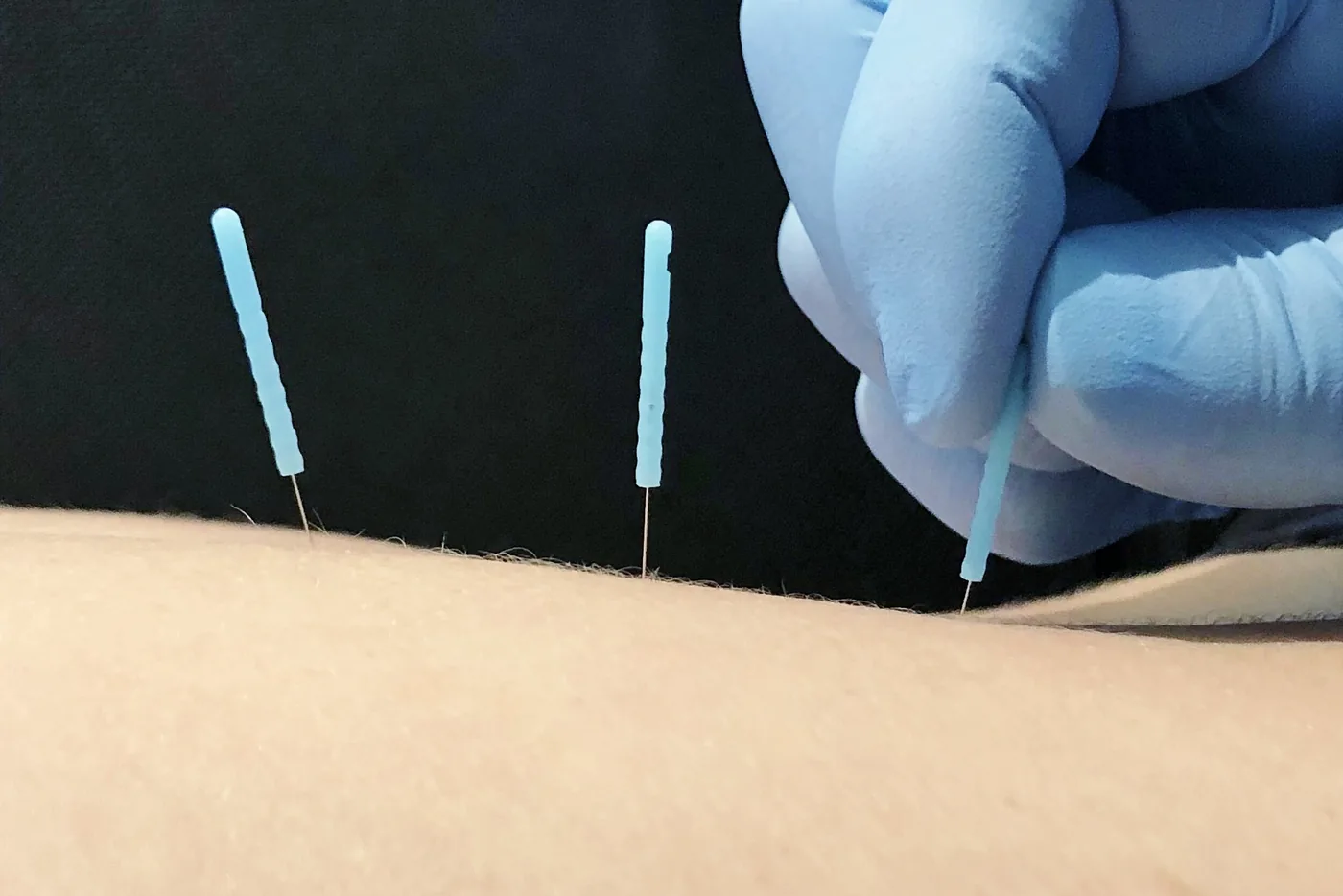
- Dry needling for the muscles that are guarding, most often the upper trapezius, levator scapulae and suboccipitals. A fine, sterile needle is used and nothing is injected. We do not needle into an area of reduced sensation.
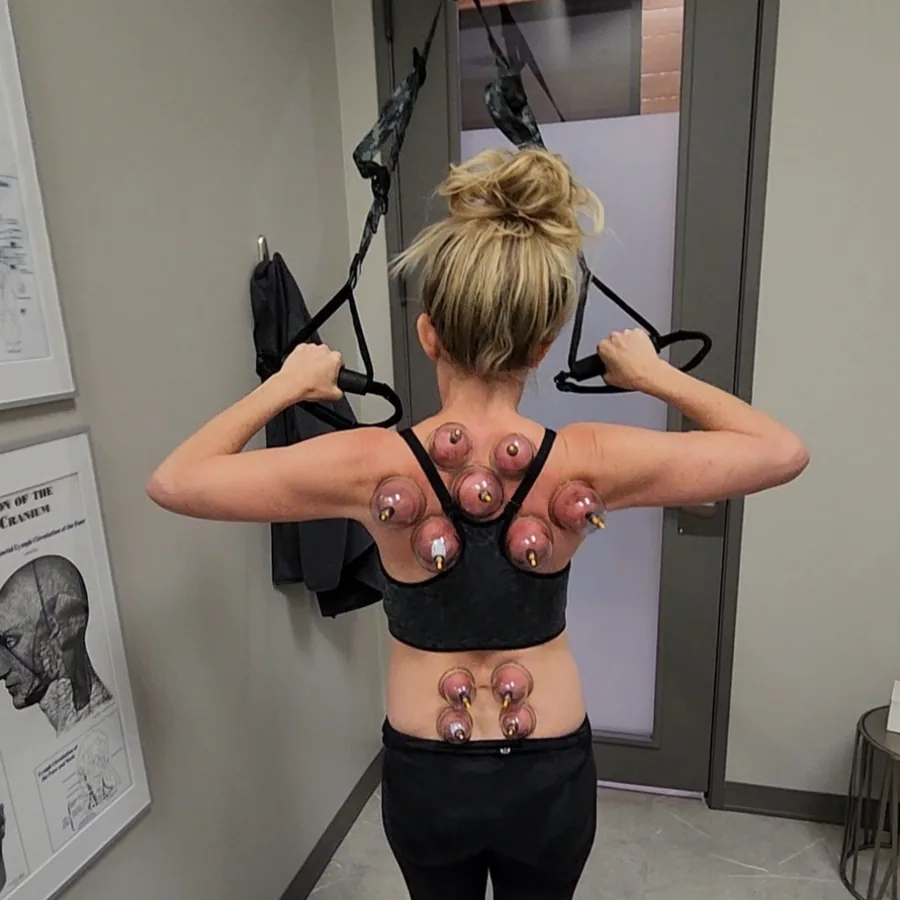
- Cupping over the upper back and shoulders, for anyone who would rather not be needled.
- Loading. Strength for the deep neck muscles and the shoulder blades, started when the neck is ready for it. After whiplash that timing is decided by the examination, not by a calendar.
What about neck manipulation? Recent significant neck trauma, a suspected fracture or instability rule it out until imaging or a physician has cleared the neck. After that the examination decides, and it is used here considerably less often than training would permit: a small, fast thrust to one joint in the middle of your range, never forced to the end. If you would rather not have it, the tools above cover most of the same ground. The risk and the screening are explained in is neck manipulation safe, and the technique on the spinal manipulation page.
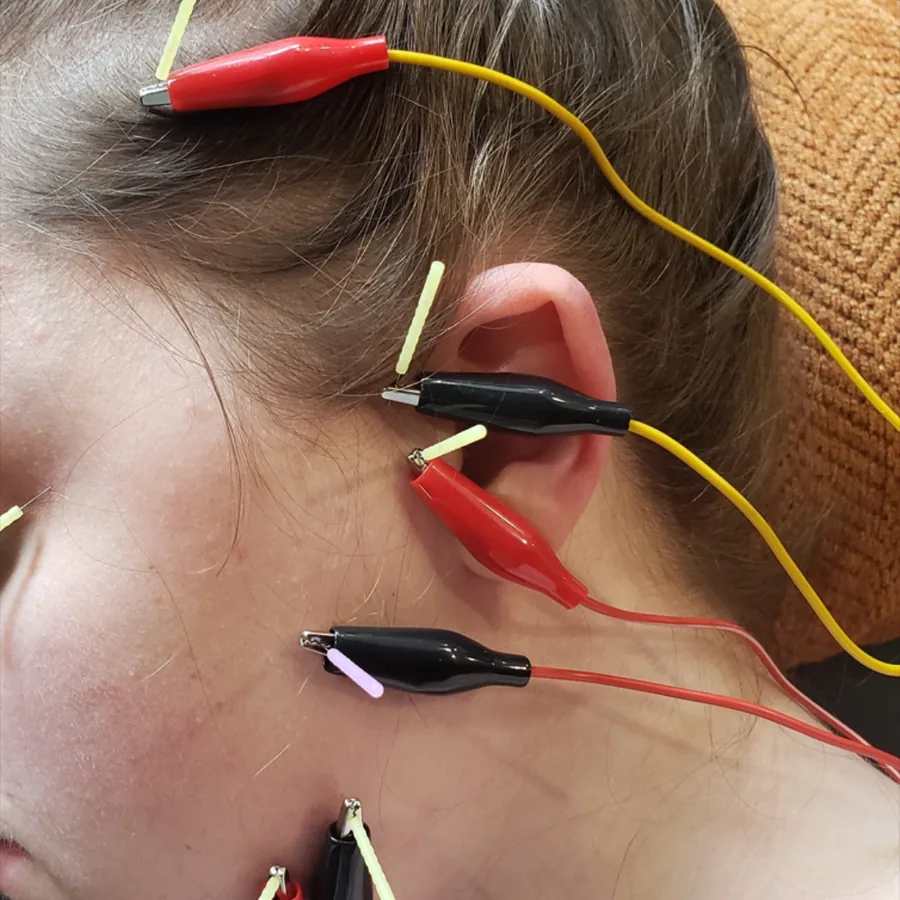
What needling feels like and which muscles it reaches are covered in dry needling for neck pain.
How long it takes
Nobody can give you an honest number before examining you, and we do not quote one over the phone. What we can tell you is how progress is judged and what the usual pace of each pattern is.
- The plan: the typical neck client is seen one to two visits a week, until the result holds between visits.
- Range: for neck pain in general, range usually changes in the first session. After a collision the early visits are gentler, so the movement you could not do is retested at each visit to see whether it is moving in the right direction.
- Headaches: most people have a clear sense within the first two or three sessions whether the neck is the source. How often the headaches come usually changes before how bad they are.
- Arm symptoms: muscle referral often changes within two or three sessions. A nerve root is slower, weeks to a few months, and the marker is the symptoms retreating up the arm.
The sign that something needs to change is the opposite: symptoms spreading further down the arm, weakness appearing, or nothing measurable changing after six weeks of a properly conducted plan. Then the assessment is widened or you are referred on. The other routes, including medication, injections and imaging, are set out in neck pain treatment: what each option does.
Who treats whiplash well in Dallas: what to look for
Whoever you choose, these are the things that matter for a neck that has been through a collision:
- They ask about the accident and who has examined you before they touch your neck.
- They screen before they treat, and can tell you what would make them send you to a physician.
- They examine the neck and the upper back with a neurological screen, not a five-minute check before a machine.
- They have more than one tool, so a neck that should not be manipulated yet still gets treated.
- They load it, at the right time, so the result holds after the visits stop.
That is how neck pain after a collision is handled at Osteopractic Physical Therapy & Pain Relief. Dr. Brent Lockett, PT, DPT holds a Diploma in Osteopractic and is certified in spinal manipulation and dry needling. Every visit is 60 minutes, one-on-one, never handed to an aide, and the screening, the hands-on work and the exercise happen in the same hour with the same person.
Insurance, claims and attorneys: what we can tell you
Here is what we can say about payment, and where our knowledge stops.
- How you pay here. The practice is an out-of-network provider. You pay directly and receive a superbill after every session to file with your insurance for potential reimbursement.
- What a claim covers. Whether an auto policy, the other driver’s insurer or a settlement pays for physical therapy is a question for your insurer or your attorney. We cannot answer it for you, and nothing on this page is legal advice.
- If a claim is open. If your care relates to an active legal claim, or the collision happened at work, say so at the first contact. Those cases have their own paperwork, and in some of them the right answer is that another provider is better set up for it. It is better to know that in the first phone call.
None of that should delay the medical part. Getting checked comes first, whatever happens with the paperwork.
Cost, referral and where you are seen
- Free discovery visit: No charge — a conversation about your neck, the accident and whether this approach fits
- 6-visit pain/movement plan: $840 — six 60-minute, one-on-one visits, designed to reduce pain, restore movement and build strength
- 12-visit performance package: $1,560 — twelve 60-minute visits, for ongoing wellness, mobility and preventative care
- Single sessions: see sessions & packages
Packages are tailored after the examination, not before it, and nobody is sold a block before a plan exists.
No referral is needed to start: Texas allows up to 30 days of treatment without one, and continuing past that needs a referral. After a significant impact we still want a physician to have examined you first, for the reasons above. The full rule is in do you need a referral for physical therapy in Texas.
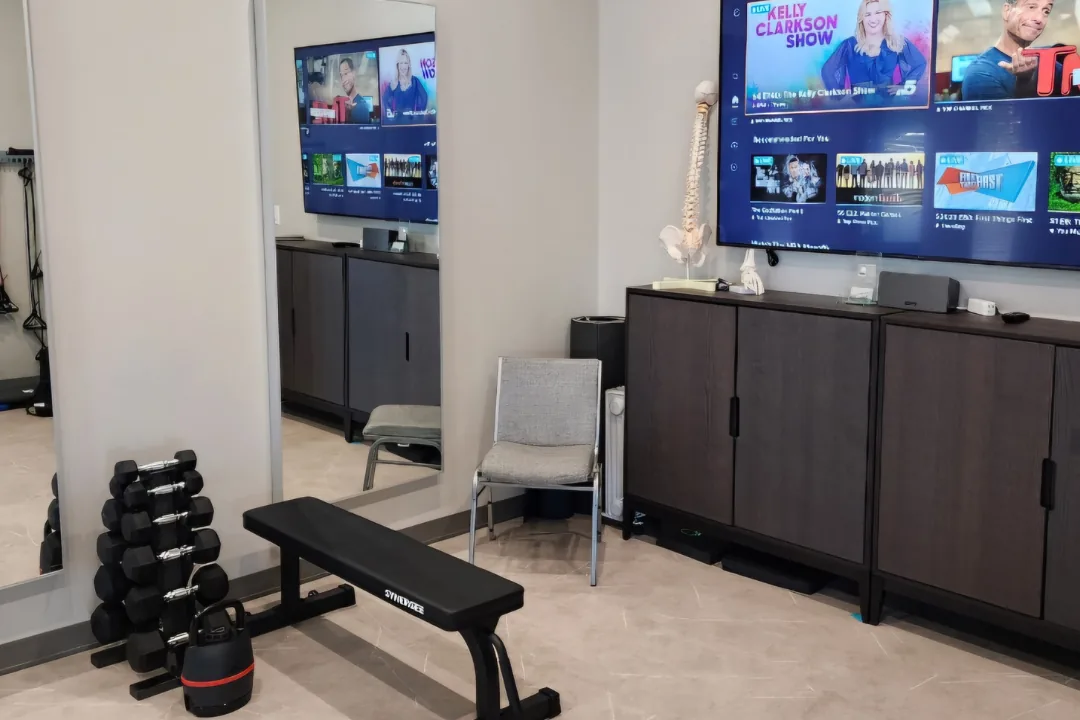
Most clients come to the clinic at 10670 North Central Expressway, Suite 110, in North Dallas. If driving is the hard part while your neck will not turn, visits at your home or office are available across Dallas and the surrounding areas for an upcharge, and telehealth sessions are offered for checking the program between visits. Call (214) 600-7762 or book a free discovery visit, and bring any report from the emergency room, urgent care or your physician.
Questions people ask
Who can treat whiplash and neck pain after a car accident in Dallas?
A physician, urgent care or emergency room first, to rule out a fracture and other injuries. After that, a physical therapist treats what remains. At Osteopractic Physical Therapy & Pain Relief in North Dallas, Dr. Brent Lockett, PT, DPT examines and treats whiplash one-on-one in 60-minute visits. Call (214) 600-7762.
Should I go to the ER for neck pain after a car accident?
Yes, if the impact was significant or you have a sudden severe headache, vision, speech or balance changes, weakness or numbness that is getting worse, symptoms in both arms or the legs, or loss of bladder or bowel control. Neck pain after a significant impact needs medical care before therapy.
When should I start physical therapy after whiplash?
Once the injuries that need a physician have been ruled out. There is no need to wait for the pain to go first. Tell us about the accident at first contact, because it changes what is examined and how early loading is introduced.
Can a physical therapist treat whiplash without a referral in Texas?
No referral is needed to start. Texas allows up to 30 days of treatment without one, and continuing past that needs a referral. After a significant impact, see a physician first anyway so a fracture and other injuries are ruled out.
Is it safe to have my neck adjusted after a car accident?
Not until it has been cleared. Recent significant neck trauma, a suspected fracture or instability rule out neck manipulation until imaging or a physician has checked the neck. Mobilization, upper back work and dry needling treat the neck in the meantime.
How long does whiplash take to get better?
There is no honest number before an examination. The typical neck plan is one to two visits a week until the result holds. Muscle-driven symptoms often change within two or three sessions; an irritated nerve root takes weeks to a few months.
Can whiplash cause headaches or dizziness?
It can. The upper neck refers pain into the head, and neck-related dizziness tends to follow whiplash or neck stiffness. A new headache or dizziness after a collision should be checked by a physician first; the neck is then examined as a source.
Do you bill car insurance or work with my attorney?
The practice is out of network: you pay directly and receive a superbill after every session. Whether an accident claim covers it is a question for your insurer or attorney. If a legal claim is open, tell us at first contact, because those cases have their own paperwork.
Should I use ice or heat on my neck after an accident?
Ice eases pain in the first day or two after an acute injury, and heat helps guarding and stiffness. Use whichever lets you keep moving, 15 to 20 minutes at a time, and never on skin that has gone numb.