The short answer
For most neck pain without warning signs, start with an examination and physical therapy that combines hands-on treatment (manual therapy, mid-range manipulation, dry needling or cupping) with strength work for the neck and upper back. Medication, injections, imaging and surgery come later, when the examination or a lack of progress points that way. Red flags go to a physician first.
- For ordinary neck pain, start with an examination and physical therapy that pairs hands-on treatment with strength work.
- Manipulation, dry needling, cupping and massage open a window; exercise and desk changes are what keep the neck moving.
- Medication and injections can calm a bad stretch but build no strength; imaging and surgery are for specific findings.
- Impact, fever with a stiff neck, progressive weakness or numbness, or a sudden severe headache go to a physician first.
- No referral needed to start: Texas allows up to 30 days of treatment without one.
By the time most people search for neck pain treatment in Dallas, they have already tried something. A massage that helped until Tuesday. A chiropractor whose adjustment felt great for a day. Ibuprofen, a heating pad, a new pillow. Maybe a physician has mentioned an MRI, an injection or a surgical opinion. Every one of those is offered as the answer, and none comes with a map of how it fits with the others.
This article is that map: what each option does to a neck, who it suits, when a physician comes first, how to choose who to see in Dallas, and what to do while you wait.
Where to start: the short version
For ordinary neck pain, the order that tends to work is: examination, hands-on treatment to get the neck moving, strength and desk changes to keep it moving, and escalation only when needed. Ordinary here means stiffness, ache and limited turning that build through the day, often with tight upper shoulders or a headache at the base of the skull, and none of the warning signs in the next section.
Most desk-related neck pain is a load and capacity problem, not damage. That matters for the choice of treatment. If the problem is how long your head spends forward of your shoulders, how little your mid-back moves and how much capacity the deep neck muscles have, then the options that change load and capacity tend to help for longer than the options that only reduce how much it hurts today.
When neck pain needs a physician first
Some neck pain is not a therapy problem at all. Our neck pain treatment in Dallas page lists the situations where you should seek urgent medical care rather than book a physical therapy visit:
- Neck pain after a significant impact or whiplash
- Neck pain with fever and a stiff neck
- Progressive weakness or numbness in the arms or legs
- Loss of coordination or bladder control
- Unexplained weight loss
- A sudden severe headache with neck pain
Add to that a sudden headache or neck pain unlike anything you have had before with visual changes, dizziness, difficulty speaking or swallowing, unsteadiness or numbness around the face. That pattern rules out neck manipulation and needs urgent medical assessment, as explained in is neck manipulation safe. Left arm symptoms with chest discomfort, breathlessness or sweating are a heart question until proven otherwise: call emergency services.

These are uncommon, and screening for them is part of every first examination here.
Every option at a glance
Here is what each route does for a neck, who it fits, and where it stops:
| Option | What it does | Best fit | Limits |
|---|---|---|---|
| Physical therapy with manual therapy | Examines the neck and upper back, treats the stiff joint and guarded muscle by hand, then loads the new range | Most mechanical neck pain, desk-related stiffness, neck-driven headaches | Takes a plan, not one visit; needs your part between visits |
| Mid-range manipulation | A small, fast thrust to one stiff joint in the neck or mid-back, in the middle of your range, never forced to the end | A neck or mid-back that feels stuck rather than simply sore | Only after screening; on its own the effect fades |
| Dry needling | A fine needle releases a trigger point in the upper trapezius, levator scapulae or suboccipitals | One-sided tightness that massage never changes for long; headaches with a stiff neck | Opens a window that still has to be trained |
| Dry cupping | Suction lifts skin, muscle and fascia over a stiff upper back and shoulders | Neck and upper back tension; anyone who would rather not be needled | Marks for a few days to a few weeks; not a whole plan |
| Exercise and strength | Builds the deep neck flexors, shoulder blade control and mid-back mobility | Everyone, once the neck is calm enough to load | Slow if it is generic or never progressed |
| Massage | Eases muscle tension for a short time | Feeling better between active treatment | Relief tends to last a day or two |
| Chiropractic adjustment | Restores movement to a stiff joint quickly | A stuck segment, when screening allows it | On its own leaves the muscle, mid-back and strength untouched |
| Medication | Reduces pain for some people | A short course to make a bad week tolerable, as your physician advises | Builds no strength and changes no load |
| Injections | Medication placed at an irritated nerve root, joint or trigger point by a physician | Pain too severe to start moving | Relief is often partial and temporary |
| Imaging (X-ray, MRI) | Shows structure | Red flags, trauma, progressive weakness, or a picture that does not fit | Wear on a scan is common in pain-free necks and explains little |
| Surgery | Treats specific structural and nerve problems | Progressive weakness, cord signs, or nerve pain that conservative care has not changed | Not the first step for ordinary neck pain |
How to read this table: read the Limits column first. It explains why trying one option after another so often ends with the same neck. The rows near the top change how the neck moves and copes with load; the rows near the bottom are for specific findings, which is why an examination decides when you move down the list.
Hands-on options: manual therapy, manipulation, needling and cupping
Manual therapy is treatment with the clinician’s hands: joint manipulation and mobilization, soft tissue and instrument-assisted work. The movement that hurts is tested before and after, so you can see whether it did anything. See manual physical therapy.
Manipulation here is a specific, low-amplitude, momentum-induced thrust applied to one joint, performed in the middle of your available range and never at the end of a range you cannot control. Guarding drops and range usually improves within seconds. Neck manipulation is used only after screening, and often the mid-back is treated instead of or before the neck. If you would simply rather not, mobilization, needling and loading cover a great deal of the same ground. More on spinal manipulation in Dallas.
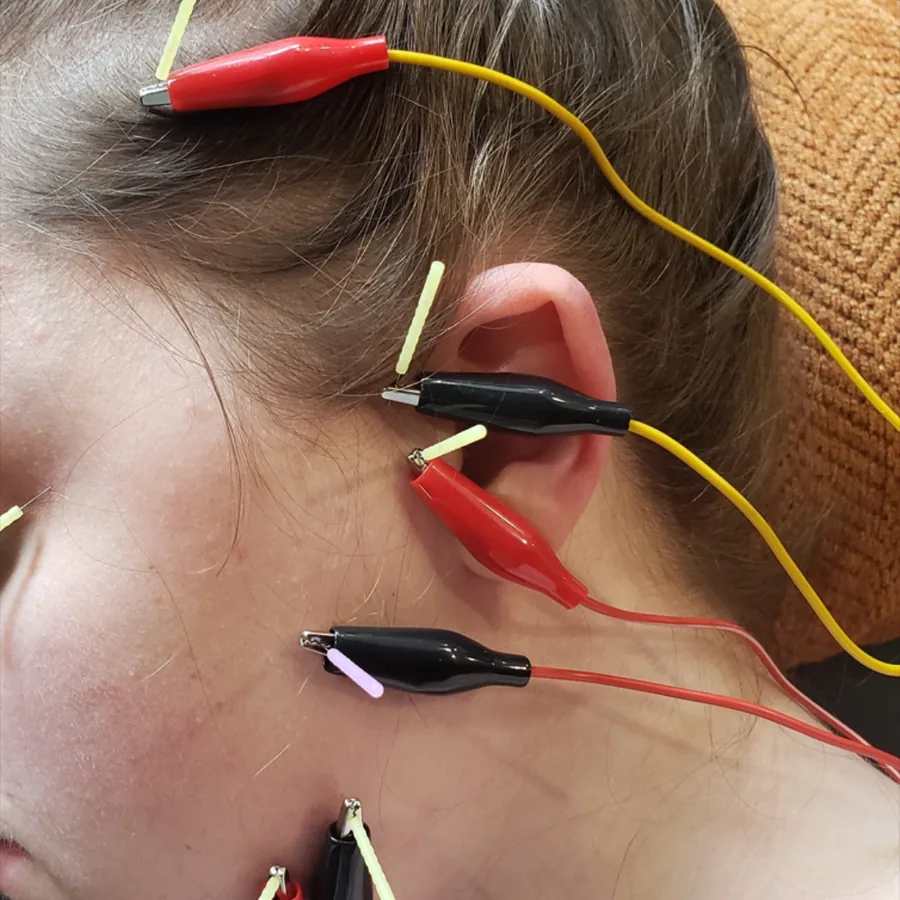
Dry needling places a fine, sterile, single-use needle into a trigger point. Nothing is injected. In the neck it is most often the upper trapezius, which refers pain up the side of the neck and behind the eye, the levator scapulae, which makes reversing the car hard, and the suboccipitals at the base of the skull. Mild soreness for 24 to 48 hours is normal. See dry needling.
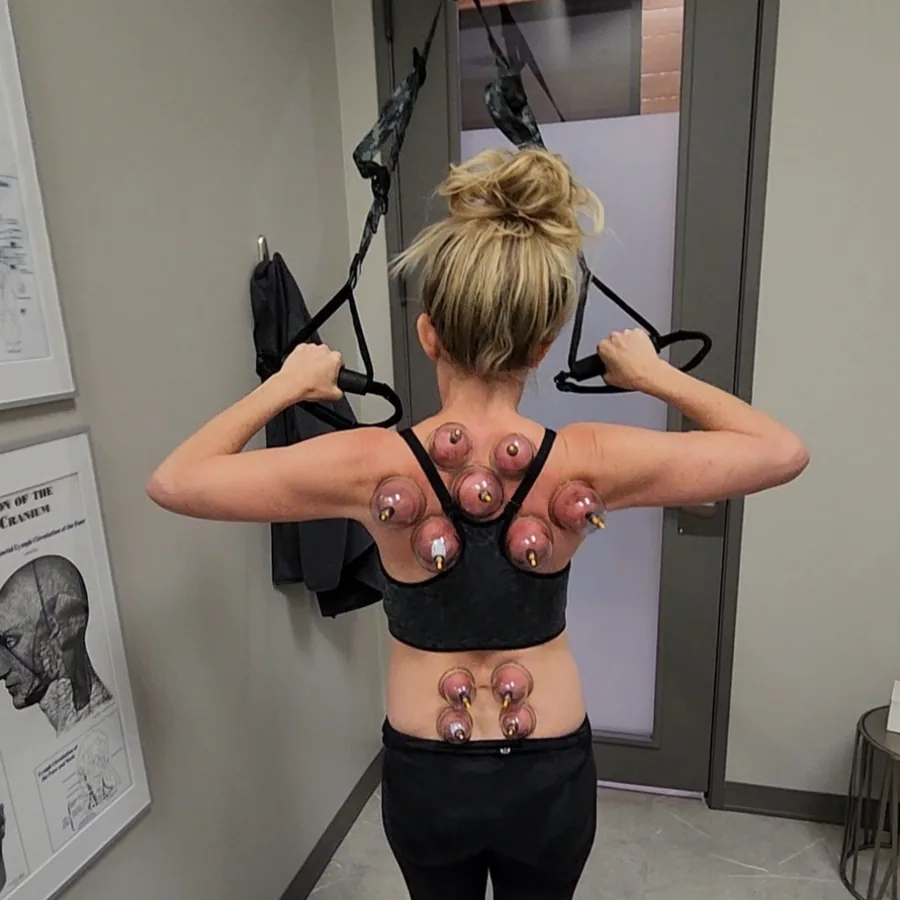
Dry cupping lifts tissue instead of pressing on it, which is why it reaches restrictions that massage keeps skating over. It is often used on the upper back and shoulders, sometimes with movement while the cups are on. The circular marks last a few days to a few weeks. See dry cupping.

None of these four is the whole answer. Each opens a window of easier movement that still has to be trained.
Exercise and strength: the part that makes it hold
A neck that can hold itself up is a neck that stops complaining. The work that gets it there is specific: the deep neck flexors that hold the head over the shoulders, the muscles that control the shoulder blades, and mobility in the mid-back so the neck stops doing two jobs.
Timing and dose matter. Chin tucks have a real role, but done into an irritable neck at the wrong stage they flare it, which is why so many people conclude they do not work. The order is usually range and comfort first, then capacity.
A sheet of stretches that is never progressed stops changing anything. Every visit here ends with loaded movement and homework, so the change holds when you are back at the desk.
Massage, chiropractic, medication and injections
Massage feels good and can calm a flare-up. It works through the skin and cannot reach a trigger point under several layers of muscle, so if the tightness is back within a day, the cause is deeper. It is a reasonable way to feel better between active sessions. See cupping vs. massage.
Chiropractic adjustments restore movement to a stiff joint. The difference is what follows: on its own, an adjustment leaves the guarding muscle, the stiff mid-back and the weak deep neck flexors where they were. An osteopractor is a physical therapist with post-doctorate training in manipulation, dry needling and instrument-assisted therapy, so the thrust sits inside a rehabilitation plan. See physical therapist or chiropractor.
Medication can reduce pain and help you sleep through a bad week. No pill builds strength or changes how the neck is loaded, so when it stops the reason for the pain is usually still there. Motion beats medication, but any change to a prescribed medication is a decision for the clinician who prescribed it. See physical therapy instead of pain medication.
Injections are medical procedures given by a physician, placing medication near an irritated nerve root, a small spinal joint or a trigger point. Relief is often partial and temporary. Used well, an injection opens a window when pain is too severe to start moving, and that window is best spent on strength and movement work.
Imaging and surgery: when they are the right conversation
Degenerative changes on a neck scan are extremely common in people with no pain at all, and they match symptoms poorly. A scan is one input, not the explanation. Imaging is requested when the history or examination suggests it would change the plan: red flags, trauma, progressive weakness, or a picture that does not fit a mechanical pattern.
Surgery has a clear role in specific situations: weakness that keeps getting worse, symptoms in both arms or in the legs with unsteadiness or clumsy hands, loss of bladder or bowel control, certain structural problems, and nerve pain that has not changed with a proper course of conservative care. Those decisions belong to your physician and surgeon.
For ordinary neck pain, surgery is not the first step. Even nerve pain into the arm, cervical radiculopathy, mostly improves without surgery. If you have pain, numbness or tingling traveling down the arm, read neck pain into the arm: nerve or muscle before your visit. Trying physical therapy first rarely closes a door, and good strength helps recovery if you do have an operation; see physical therapy before orthopedic surgery.
How to choose who to see in Dallas
Dallas has chiropractors, massage studios, pain practices and physical therapy clinics on every corner. A few questions sort them quickly.
- Who examines you, and for how long? A neck needs a cervical and upper back examination with a neurological screen, not a five-minute check-in before a machine.
- Do they screen before they manipulate? Ask what they found that makes a technique right today, and what would make them not use it. A vague answer usually means vague screening.
- Is there more than one tool? A clinic that only adjusts, only massages or only hands out exercises will fit your neck to its tool.
- What happens after the hands-on part? Loading and homework, or another appointment next week for the same thing?
- Do they look at your desk? An hour of treatment against nine hours of the position that caused it is not a fair fight.
The clinic is at 10670 North Central Expressway, Suite 110, on the edge of Preston Hollow and a few minutes from the Park Cities. Home and office visits across Dallas are available for an added fee, and live video sessions are offered too.
What a first visit here looks like
Every visit is 60 minutes, one-on-one with Dr. Brent Lockett, PT, DPT, Cert. DN, Cert. SMT, Diploma in Osteopractic, never handed to an aide.
- What your neck will not do. Turning to check traffic on Central Expressway, looking at the second monitor, sleeping on one side. That becomes the movement we retest.
- The examination. A full cervical and thoracic examination with neurological screening: whether this is mechanical neck pain, a headache generator, nerve root involvement, or something that belongs with a physician.
- Treatment the exam directs. Manipulation, needling or cupping as indicated, for the neck, the mid-back or both.
- Retest and load. The same movement is checked again, then trained with loaded exercise in the same hour.
- Homework and the desk. Self-mobilization, specific exercise, and the workstation, phone and pillow changes that stop the gains being undone every day.
The typical plan is one to two visits a week until the result holds. You get an honest estimate after the examination, not before it.
Not sure yet? The free discovery visit is a no-cost, no-obligation conversation first.
What you can do at home while you wait
General steps for ordinary neck pain without warning signs; they do not replace an examination.
- Keep moving. Gentle turning and nodding within comfort, and a walk. Complete rest tends to stiffen a neck further.
- Break up the position. Time in one position, not a single movement, is what usually produces desk-related neck pain. Get up and change position regularly; there is no perfect posture, only a limit to how long any posture should be held.
- Face your screen. Put the monitor you use most directly in front of you at a height you can see without craning, instead of turning to a second screen all day. Our guide to a desk setup that reduces neck pain walks through it.
- Take the phone off your shoulder. Use a headset or speaker for long calls.
- Sleep with the neck neutral. A pillow that is neither so flat that the neck bends toward the bed nor so thick that it bends the other way.
If symptoms spread down the arm, weakness appears or a red flag shows up, get it seen.
Cost, referral and how to start
- Free discovery visit: no charge, no obligation.
- Single session: 60 minutes, one-on-one; see sessions & packages.
- 6-visit pain/movement plan: $840.
- 12-visit performance package: $1,560.
Packages are a discounted way to pay, not a prediction. The practice is out of network; a superbill after each session lets you file for possible reimbursement.
No referral needed to start: Texas allows up to 30 days of treatment without a referral, and the full rule is in do you need a referral in Texas. Call (214) 600-7762 or book a free discovery visit, and bring the one movement your neck has been stopping you from doing.
Questions people ask
What is the best neck pain treatment in Dallas?
For most neck pain without warning signs, an examination followed by physical therapy that combines hands-on treatment with strength work. At Osteopractic Physical Therapy & Pain Relief in North Dallas, Dr. Brent Lockett, PT, DPT combines mid-range manipulation, dry needling or cupping with loaded exercise in 60-minute one-on-one visits.
Should I see a chiropractor or a physical therapist for neck pain?
Both can restore movement to a stiff joint. The difference is what follows: a physical therapy plan pairs hands-on work with strength for the deep neck muscles and upper back, and with desk changes, which is what keeps the improvement.
Do I need an MRI for neck pain?
Usually not at the start. Wear on a neck scan is common in people with no pain. Imaging makes sense after trauma, with progressive weakness or numbness, other red flags, or when the picture does not fit a mechanical pattern.
Is neck manipulation safe?
In trained hands and after proper screening, yes for most people, and the serious risk is rare rather than zero. Manipulation here is mid-range, never end-range, and you can always choose mobilization, needling or loading instead.
When should neck pain be seen by a doctor right away?
After a significant impact or whiplash, with fever and a stiff neck, with progressive weakness or numbness in the arms or legs, loss of coordination or bladder control, unexplained weight loss, or a sudden severe headache.
Can neck pain be treated without medication?
Often, yes. Hands-on treatment and strength work address load and capacity, which medication does not. Any change to a prescribed medication should be discussed with the physician who prescribed it.
How long does neck pain treatment take?
Range usually changes in the first session. Whether it holds depends on the loading and the desk changes. The typical plan is one to two visits a week until the result holds, with an honest estimate after the examination.
Do I need a referral for physical therapy for neck pain in Texas?
No referral is needed to start. Texas allows up to 30 days of treatment without a referral. Some insurance plans set their own rules for reimbursement.