The short answer
No, dry needling is not the same as acupuncture. They use the same needle and almost nothing else. Acupuncture places needles along meridians drawn from traditional Chinese medicine. Dry needling places them in a specific muscle identified by an orthopedic examination, to release a trigger point that is driving your pain. In Dallas, acupuncture is usually done by a licensed acupuncturist and dry needling by a physical therapist with dry needling training.
- Same needle, different reasoning: acupuncture works from meridian theory, dry needling from musculoskeletal anatomy and an orthopedic exam.
- The needle usually goes where the problem is, not where the pain is.
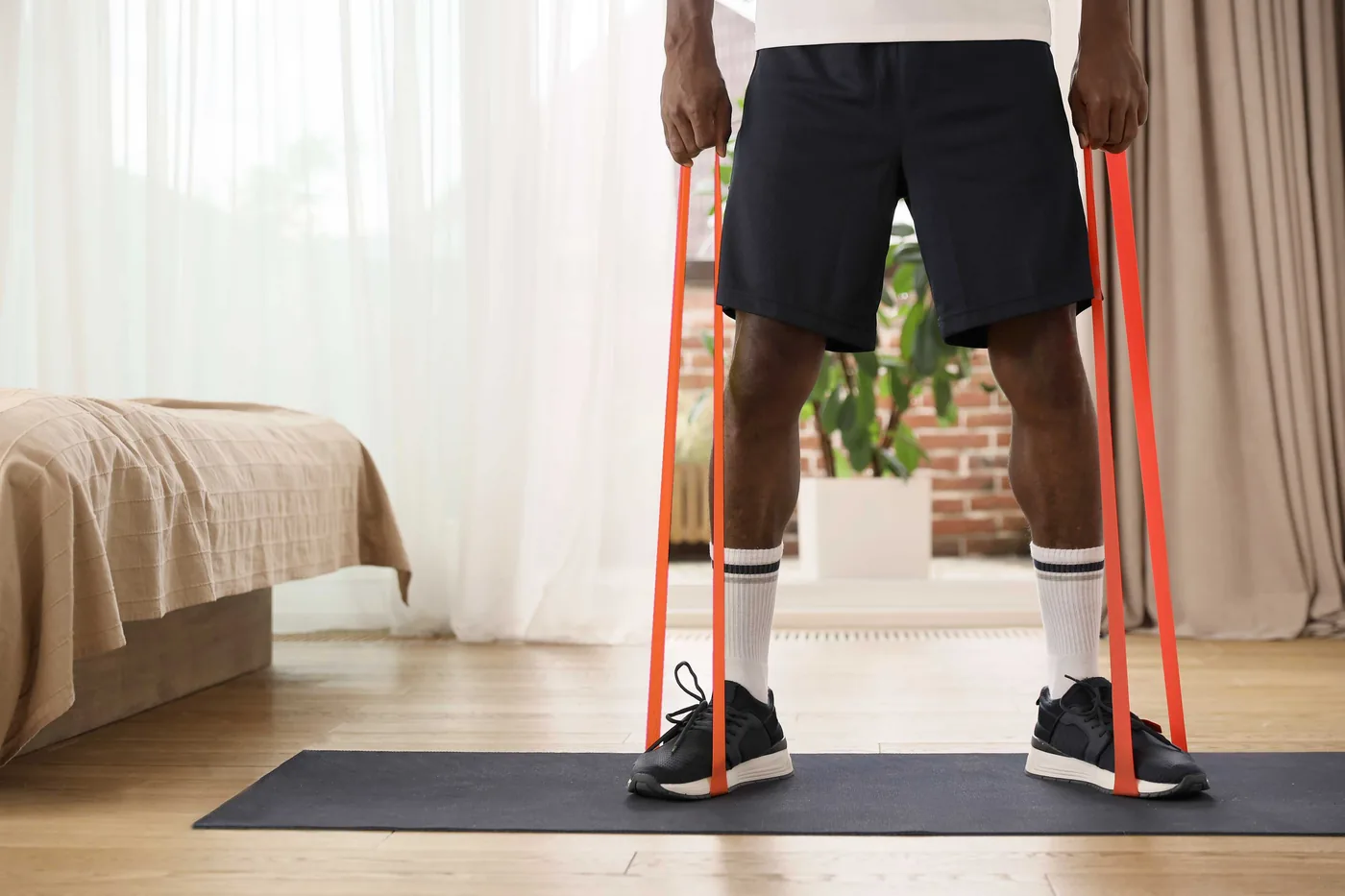
- Release without loading does not last — that is why needling is paired with manipulation and exercise here.
- Mild soreness for a day or two afterwards is normal and expected.
This is the question I get asked more than any other, usually about four seconds after somebody sees the needles come out of the package. It is a fair question, and the answer matters more than most people expect — because the difference is not the tool, it is how the target gets chosen.
The needle is the same. The reasoning is not.
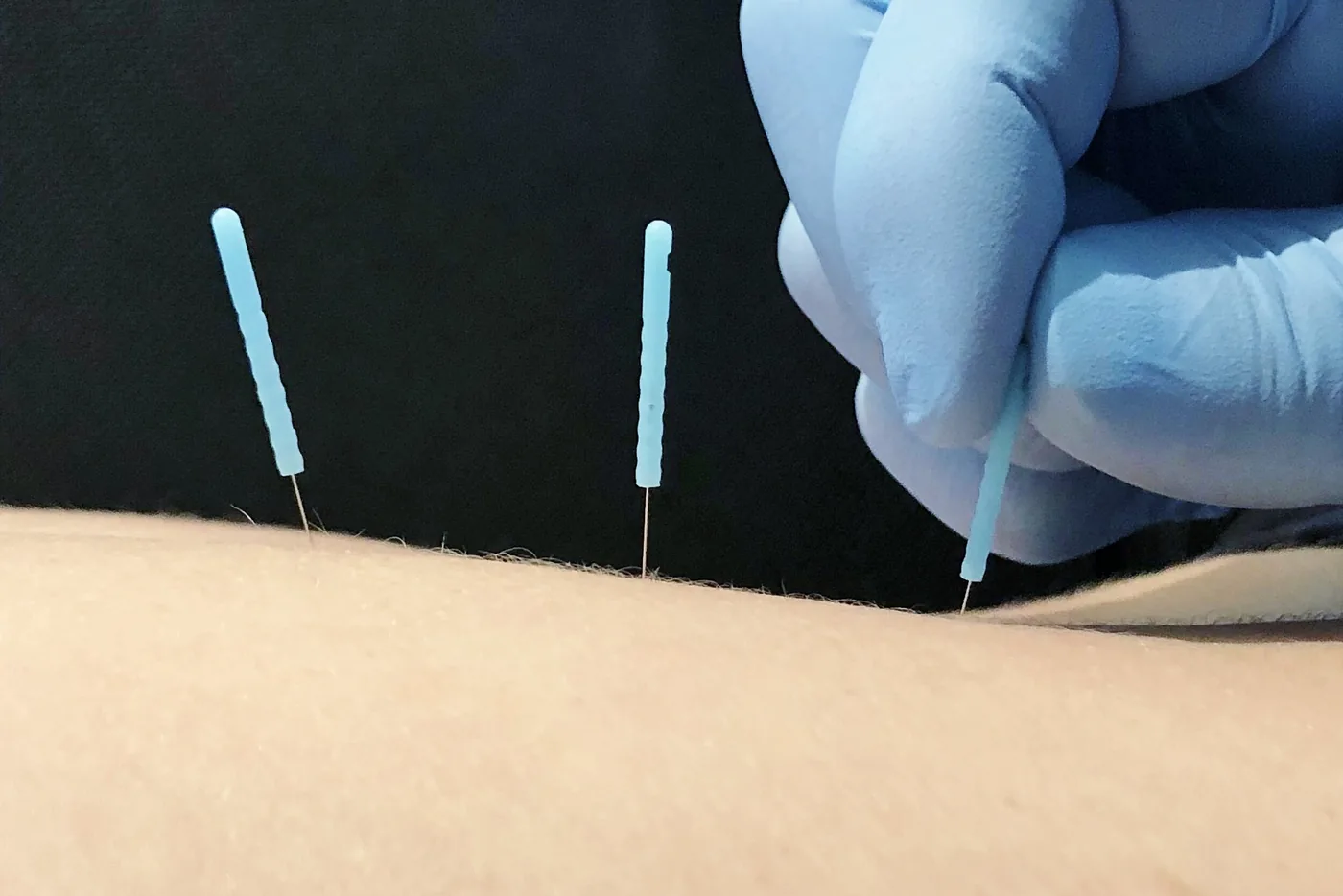
Both techniques use a fine, sterile, single-use microfilament needle. Nothing is injected. There is no medication. The needle itself is the entire intervention.
What separates them is how a practitioner decides where that needle goes. Acupuncture comes out of traditional Chinese medicine and works from a system of meridians and points developed over centuries of practice. Dry needling comes out of Western musculoskeletal medicine and works from anatomy: a specific muscle, tendon or ligament that an orthopedic examination has identified as the source of your symptoms.
So two practitioners can put a needle in almost the same square inch of your shoulder and be doing genuinely different things for genuinely different reasons.
| Acupuncture | Dry needling | |
|---|---|---|
| Where it comes from | Traditional Chinese medicine | Western anatomy and musculoskeletal medicine |
| How the spot is chosen | Meridians and traditional points, guided by the practitioner’s assessment | An orthopedic exam that finds the muscle reproducing your pain |
| Who does it in Texas | Licensed acupuncturists (L.Ac.) and some physicians | Physical therapists with dry needling training |
| What is targeted | Points along meridians, often in several areas of the body | Trigger points and tight bands in specific muscles |
| How it usually feels | A dull ache or heaviness near the needle; many people find it calming | Often a brief muscle twitch, then soreness for a day or two |
| What it is used for | Pain and a wide range of wellness goals | Muscle and joint pain, as one part of a physical therapy plan |
How to read this table: the needle is the only row where the two match. If your goal is a specific muscle or joint problem that limits how you move, dry needling inside a physical therapy plan fits. If your goal is broader, a licensed acupuncturist is the right person to ask.
What I am actually aiming at
A myofascial trigger point — the hard, irritable band in a muscle that hurts when you press it and, more importantly, refers pain somewhere else. That referral pattern is the useful part. A trigger point in the upper trapezius sends pain up the side of the neck and behind the eye. One in the gluteus minimus sends it down the leg convincingly enough to be mistaken for sciatica.
That is why the spot I needle is frequently not the spot that hurts. If you come to me with pain at the outside of your elbow, there is a good chance a fair amount of the session happens in your forearm and your shoulder blade.
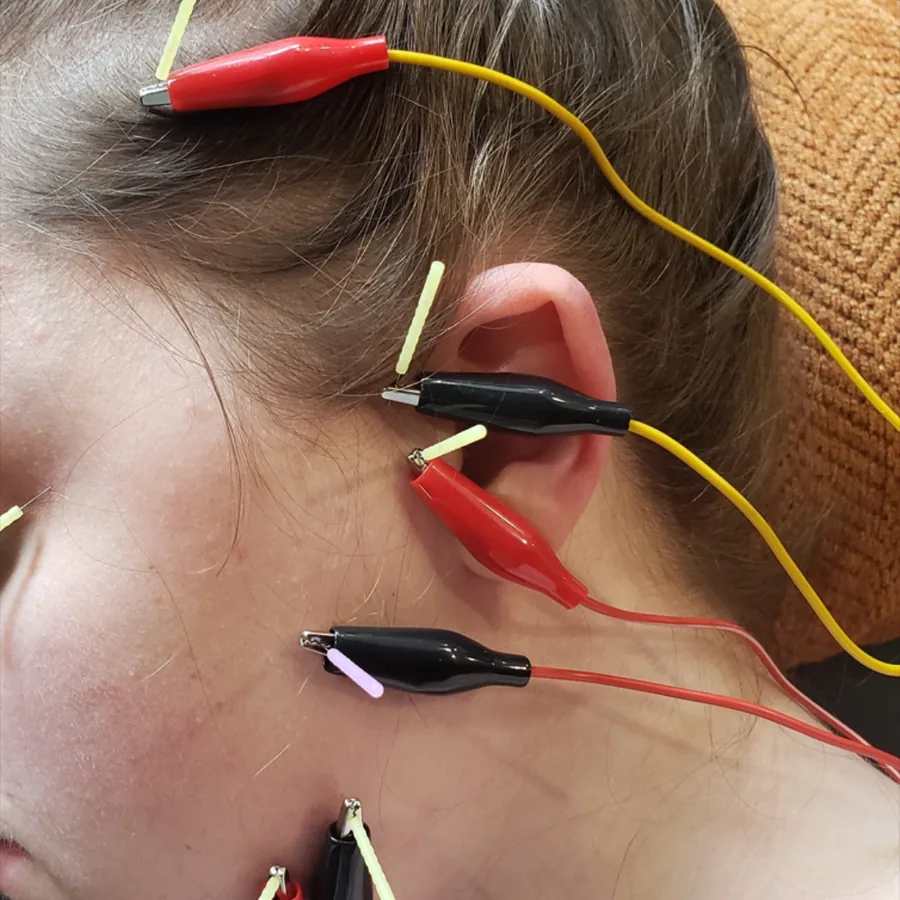
The needle gets deep into areas of restriction and lets stubborn knots and tension release in a way that ordinary therapy techniques cannot accomplish. Hands are excellent tools. They cannot reach a trigger point sitting under three layers of muscle without squashing everything above it.
What happens when a trigger point releases
Often a brief involuntary twitch. Clients feel it as a small jump, and it is a good sign — it means the needle found the band rather than the tissue beside it.
Then the interesting part: the muscle re-sets. Tension drops, blood flow into the area increases, and the muscle can return to its normal resting state. Stimulating those points also prompts the brain to release endorphins, which is why people so often describe a heavy, warm, oddly relaxed feeling in the twenty minutes afterwards.
Range of motion typically improves inside the same session. That improvement is the opportunity, not the finish line, and what I do with the next fifteen minutes decides whether it survives the week.
Where dry needling helps most
- Headaches and migraines with a neck component
- Back and neck pain
- Shoulder pain
- Piriformis syndrome
- Shin splints and plantar fasciitis
- Hip pain
- Tennis and golfer's elbow
- Carpal tunnel
- IT band syndrome
That list has a common thread: they are all problems where a specific muscle's tone and trigger points are contributing to the symptom. Where that is not the case — and it is not always the case — needling is the wrong tool and I will say so.
What to ask before anyone puts a needle in you
Which muscle are you targeting, and what in the examination pointed at it?
What should change today, and how will we know?
What are the risks, and what should I watch for afterward?
And what is the plan if this does not change anything by the third session? A clinician with a clear answer to that last one is a clinician with a plan rather than a technique.
How many sessions, and how you will know it is working
Most muscular presentations that respond to needling do so within two or three sessions. If three sessions have produced nothing at all, the target was probably wrong and the answer is to reassess rather than to needle harder.
What should change is measurable: range of motion, the load at which the symptom appears, or how long an activity can be sustained before it complains.
Pain intensity is a poor early marker because it fluctuates for reasons that have nothing to do with the treatment.
So the reassessment at session three is not a formality. It is where a plan either continues with evidence or changes direction.
What the evidence actually supports
Dry needling has reasonable evidence for short-term pain reduction and improved range of motion in a number of musculoskeletal conditions, and considerably weaker evidence that it changes anything on its own over months. That is not a criticism of the technique; it is a description of what it is for.
The trials that show the best results almost all pair needling with exercise. The ones that show little are usually the ones that used needling alone and hoped it would hold.
So the honest framing is that needling opens a window — less guarding, more range, less pain for a few days — and the loading that goes into that window is what produces the durable change. Anyone selling it as a standalone treatment is selling the wrong half.
What a session actually looks like
The examination comes first and it is not a formality. Which movements reproduce your symptom, which muscles are tender, and whether pressing on one of them recreates the pain you came in with. That last finding is the one that decides where the needle goes.
Then the needling itself, which takes a few minutes per muscle. You are told what is being targeted and why before anything happens, and nothing happens that you have not agreed to.
Then movement, immediately, while the tissue is more available than it was ten minutes ago. That part is not filler. A muscle that has released and then sat still for two days tends to return to where it started.
You leave with two or three things to do at home, chosen because they load what was just treated.
After a session
Soreness for twenty-four to forty-eight hours, similar to the feeling after an unfamiliar workout, is the most common experience. It is not a complication and it settles on its own.
Some people feel tired or unusually relaxed for a few hours, which is the endorphin response and is entirely benign.
Small bruises happen occasionally, particularly in people taking blood thinners, and they resolve like any other bruise.
Heat, a walk and normal activity all help. What does not help is treating the day afterward as a rest day, because the point of the treatment was to make movement easier.
Who should not have it
Anyone who genuinely does not want it. There is always another way to get at the same tissue, and needling is not so much better than the alternatives that it is worth doing to someone reluctant.
People on anticoagulants, with bleeding disorders, with a local infection or an open wound over the area, or with a compromised immune system all need a specific conversation first rather than a blanket answer.
I do not needle into an area of reduced sensation, or over a region where the anatomy makes it inadvisable.
And in pregnancy, certain areas are avoided. None of that rules out treatment; it changes which tools are used.
The mistake I see most often
Treating dry needling as the treatment. It is not. It is a window.
A muscle that has been guarding for two years has adapted. Release it and, left alone, it will re-adopt the pattern it knows within days, because nothing has told the nervous system that the new range is safe to keep. What tells it that is load: manipulation to restore joint movement, then specific strength and control work in the range you just recovered.
This is exactly why every client here leaves with therapeutic exercise and self-mobilization techniques. If the plan is a needle every week forever, the plan has failed.
Does it hurt?
The insertion itself is usually barely noticeable — the needle is far thinner than anything you associate with an injection. The twitch response is a strange sensation rather than a painful one. Afterwards, mild soreness in the treated area for 24 to 48 hours is normal, similar to the day after an unfamiliar workout.
If any of that concerns you, say so. Dosage is adjustable, and starting conservatively on a first session is entirely reasonable.
When acupuncture may be the better fit
Dry needling is a tool for a specific muscle or joint problem. If what you want is broader — a traditional Chinese medicine approach, or care that is not tied to one painful area — a licensed acupuncturist is the right person to see, and I will tell you so.
Some people see both. That is fine, as long as each practitioner knows about the other, so the same area is not needled twice in one week and any soreness is easy to trace.
If you have had acupuncture before and it did not help a muscle problem, that does not mean dry needling will not. The target is chosen in a different way, and that is the part that changes the result.
Getting dry needling in Dallas
The clinic is in North Dallas at 10670 North Central Expressway, Suite 110. Texas allows direct access to physical therapy, so you do not need a physician referral to book.
Full sessions are 60 minutes, one-on-one, and needling sits inside them alongside manipulation and exercise. Focused 30-minute dry needling sessions are also available. We are an out-of-network provider, and you get a superbill at the end of each session to file with your insurance.

If you would rather talk it through first, the free discovery visit is a no-cost, no-obligation conversation. If needling is not the right tool for your problem, you will be told that directly. Call (214) 600-7762 to ask a question before you book.
Questions people ask
Is dry needling the same as acupuncture?
No. Both use a fine, sterile, single-use needle, but acupuncture chooses its points from the meridians of traditional Chinese medicine, while dry needling targets a specific muscle, tendon or ligament that an orthopedic examination has identified as the source of your pain.
What is dry acupuncture?
“Dry acupuncture” is a phrase people often use when they mean dry needling. The word “dry” means nothing is injected: no medication, no steroid and no fluid. The mechanical effect of the needle on the muscle is the entire treatment.
Does dry needling feel different from acupuncture?
Usually, yes. When the needle reaches a trigger point the muscle often gives a brief involuntary twitch, which feels strange rather than painful. Mild soreness in the treated muscle for 24 to 48 hours afterwards is normal, similar to the day after an unfamiliar workout.
Who performs dry needling at this clinic?
Dr. Brent Lockett, PT, DPT, a doctor of physical therapy with a dry needling certification. Needling is part of a physical therapy plan here, paired with manipulation and exercise, because a released muscle needs loading to keep the change.
Where can I get dry needling in Dallas?
At Osteopractic Physical Therapy & Pain Relief, 10670 North Central Expressway, Suite 110, Dallas, TX 75231. Full sessions are 60 minutes one-on-one, and focused 30-minute dry needling sessions are also available. No physician referral is needed in Texas.
Can I have acupuncture and dry needling at the same time?
You can see both, but tell each practitioner about the other. That way the same area is not needled twice in a short span, and any soreness afterward is easy to trace.
Is dry needling better than acupuncture?
Neither is better in general; they do different jobs. For a specific muscle or joint problem found on examination, dry needling paired with exercise is the more targeted choice. For broader goals, a licensed acupuncturist is the right person to ask.