The short answer
Dry needling helps lower back pain when an examination finds trigger points in the muscles guarding the back, most often the quadratus lumborum, the erector group and the glutes. Most clients feel a change in range of motion in the first session. In Dallas, Dr. Brent Lockett, PT, DPT, Cert. DN provides it one-on-one at 10670 North Central Expressway, Suite 110, with no referral needed.
- Dry needling releases trigger points in the muscles guarding the back, most often the quadratus lumborum, the erector group and the glutes.
- The examination decides whether your back is a muscle, joint or nerve problem; the needle is used only when muscle is part of it.
- A brief twitch during treatment and mild soreness for 24–48 hours afterwards are normal.
- Needling opens a window; manipulation and loaded exercise in the same hour are what make the change hold.
- Typical plan: one to two visits a week until the result holds. No referral needed in Texas.
Most people who ask about dry needling for their lower back have already tried the obvious things. They have stretched, foam rolled, had massages, taken anti-inflammatories and maybe been adjusted. Each helped for a day or two. Then the same band of tightness came back across the low back or into one buttock, usually after a long drive, a day at a desk or a weekend of yard work. This article explains what dry needling actually does to a back, which muscles are usually involved, what it feels like during and after, how it compares with the other options, how many visits it usually takes, what it costs here, and who should not have it.
What dry needling is, and what it is not
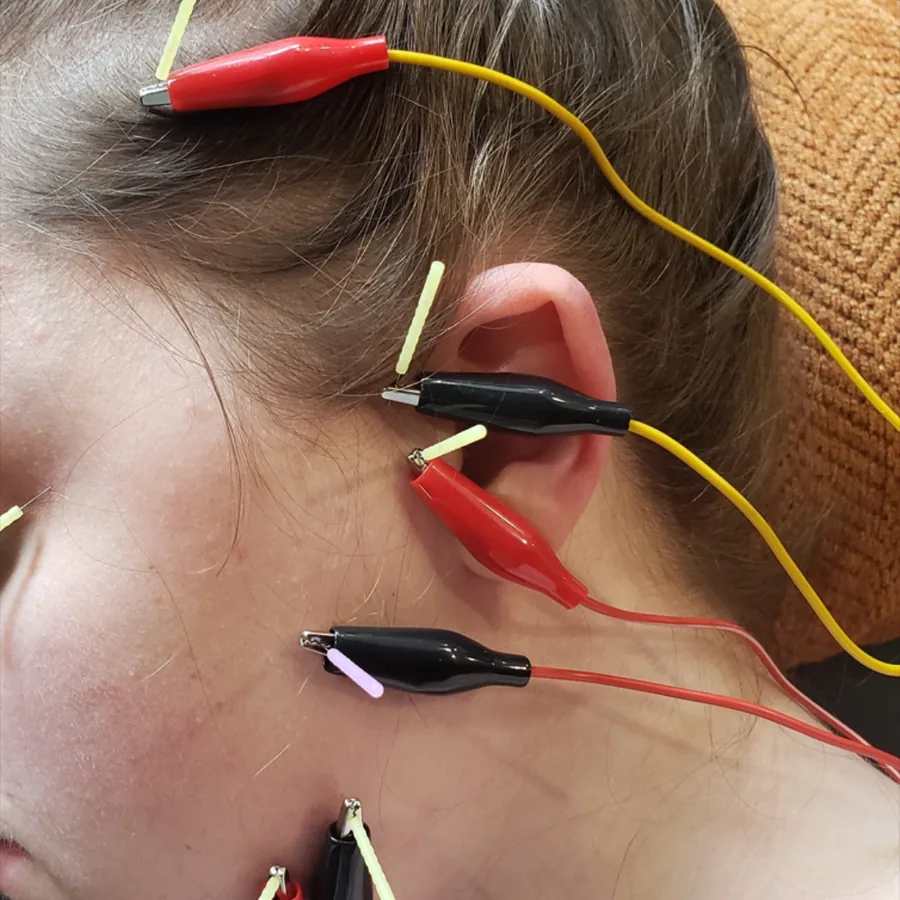
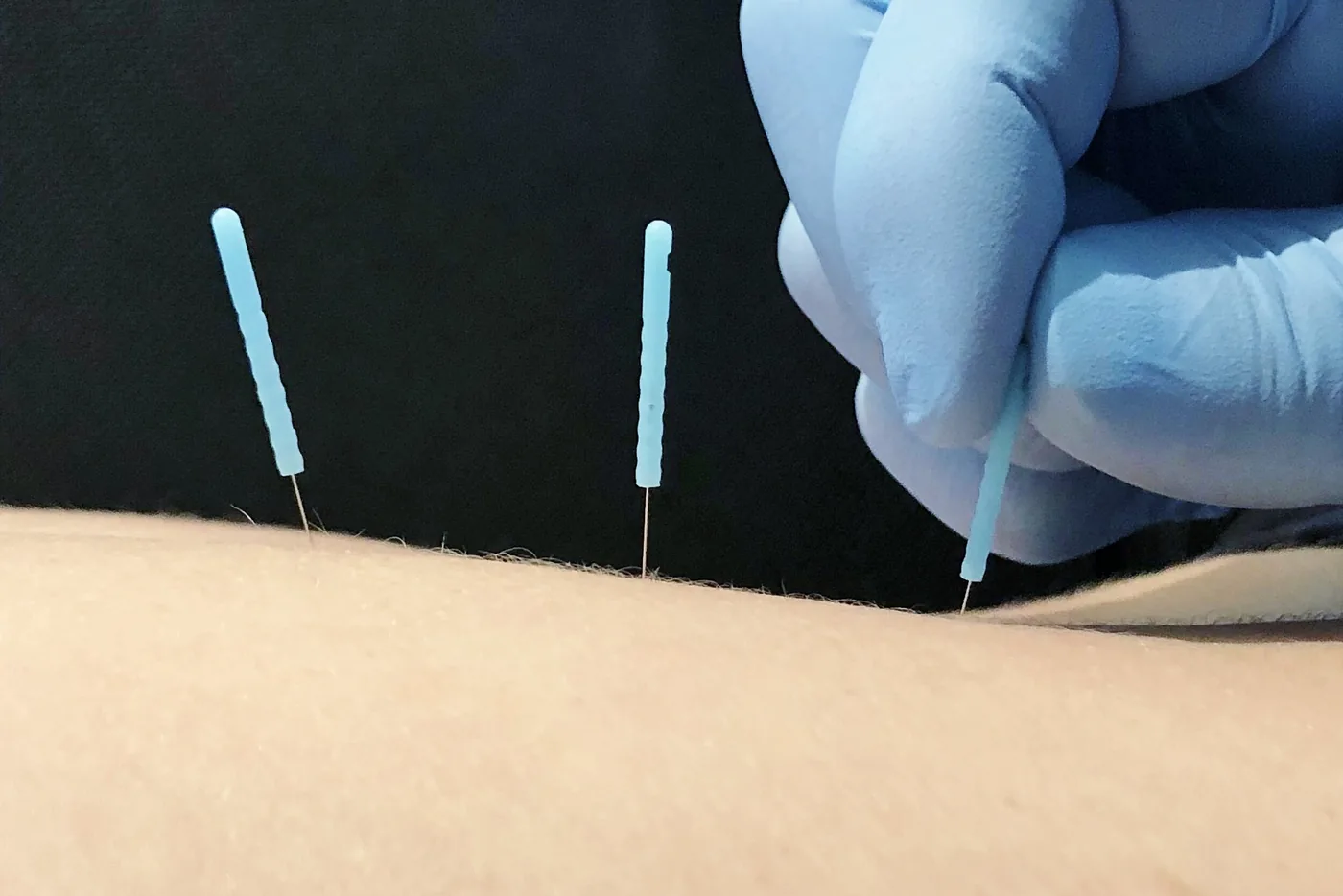
Dry needling uses a fine, sterile, single-use microfilament needle placed into a myofascial trigger point, a tendon or a ligament. Nothing is injected. The needle itself is the treatment, which is where the word “dry” comes from.
It is not acupuncture. Acupuncture works from traditional Chinese meridian theory. Dry needling is a Western, anatomy-led technique: a neuro-musculoskeletal examination identifies a specific muscle, tendon or ligament as the source of the problem, and that is where the needle goes. The two use a similar needle and very different reasoning; the longer comparison is in dry needling vs. acupuncture.
What the needle does is “re-set” the muscle. A trigger point is a hard, irritable band inside a muscle that will not let go. Needling it releases the tension, increases blood flow, improves range of motion and prompts your brain to release endorphins, which is why so many people feel the difference before they get off the table.
Why a low back gets stuck
Most recurring low back pain is not one injury repeating itself. It is a movement pattern that keeps loading the same tissue in the same way, plus a nervous system that has learned to guard the area. Guarding is useful for a few days after a strain. After a few months it is the problem: the muscles that were protecting the back stay switched on, stiffen the segments they cross, and become a source of pain in their own right.
That is why rest and massage tend to help briefly. They calm the guarding for a day. They do not change the pattern, and they do not reach a trigger point that sits under several layers of muscle. A needle does reach it, and the window of movement it opens can then be used to change the pattern. There is more on that cycle in why low back pain keeps coming back.
The back and hip muscles that cause most of the trouble
Four groups account for most of the low back pain we needle. Which of them is involved in your back is decided by the examination, not by where it hurts.
- Quadratus lumborum. The deep muscle between the lowest rib and the top of the pelvis, on each side. When it guards, it can make one side of the back feel jammed, turn getting out of a car into a project, and refer pain into the hip and buttock.
- The erector group. The long muscles either side of the spine. They are the ones that hold you rigid after a back “goes”, and they often keep doing it long after the original strain has healed.
- The glutes, including gluteus minimus. Trigger points in the deep buttock muscles refer pain down the side and back of the leg convincingly, without any nerve involvement at all, and are frequently mistaken for sciatica.
- Piriformis. The sciatic nerve runs past, and in some people through, this deep hip rotator. When it is irritable it can irritate the nerve and produce leg pain that looks like a disc problem at first glance. See sciatica or piriformis.
The quadratus lumborum and the glutes are the most common offenders, and both refer pain in patterns that make the source hard to find without testing. That is the point of the examination: we needle the tissue driving the problem, which is often not the spot that hurts most.
Disc, joint or muscle: why the examination comes first
Two backs that hurt in the same place can need opposite treatment. A guarding muscle responds to needling. A stiff segment in the lower spine or the sacroiliac joint responds to manipulation and mobility. A nerve root irritated at the spine responds to directional loading, and needling the buttock will not change it much.
So the first visit is a full neuro-musculoskeletal examination: how the spine and hips move under load, which movement reproduces your pain, what palpation of the deep muscles finds, what the nerve tests say, and whether anything in your history means you should be imaged or seen by a physician first. The short guide disc or muscle back pain explains the main differences; it cannot replace the examination.
We don’t guess, we assess. If the testing says your back is a joint problem or a nerve problem, that is what gets treated, and the needle stays in the box.
What a session feels like
The insertion itself is usually barely noticeable; the needles are far finer than the ones used for an injection. When the needle reaches a trigger point, the muscle often gives a brief involuntary twitch. Clients describe it as a small jump or a strange cramp-like sensation rather than pain, and it is a good sign: it usually means the right spot has been found. After that most people feel a heavy, warm release in the area.
In the low back, needling is often combined with electrical stimulation through the needles, which many people find relaxing once the muscle has let go. You are told what is being treated and why before anything starts, and you can stop at any point. The fuller answer is in does dry needling hurt.
Straight after needling, the range you have just gained is restored with manipulation where a segment is stiff, and with loaded movement, so the nervous system keeps it. That is the difference between a needling session and a physical therapy session that uses needling.
Afterwards: soreness, sitting and getting back to training
Most people notice improved range of motion the same day, often immediately. Some feel loose and slightly tired for a few hours.
Over the next 24 to 48 hours, mild muscle soreness in the treated area is normal, similar to the day after an unfamiliar workout. Light movement helps: walking is almost always tolerated and almost always useful. Heavy loading of the exact muscle that was needled can wait a day. Sitting for long stretches is usually the hardest part of a back’s day, so get up and move every half hour or so while it is sore.
Some people bruise slightly at a needle site. It fades on its own. Specific instructions for your back and your training are given before you leave; the general version is in dry needling aftercare.
How it compares with the other options
- Massage and foam rolling. Pleasant and useful for general tension, but pressure from the surface cannot reach a trigger point deep in the quadratus lumborum without squashing everything above it. Relief tends to last a day.
- Stretching. Pulling on a muscle that is guarding often makes it guard harder, and hamstring stretches can irritate an already sensitive sciatic nerve.
- An adjustment on its own. Manipulation is one of the quickest ways to free a stiff segment, and it is used here when testing calls for it. On its own, without the muscle released and the pattern retrained, it tends to need repeating. See the truth about cracking your back.
- Medication and injections. They can calm pain. They do not change how the back is loaded. Motion beats medication, but stopping a prescribed medication is a decision for the clinician who prescribed it, not for us.
- Dry needling inside a plan. Releases the guarding muscle at depth and opens a window, which manipulation and loaded exercise then use. That combination is what makes a result hold.
How many sessions it takes
Most clients notice a change in range of motion in the first session. Holding that change is what the rest of the plan is for. The typical plan is one to two visits a week until the result holds, and you get an honest estimate after the examination, not before it.
How long depends on how long the back has been this way, what is driving it, and what your week asks of it. A back that has been flaring every few months for ten years will not be changed by one needle, and nobody should promise that it will. What you should see across the first few visits is a measurable change in the movement that hurts, and a longer time before the tightness returns.
As your own strength and movement take over, needling becomes less frequent and then unnecessary. You leave with self-mobilization and specific exercise so you hold the change without needing a needle every week.
What it costs at Osteopractic Physical Therapy
Every full visit is 60 minutes, one-on-one with Dr. Lockett, and dry needling is part of the visit rather than an add-on. A shorter 30-minute focused dry needling session is also available, for fast relief when a flare-up hits or between visits of a wider plan; it is explained in the 30-minute dry needling session.
- Free discovery visit: No charge — a conversation about your back and whether this approach fits
- 6-visit pain/movement plan: $840 — six 60-minute, one-on-one visits, discounted against single sessions
- 12-visit performance package: $1,560 — twelve 60-minute, one-on-one visits, discounted against single sessions
- Single session or 30-minute dry needling: See sessions & packages — a full hour, or a focused needling session on its own
The practice is an out-of-network provider. You receive a superbill at the end of every session to file with your insurance for potential reimbursement under your out-of-network benefits; check those benefits with your insurer before you budget around them. More in what out-of-network physical therapy costs.
Who should not have dry needling, and when back pain needs a physician
Tell us first, and expect the plan to change or the needle to be left out, if any of these apply: a needle phobia you would rather not fight (there are other tools); certain bleeding disorders or blood-thinning medication; an active infection or an open wound over the treatment area; or pregnancy. Never stop a prescribed blood thinner to make yourself eligible.
Needling near the rib cage and upper back requires particular anatomical care because the lung sits close underneath. New chest pain or shortness of breath after any needling needs urgent medical care.
Some back pain is not a therapy problem at all. Get urgent medical care rather than therapy if you have loss of bladder or bowel control, numbness around the groin or inner thighs, progressive leg weakness, pain in both legs at once, unexplained weight loss, or fever with back pain. Differential diagnosis is part of Dr. Lockett’s post-doctorate osteopractic training precisely so that “this is not a therapy problem” is an answer you can be given.
Getting dry needling for your back in Dallas
Dr. Brent Lockett, PT, DPT holds a Certified Dry Needling credential (Cert. DN), a certification in spinal manipulation (Cert. SMT) and a Diploma in Osteopractic from post-doctorate residency training. Every visit is the full hour with him, never handed to an aide, at the clinic at 10670 North Central Expressway, Suite 110, or at your home, office or gym across Dallas and the surrounding areas.
Texas allows direct access to physical therapy, so you do not need a referral. Call (214) 600-7762 or book the free discovery visit online, and bring the one activity your back has been stopping you from doing. That is what the plan is built around. The full picture of how back pain is treated here is on the low back pain page.
Questions people ask
Dry needling for lower back pain in Dallas
Osteopractic Physical Therapy & Pain Relief in North Dallas provides dry needling for lower back pain inside a 60-minute, one-on-one physical therapy visit with Dr. Brent Lockett, PT, DPT, Cert. DN, combined with manipulation and loaded exercise. A 30-minute focused dry needling session is also available. No referral is needed.
Does dry needling work for lower back pain?
When an examination finds trigger points in the muscles guarding the back, it is one of the quickest ways to release them, and most clients feel a change in range of motion in the first session. It is less useful when the pain comes purely from a joint or a nerve root.
Which muscles are needled for low back pain?
Most often the quadratus lumborum, the erector muscles beside the spine and the glutes, and the piriformis when leg pain is part of the picture. The examination decides which, since the source is often not where it hurts most.
Does dry needling the back hurt?
The insertion is usually barely noticeable. When a trigger point releases, the muscle often gives a brief twitch that feels strange rather than painful, followed by a heavy, warm sensation.
How long is the back sore after dry needling?
Mild soreness in the treated area for 24 to 48 hours is normal, similar to the day after an unfamiliar workout. Walking and light movement help.
How many dry needling sessions does low back pain take?
There is no fixed number. The typical plan is one to two visits a week until the result holds, with needling becoming less frequent as your own strength takes over.
Can dry needling help sciatica?
When the deep hip muscles are irritating the nerve or referring pain down the leg, yes. When the nerve root is irritated at the spine, directional loading and work at the spine matter more.
Who should not have dry needling?
Tell your therapist first if you take blood thinners, have a bleeding disorder, are pregnant, have an infection or wound over the area, or have a strong fear of needles. Bladder or bowel changes or numbness around the groin need urgent medical care, not needling.