The short answer
Achilles tendon pain responds to progressive loading, most often heavy slow resistance or eccentric calf work, not rest. Where it hurts decides the program: midportion pain, two to six centimeters above the heel, tolerates full-range heel raises; insertional pain, at the bone, needs the range limited and no early stretching. In Dallas, Dr. Brent Lockett, PT, DPT tells the two apart at the first appointment.
- Midportion and insertional Achilles pain need different programs; the insertional one must avoid dorsiflexion early.
- Morning stiffness compared with the previous day is the most reliable marker of whether the loading is right.
- Most people can keep running at reduced volume, with hills and speed added last.
- Twenty to twenty-five full-range single-leg heel raises is a reasonable strength benchmark, and most people with Achilles pain are far short of it.
The Achilles is the strongest tendon in the body and it takes loads of several times body weight when you run.
When it becomes painful, the instinct is to protect it, and protection is close to the worst available option.
The two locations
Midportion: the painful, sometimes thickened part sits two to six centimeters above where the tendon attaches to the heel bone. This is the more common presentation and the one with the better evidence.
Insertional: pain right at the back of the heel where the tendon meets the bone, often with tenderness on both sides of the attachment.
You can usually tell by pinching along the tendon and finding where the tenderness peaks.
The distinction matters because the insertional version is compressed against the heel bone in dorsiflexion, so exercises and stretches that take the ankle into that position make it worse.
| Feature | Midportion | Insertional |
|---|---|---|
| Where it hurts | 2 to 6 cm above the heel, sometimes thickened | At the back of the heel, where the tendon meets the bone |
| Heel raises | Off a step, through full range | On flat ground, so the ankle does not drop |
| Calf stretching | Full-range work is tolerated | None in the early phase |
| Heel lift in the shoe | Optional short-term load reducer | Often gives immediate relief |
| Full range back | From the start | Reintroduced gradually, typically after 6 to 8 weeks |
| Time frame | 12 weeks minimum; change around weeks 4 to 6 | The same principle and a similar course |
How to read this table: pinch along the tendon to find where it is most tender, then follow that column. The rows that differ are about range: the insertional tendon is squeezed against the heel bone when the ankle bends up, so stretching that helps one can aggravate the other.
What is happening in the tendon
Disorganized collagen, increased ground substance, and new vessels and nerve endings, as in every other tendinopathy on this site.
The thickening you can feel is real tissue change rather than swelling, and it often persists after the pain has resolved.
There is little inflammation, which is why anti-inflammatory treatment does not change the course.
The useful mental model is a tendon whose capacity has fallen below what it is being asked to do.
The characteristic history
Pain and stiffness first thing in the morning, easing after a few minutes.
Pain at the start of a run that warms up and then returns afterward, which is the pattern that makes people think it is improving.
A recent increase in volume, intensity, hill work or speed work — usually within the six weeks before it started.
And frequently a change of footwear, or a return to training after a break.
The loading program for midportion
Heavy slow resistance or eccentric calf work, both of which have good evidence.
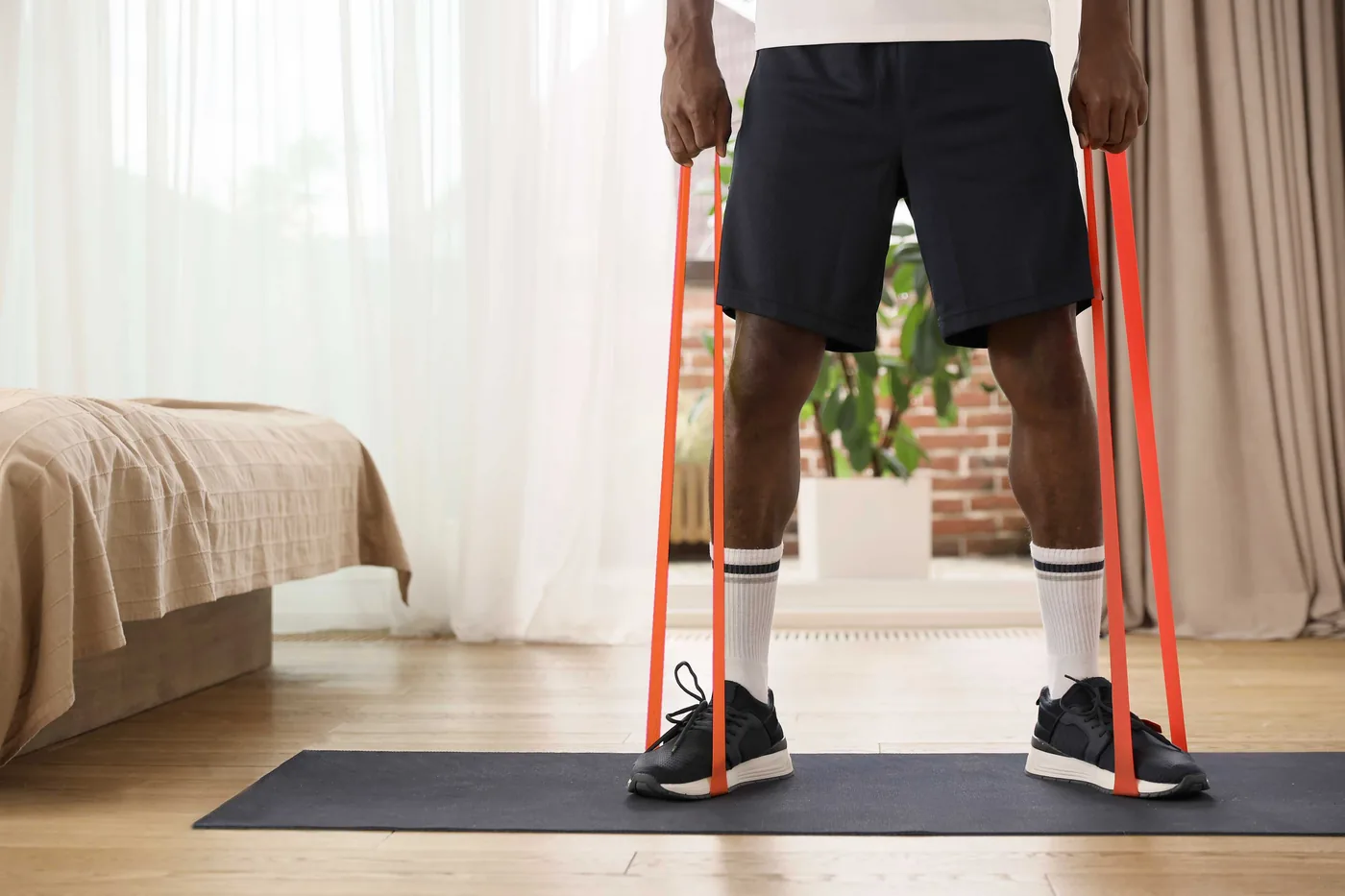
The practical version: single-leg heel raises off a step, lowering slowly through full range, three sets of fifteen, twice a day for eccentric protocols; or heavy slow resistance three times a week with fewer repetitions and more load.
Both work. Heavy slow resistance takes less time and adherence tends to be better.
Twelve weeks minimum. Improvement usually starts around week four to six.
The loading program for insertional
Same principle, limited range. Heel raises performed on flat ground rather than off a step, so the ankle does not drop into dorsiflexion.
No calf stretching in the early phase. This is the instruction people find hardest to accept and it matters most.
A small heel lift in the shoe reduces compression at the insertion and often produces immediate relief while the loading works.
Range is reintroduced gradually once symptoms allow, typically after six to eight weeks.
How much pain is acceptable
Up to about five out of ten during the exercise, settling within twenty-four hours, with morning stiffness no worse than the previous day.
Morning stiffness is the single best day-to-day marker in Achilles problems. If it is worse than yesterday, the last session was too much.
That gives you a simple daily feedback loop that does not require any equipment.
Pain during running follows a similar rule, but morning stiffness is more reliable because it is not affected by warm-up.
Running while you rehabilitate
Most people can keep running in some form, and complete cessation is rarely necessary or helpful.
Reduce volume by a third to a half, remove hills and speed work, and run on flatter, softer surfaces.
Increase cadence slightly, which reduces Achilles load per step.
Then rebuild by about ten percent a week, adding hills and speed last. Those two are the highest tendon loads and they belong at the end.
The stage-by-stage plan is in return to running after injury.
What to avoid
Rest as the plan. Six weeks off produces a tendon with less capacity and the same problem waiting.
Corticosteroid injection into the tendon, which carries a rupture risk and is generally avoided.
Aggressive stretching, particularly in insertional cases.
And the flat, unsupportive shoes that many people switch to when the heel hurts, which increases the range the tendon works through.
Adjuncts that are worth something
Heel lifts, particularly for insertional pain, as a short-term load reducer.
Shockwave therapy, which has reasonable evidence in cases that have not responded to loading.
Dry needling and soft tissue work into the calf, which reduce symptoms enough to make loading tolerable.
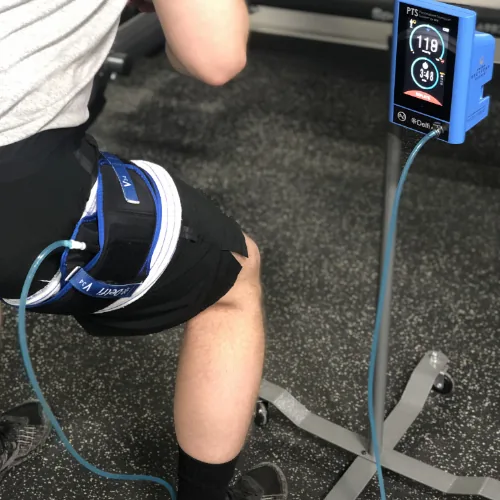
Blood flow restriction training, useful where even light calf loading is not tolerated, which happens in acutely irritable tendons.
The warning signs that are not tendinopathy
A sudden sharp pain during activity, often described as being kicked in the back of the leg, with immediate difficulty pushing off. That is a possible rupture and needs same-day assessment.
An inability to perform a single heel raise on that leg, or a palpable gap in the tendon.
Swelling and warmth in the calf, particularly after immobility, travel or surgery, raises the question of a blood clot and is an emergency.
And anyone who has recently taken a fluoroquinolone antibiotic with new Achilles pain should stop the drug and speak to their physician, because those medications are associated with tendon rupture.
Why it takes so long
Tendon adapts slowly. Collagen turnover is measured in months, and the tissue has a limited blood supply relative to muscle.
Three months is a realistic minimum for a straightforward case. Six to twelve for one that has been going for a year.
Most people notice change at four to six weeks, which is exactly when adherence starts to fall.
The single best predictor of a good outcome is whether the program was actually done at the prescribed load and frequency, which is why the program has to be one you can fit into your week.
What to do about the lump you can feel
A thickened, tender section of the tendon is the usual finding in midportion problems, and people are often alarmed by being able to feel it.
It reflects real tissue change. It also frequently persists after the pain has gone, and its persistence is not a sign that the problem is unresolved.
Imaging the tendon is rarely necessary in a typical presentation and often adds worry without changing the plan.
The exception is a tendon that has changed suddenly, or one where a gap can be felt, which is a different question and needs same-day assessment.
Keeping it away
Two calf sessions a week, indefinitely, for anyone who runs. It takes ten minutes and it is the closest thing to insurance available.
Sensible progression: about ten percent a week in volume, and never adding volume, intensity and hills in the same two weeks.
Enough calf strength that you can do at least twenty to twenty-five single-leg heel raises through full range. That is a reasonable benchmark and most people with Achilles problems are well short of it.
And attention to sleep and general load, because tendon problems cluster around busy, under-slept periods.

More on that in calf strength and foot pain.
The mid-run pattern that misleads people
Achilles pain that hurts for the first ten minutes, disappears for the rest of the run, and then returns two hours later is the classic tendinopathy pattern.
The warm-up effect is real: tendon behaves differently once it is loaded and warm. It is not evidence that the tissue is fine.
So the decision about whether to keep running should be based on the following morning rather than on how the middle of the run felt.
That rule — judge by tomorrow morning, not by today — is the most useful single instruction in the whole condition.
Age, and why it changes the plan
Achilles problems become more common from the late thirties onward, and the tendon adapts more slowly with each decade.
That does not mean the program changes. It means the timeline lengthens and the maintenance work becomes permanent rather than temporary.
It also means a sudden return to a sport played twenty years ago deserves a genuine ramp rather than a season of enthusiasm.
Rupture risk rises in the same period, particularly in intermittent athletes doing explosive sport, which is another argument for the twice-weekly calf work.
What a first appointment covers
Where exactly it is tender, which decides midportion or insertional.
Calf strength and endurance, measured as single-leg heel raises to failure and compared with the other side. Large differences between sides are common.
Ankle dorsiflexion range, foot posture and running gait if relevant.
And the load history in detail, because the answer to what changed is almost always in the six weeks before it started.
That appointment is part of sports performance therapy at 10670 North Central Expressway, Suite 110, in North Dallas; heel pain underneath rather than behind is on the plantar fasciitis page.
Questions people ask
Should I rest Achilles tendon pain?
Not completely. Rest lowers the tendon’s capacity and leaves the same problem waiting. Progressive calf loading within an acceptable pain level is the treatment.
What is the difference between midportion and insertional Achilles pain?
Midportion pain sits two to six centimeters above the heel and tolerates full-range heel raises off a step. Insertional pain is at the bone and gets worse when the ankle drops into dorsiflexion, so it starts on flat ground without stretching.
Can I keep running with Achilles pain?
Most people can at reduced volume: cut it by a third to a half, drop hills and speed, run on flatter ground, then rebuild by about ten percent a week.
How long does Achilles tendinopathy take to heal?
Three months is a realistic minimum for a straightforward case, and six to twelve for one that has lasted a year. Most people notice change at four to six weeks.
When is Achilles pain an emergency?
A sudden feeling of being kicked in the back of the leg, trouble pushing off, a gap in the tendon or being unable to do a single heel raise needs same-day assessment. A swollen, warm calf after travel or surgery is an emergency.
Where can I get Achilles pain treated in Dallas?
Dr. Brent Lockett, PT, DPT treats Achilles problems one-on-one at 10670 North Central Expressway, Suite 110, in North Dallas. Call (214) 600-7762.