The short answer
Golfers in Dallas with pain or a turn that keeps getting shorter should look for a physical therapist who examines the whole swing chain (hips, mid-back, shoulders and grip), treats hands-on and rebuilds strength in the same visit. Osteopractic Physical Therapy & Pain Relief does that in 60-minute one-on-one visits with Dr. Brent Lockett, PT, DPT in North Dallas, near the Park Cities and Preston Hollow.
- In a golfer the sore spot is often making up for a stiff hip or mid-back, so a good examination measures the whole swing chain on both sides before treating.
- Low back pain is the most common golf complaint; hip, shoulder, neck, knee, elbow and wrist problems each have a usual cause and their own plan.
- Most golfers can keep playing: cut range volume first, play nine holes, use a push cart, warm up, and keep your swing until things settle.
- Numbness, weakness, a joint that locks or gives way, fast swelling, or sharp wrist pain after hitting something hard need a physician first.
- Every visit here is 60 minutes, one-on-one with Dr. Lockett in North Dallas. Packages: 6 visits for $840, 12 visits for $1,560, out of network with a superbill.
You can play golf in Dallas almost every week of the year, and most golfers here do it after five days at a desk. Then the low back tightens on the back nine, the lead hip pinches when you get out of the cart, or the inside of the elbow stings every time you take a divot. You can still play, so you do, a little shorter and a little more carefully each month.
Below: golf pain sorted by where it hurts, what is usually going on in each area, the mobility a swing needs, what a golfer’s examination looks like at our clinic, when to keep playing and when to stop, the questions to ask any physical therapist before you book, and what it costs here.
What to look for in a Dallas physical therapist if you play golf
There is no separate license for treating golfers. What matters is how the examination is run. In a golfer, the place that hurts is often not the place that is short of movement or strength, so a visit that looks only at the sore spot tends to give relief that lasts until the next round.
Three things are worth insisting on:
- The whole chain is examined. Hips, mid-back, shoulders, neck and grip, both sides, with the turn itself looked at.
- Treatment and strength work happen in the same visit. Range gained on the table and never loaded is gone by the weekend.
- You are told how to keep playing, or told plainly when you should not.
That is how our sports physical therapy in Dallas is built, and golf is one of the sports it names. Every visit is 60 minutes, one-on-one with Dr. Lockett, never handed to an aide. If you are comparing clinics for any problem, how to choose a physical therapist in Dallas has the general checklist.
Golf pain by body area: where it hurts and what is usually going on
Find your row. The second column is the usual explanation in a golfer, not a diagnosis; the examination is what confirms it or rules it out.
| Where it hurts | What is usually going on | What we do | Page to read |
|---|---|---|---|
| Low back, during or after a round or a range session | A stiff lead hip and mid-back push the swing’s rotation into the low back, a region built to rotate very little | Measure hip and mid-back rotation on both sides, free the restricted joints and guarding muscles, then build rotation and anti-rotation strength | Golf and back pain |
| Hip: groin, outside of the hip or buttock | Three different problems. Groin points at the joint, the outside at the gluteal tendons, the buttock often at the low back or the deep hip rotators | Name which one it is, screen the lumbar spine and sacroiliac joint, then load the gluteal muscles at a dose the hip tolerates | Hip pain treatment |
| Shoulder, at the top of the backswing or in the follow-through | A mid-back that does not turn leaves the shoulder to make up the range at its limit; or the range is there and the control is not | Test passive range first, then mid-back and rib mobility, shoulder blade control and rotator cuff strength | Shoulder pain treatment |
| Inside of the elbow | Golfer’s elbow: the tendon of the wrist flexors, overloaded by gripping and by hitting the ground before the ball. A nerve runs right beside it | Tendon tests, a nerve screen, pain-free grip measured on both sides, then progressive loading | Golfer’s elbow vs. tennis elbow |
| Wrist and hand | Fat shots and range mats, usually after a jump in practice volume. Numbness in the fingers is a nerve question, not a wrist strain | Wrist, forearm, elbow and neck examined together, grip tracked, range volume dosed | Grip strength and elbow pain |
| Neck | The body turns under a still head. When the mid-back is stiff, the neck makes up the difference on every swing | Neck and mid-back examined with a nerve screen, joints and muscles treated, then deep neck and shoulder blade strength | Neck pain treatment |
| Knee, usually the lead one | The lead leg takes the twist at the end of the swing. A stiff hip or ankle hands the knee more than its share | Knee, hip and ankle examined under load, strength compared with the other leg and rebuilt | Knee pain physical therapy |
How to read this table: the first column is where you feel it, and the second is why a golfer usually feels it there. Notice how often the second column points somewhere else: the hip for the back, the mid-back for the shoulder and the neck, the hip and ankle for the knee. That is why the third column nearly always starts with measuring before treating.
Low back: the most common complaint in golfers
Low back pain is the most common complaint in golfers, and the usual mechanism is simple. A swing needs a lot of rotation. The hips and the mid-back are built to supply it; the low back is not. When the lead hip and the mid-back are stiff, the low back is asked for range it does not have, a hundred times a round and more on the range.
So the treatment usually happens somewhere other than the back. Two measurements decide most of it: hip internal rotation, especially on the lead side, and mid-back rotation measured seated. Both take about a minute to test and both are trainable.
We have a full guide to this one, with the exercises, the warm-up, the range-volume problem and the carry, push or ride question: golf and back pain: what the swing actually asks for. If the pain travels below the knee, or comes with numbness or weakness, start with the low back pain and sciatica page instead, because that needs a neurological assessment before anything else.
Hips and knees: the lead side does the hard work
Through impact and the follow-through, the lead hip rotates inward under load while the trunk turns over it. Most people never train hip rotation, and most golfers sit all week, so the lead hip is very often the stiff one.
“Hip pain” in a golfer is three different problems, and where you feel it tells you a lot:
- Deep in the groin, worse squatting to read a putt or getting out of the cart: this points at the joint itself.
- On the outside of the hip, worse lying on that side at night: usually the gluteal tendons.
- In the buttock, sometimes traveling down the thigh: often the low back or the deep hip rotators, not the hip at all.
They do not share a treatment, which is why the first visit names which one you have. It also covers the low back as a matter of course, because the two feed each other.

One warning before you stretch it. The classic stretch that pulls the leg across the body compresses the gluteal tendons against the bone, which is the exact position that irritates an outside-of-the-hip problem. It gives relief for a minute and irritation for the rest of the day. Which mobility work suits your hip is a decision the examination makes.
The lead knee sits under the same twist. Pain on the inside or outside of the knee when you pivot through the finish, or a knee that aches after walking eighteen holes but not during them, is examined together with the hip above and the ankle below, under load. A stiff ankle or a weak hip pushes load onto the knee: the knee is where it hurts, and the cause is often above or below it. Strength and single-leg control are measured against your other leg, so progress is a number. A knee that locks, gives way or swelled within hours needs a physician first.
Shoulder, neck and mid-back: one stiff area, three complaints
The mid-back is meant to turn freely. After a few thousand hours at a desk it often does not, and in a golf swing two neighbors pay for that.
The shoulder. The shoulder blade glides over the upper back and rib cage. When the mid-back is stiff, the shoulder has to make up the difference at the end of its range, which is where tissue gets irritated. In a golfer that shows up at the top of the backswing or deep in the follow-through.
The first test is passive range: how far the shoulder moves when someone else moves it. A shoulder that has lost passive range needs mobility work. A shoulder with full range that hurts under load needs strength and control, and stretching it further makes it worse. The test takes about a minute, and shoulder mobility vs. stability explains why getting it backward costs months.
The neck. In a good swing the head stays fairly still while the body turns under it, so the neck has to rotate freely in both directions. A stiff mid-back makes the neck do more of the turning. Neck pain after a round, or a pinch at the base of the neck at the top of the backswing, is treated at both levels: the neck joints and muscles, and the mid-back that keeps re-loading them.
Pain, numbness or tingling that travels into the arm changes the examination; that pattern is covered in neck pain that travels into the arm.
Golfer’s elbow and the wrist: what a fat shot costs
Golfer’s elbow hurts on the bony point on the inside of the elbow, with gripping and with bending the wrist against resistance. It is a tendon problem, and the story is almost always a recent increase in volume: a week of range sessions, a golf trip, a new set of lessons.
Four things are worth knowing:
- Hitting the ground before the ball is the classic producer. That is a technique issue, and it is worth a lesson, because a tendon program that returns you to the same swing returns you to the same load.
- A nerve runs beside that tendon. Numbness or tingling in the ring and little fingers changes the plan, so every inside-elbow problem gets a nerve screen.
- Rest does not rebuild a tendon. Progressive loading of the wrist and grip does, and it is slow: three to six months is realistic for an inside-elbow problem that has been going a while.
- The name does not decide which tendon it is. A golfer can have the outside of the elbow sore instead. The tests decide, and golfer’s elbow vs. tennis elbow walks through them.
The number we track is pain-free grip strength on both sides, because it shows progress weeks before the elbow feels different. The clinic’s tennis and golfer’s elbow treatment page has the full plan.
The wrist. Range mats are harder than turf and send more through the wrists on a fat shot, so wrist pain tends to follow a jump in practice volume. The wrist is examined with the forearm, elbow and neck, since the same nerves and muscles run through all four. Numbness in the thumb, index and middle fingers, especially at night, is a carpal tunnel question. Sharp pain at the heel of the hand after hitting a root, a rock or the mat hard should be seen by a physician first, because a small wrist bone can be broken that way.
The mobility a swing needs, and what a golfer’s examination checks
A golf swing borrows range from three places: the hips, the mid-back and the shoulders. When one of them is short, the swing does not get smaller. Something else supplies the difference, and that something is usually what ends up hurting. So the examination measures the supply before it looks at the sore spot.
At the first visit a golfer can expect:
- Your golf week. Rounds, range sessions, mat or turf, walk or ride, lessons, and what changed in the last month.
- Hip rotation, both sides. Internal rotation of the lead hip above all.
- Mid-back rotation, measured seated so the low back cannot help.
- Shoulder range and strength, passive range first, then the rotators under load.
- Grip strength, pain-free, both hands, if the elbow or wrist is involved.
- Single-leg balance and control, because the finish is spent on the lead leg.
- The turn itself. The examination is sport-specific, so the movement your sport repeats is looked at, not only the joint on the table.
- A neurological screen wherever symptoms travel into an arm or a leg.
In a rotational sport the difference between sides matters more than any single number, so everything is measured left and right and written down. Those numbers are what gets re-tested later.
You do not need to be in pain to have this done. A screen before the spring season, or before a trip with a round every day, finds a stiff hip while it is still only a limitation. What it covers, and what it cannot predict, is in what a pre-season injury prevention screen checks.
The treatments that fit golfers, in one 60-minute visit
Every session follows the same four steps: a full-body evaluation, clearing the restriction it found, loading the new range, and fitting the plan to your calendar. For a golfer the tools usually look like this:
- Spinal and extremity manipulation for stiff mid-back, low back and hip joints. It often changes available rotation at once, and that window is used for strength work in the same hour.
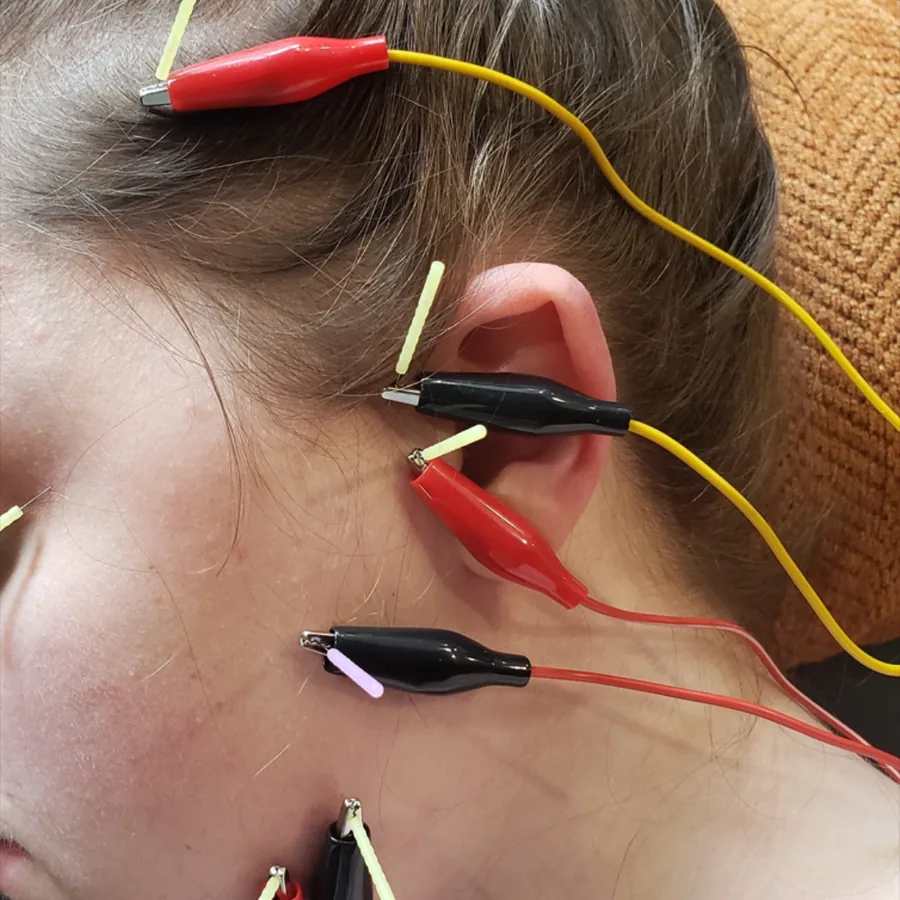
- Dry needling for the muscles that guard: the low back muscles after a flare, the deep hip rotators and gluteal muscles, the forearm in an elbow problem.
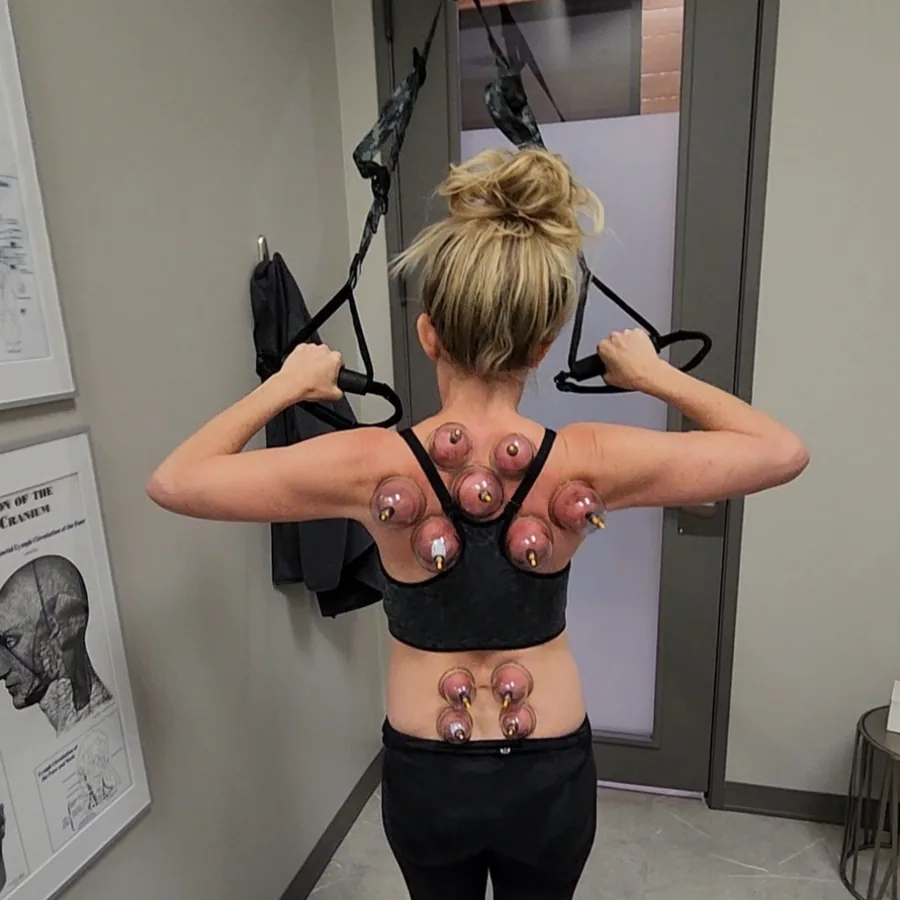
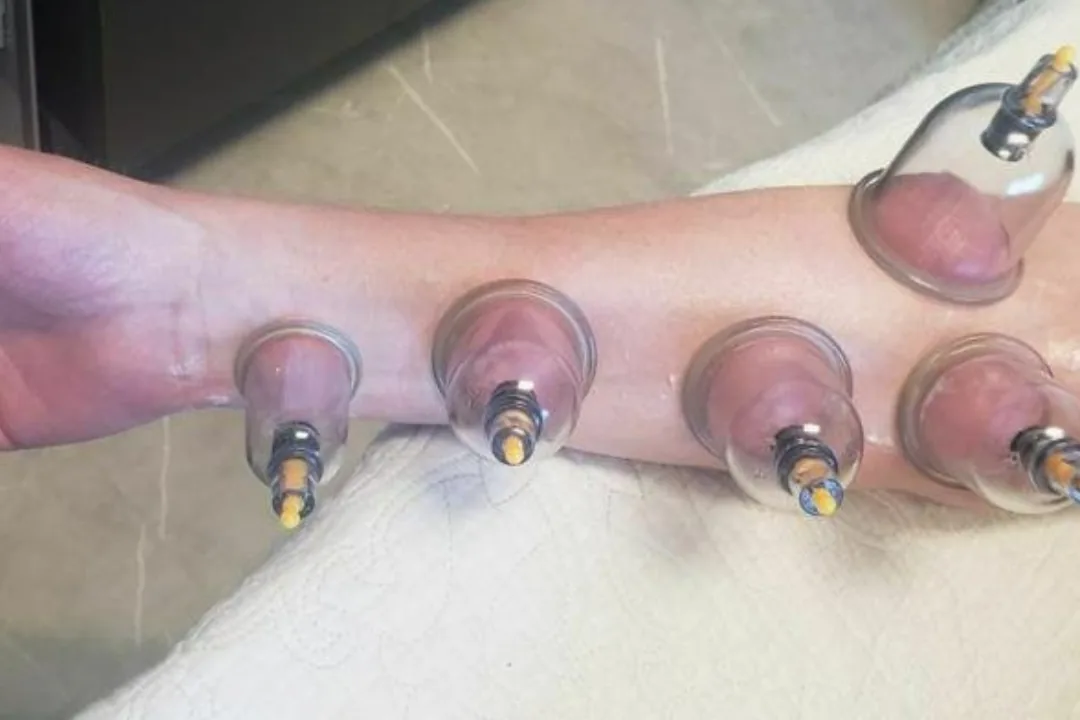
- Cupping and instrument-assisted soft tissue work where tight tissue is limiting the movement.
- Mobility and strength work that holds the change: hip and mid-back rotation, anti-rotation trunk strength, gluteal and grip strength.
- Blood flow restriction when a knee, hip or elbow cannot take meaningful weight yet. A cuff lets the muscle work hard at light loads.
What we do not do is rebuild your swing. If the finish position or the sequence is part of the problem, that belongs with your coach, and where you have one the two plans are coordinated rather than duplicated.
On timing, the back guide gives the honest version: symptoms often change within two to three sessions because much of the pain is guarding, mobility takes four to six weeks of consistent work, and strength takes about twelve. The gains fade if the work stops. You get an estimate for your own problem after the examination, not before it.
Keep playing or rest? What to change first
Most golfers can keep playing while a problem is treated, and stopping completely is rarely necessary. What changes is the dose. In order:
- Cut range volume first. A hundred balls off a mat in a short window is the highest repetition in the sport and the lowest value. Treat it as training load, not free practice.
- Play nine holes for a few weeks, not eighteen.
- Use a push cart if the back is the problem. It keeps the walking and takes the bag off one shoulder.
- Warm up for ten minutes. Hip and mid-back rotations, then wedges up to the driver. The first tee shot, hit cold, is a common moment for a back to complain, and in a Dallas January it matters more.
- Keep your swing. Technique changes belong with a coach once things have settled, not in the middle of a flare.
A useful rule for any of it: mild pain during play is acceptable if it settles within a day and the next morning is no worse. Sharp pain, swelling, a joint that gives way or locks, numbness or weakness mean stop and get it examined. The full version is in when you can train through pain.
If two or three weeks of sensible changes have made no difference, more waiting is not a plan. A problem seen early usually takes fewer sessions than the same problem seen after months of guarding and playing around it.
Seven questions to ask a physical therapist as a golfer in Dallas
Ask these on the phone before you book anywhere, including here.
| Question | Why it matters for a golfer | How it works here |
|---|---|---|
| 1. Will you examine my hips and mid-back, or only where it hurts? | The sore spot is often making up for range that is missing somewhere else | A full-body evaluation at the first visit, both sides measured |
| 2. Who am I with, and for how long? | Measuring, treating and loading do not fit into a few minutes | 60 minutes, one-on-one with Dr. Lockett, the same clinician every visit |
| 3. Do you treat and strengthen in the same visit? | Passive treatment alone feels good and does not hold | Hands-on work first, then the new range is loaded in the same hour |
| 4. Can I keep playing? | Weeks off cost strength and the season | Usually yes, with range volume and holes adjusted; you are told plainly when the answer is no |
| 5. Will you work alongside my golf coach? | Technique and tissue are two different jobs | The rehabilitation is prescribed here and coordinated with your coach; the swing stays with the coach |
| 6. How will we know it is working? | “It feels looser” is not a measure | Rotation, strength and grip are measured on both sides and re-tested |
| 7. What does it cost, and how is it paid? | Know the terms before you start | Out of network, with a superbill after every session; packages of 6 visits for $840 and 12 visits for $1,560 |
How to read this table: the middle column is the reason to ask, whichever clinic you call. The right-hand column is what our own pages state, so you can hold us to it. If a clinic cannot answer questions 1 and 3 clearly, keep looking. Whether a visit is worth paying for at all, for someone who plays for enjoyment, is weighed up in is a sports physical therapist worth it for a weekend athlete.
Cost, where we are and how to book
Dr. Brent Lockett, PT, DPT holds a Diploma in Osteopractic from post-doctorate residency training and certifications in dry needling, spinal manipulation and blood flow restriction therapy. His own interest in physical therapy began as an injured young athlete trying to get back to his sport, which is why the aim here is the round you want to play, not just a quieter joint. The practice holds a 5.0 rating from 81 Google reviews, and you can read them here.
- Free discovery visit: No charge — a conversation about where it hurts, how much you play and whether this fits
- 6-visit pain/movement plan: $840 — six 60-minute, one-on-one visits for a current problem
- 12-visit performance package: $1,560 — twelve 60-minute visits for ongoing mobility, strength and preventative care
- Single sessions: see sessions & packages
The practice is out of network: you receive a superbill after every session to file with your insurance for potential reimbursement. The typical client starts at one to two visits a week, and nobody is sold a package before the examination has produced a plan. No referral is needed to start; Texas allows up to 30 days of treatment without one, and do you need a referral for physical therapy in Texas has the full rule.
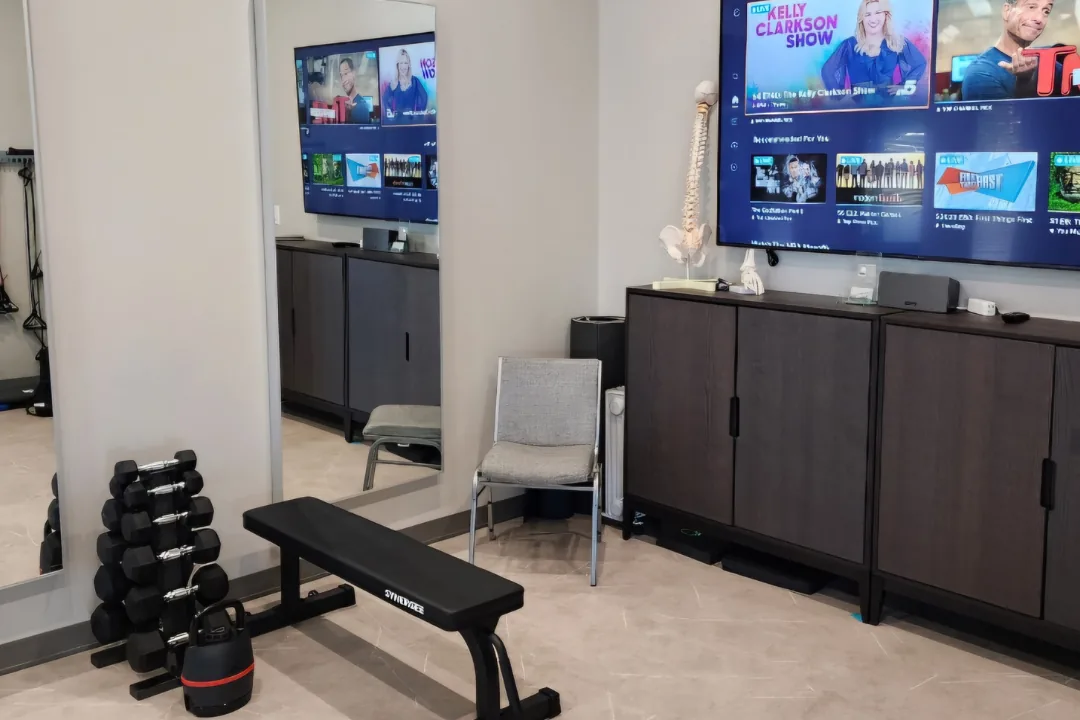
The clinic is at 10670 North Central Expressway, Suite 110, Dallas, TX 75231, in North Dallas near the Park Cities and Preston Hollow. Visits at your home, office or gym are available across Dallas and the surrounding areas, including Highland Park, University Park, Uptown, Lakewood, Lake Highlands, Addison, Richardson, Plano and Farmers Branch, for an upcharge; see mobile physical therapy.
Call (214) 600-7762 or book a free discovery visit. Tell us where it hurts, how many rounds and range sessions you play in a week, and what is on the calendar. Once you are back to full rounds, staying active after 40 without getting hurt covers the habits that keep you there.
Questions people ask
Which physical therapists in Dallas help golfers with pain and mobility?
Osteopractic Physical Therapy & Pain Relief treats golfers in 60-minute one-on-one visits with Dr. Brent Lockett, PT, DPT. The examination covers hips, mid-back, shoulders and grip on both sides, and treatment and strength work happen in the same visit. The clinic is at 10670 North Central Expressway, Suite 110, Dallas. Call (214) 600-7762.
Who can help with back pain from golf near Highland Park and the Park Cities?
The clinic is in North Dallas near the Park Cities and Preston Hollow, and visits at your home, office or gym are available in Highland Park and University Park for an upcharge. Golf back pain is usually treated by restoring hip and mid-back rotation, not by working on the back alone.
Can I keep playing golf while I am in physical therapy?
Usually, yes. Range volume is reduced first, then holes, and a push cart helps a sore back. Sharp pain, swelling, a joint that gives way or locks, numbness or weakness mean stop and get it examined.
Why does my lead hip hurt after golf?
The lead hip rotates inward under load through impact and the follow-through, and it is very often the stiff one. Groin pain points at the joint, pain on the outside at the gluteal tendons, and buttock pain often at the low back, so the examination names which one it is.
How long does golfer’s elbow take to get better?
It is a tendon problem and it improves slowly with progressive loading. Three to six months is realistic for an inside-elbow problem that has been going a while. Most golfers keep playing at a reduced volume while they rebuild.
Do you work on my golf swing?
No. We measure and treat what your body can supply to the swing: hip, mid-back and shoulder range, strength and control. Technique belongs with your golf coach, and where you have one the two plans are coordinated.
I am not in pain. Is a golf mobility assessment worth doing?
It can be, especially before the season or a golf trip. A full-body evaluation finds a stiff hip or mid-back while it is still only a limitation. No screen predicts every injury.
How much does physical therapy for golfers cost at your clinic?
The published packages are a 6 visit pain/movement plan at $840 and a 12 visit performance package at $1,560. Single sessions are also available; see the sessions and packages page. The discovery visit is free.
Does insurance cover it?
The practice is an out-of-network provider. You receive a superbill after every session to file with your insurance for potential reimbursement, which depends on your own out-of-network benefits.
Do I need a referral to see a physical therapist for a golf injury in Texas?
Not to start. Texas allows up to 30 days of treatment without a referral, and continuing past that needs one. Some insurance plans have their own rules.