The short answer
Injury prevention physical therapy for athletes starts with a full-body evaluation: range of motion, strength side to side, single-leg control, landing and the movements your sport repeats. What it finds is treated with hands-on work and loaded with strength training, timed around your season. In Dallas, Dr. Brent Lockett, PT, DPT provides it one-on-one at 10670 North Central Expressway, Suite 110, or at your own gym.
- Most sports injuries are overuse injuries that build for months behind a compensation you do not feel.
- A pre-season screen checks range, strength and single-leg control side to side, landing, and the movement your sport repeats.
- The findings are treated in the same visit with hands-on work and strength training, then fitted into your existing training week.
- The best time is before the load goes up; in season the work is lighter and timed around competition.
- A screen cannot prevent every injury and is not a medical exam; acute injuries and warning signs go to a physician first.
Ask an athlete coming off a six-week layoff when the problem started and the honest answer is often months earlier: a calf that always felt tight on one side, a hip that never quite reached the bottom of a squat, a shoulder that needed a longer warm-up every week. None of it hurt enough to do anything about. Then the season got busy, the load went up, and the weak link gave way. This article explains what an injury prevention screen checks, what happens with the results, how it fits around a season, and who gets the most out of one.
Why most sports injuries are not sudden
Some injuries really are bad luck: a collision, a fall, a foot landing on someone else's shoe. Many more are overuse injuries, and those build slowly. Tendons, muscles and joints are asked to do more than they are ready for, week after week, until one of them complains.
The body is good at hiding the early stage. If one ankle does not bend as far as the other, you shift a little more weight to the other leg. If a hip is stiff, the lower back moves more to make up for it. You do not feel a compensation. You feel what it eventually costs, usually at the worst moment of the season.
That is the whole case for screening: anyone training hard on a weekly basis is almost certainly compensating for something already, and it is far cheaper to find it before it becomes an injury than after.
What a pre-season screen checks
A useful screen looks at the whole body, not only the joint that has been complaining. At Osteopractic Physical Therapy & Pain Relief it covers:
- Range of motion, side to side. Ankles, hips, thoracic spine and shoulders, the joints whose stiffness most often pushes load somewhere else.
- Strength, side to side. Calf, quadriceps, hamstrings, hip and shoulder rotators, compared with the other side rather than with a chart.
- Single-leg control. Balance, single-leg squats and hops, watching for the knee collapsing inward or the trunk leaning.
- Landing and change of direction for sports that jump and cut.
- The movement your sport repeats. A runner's stride, a golfer's turn, a lifter's squat and press, a thrower's arm.
- Your history. Old injuries, the niggle that returns every season, and what your training week actually looks like.
The question it answers is different from a pain visit. Not ‘why does this hurt?’ but ‘what is going to hurt if we leave it?’
Why side-to-side differences matter
Most athletes are not symmetrical, and they do not need to be. What matters is a difference large enough that one side is doing work the other cannot. A calf that manages far fewer single-leg raises than the other, or a hip that turns in much less on one side, is the kind of finding that tends to show up again later as an Achilles, knee or back problem.
This is also the clearest way to see whether an old injury ever fully recovered. A sprained ankle from two seasons ago often still shows up as weaker balance and a stiffer joint on that side, long after the pain went. See the ankle sprain that keeps rolling.
What happens with the findings
A screen that ends with a list of problems is half a job. In the same 60-minute visit, the findings are treated:
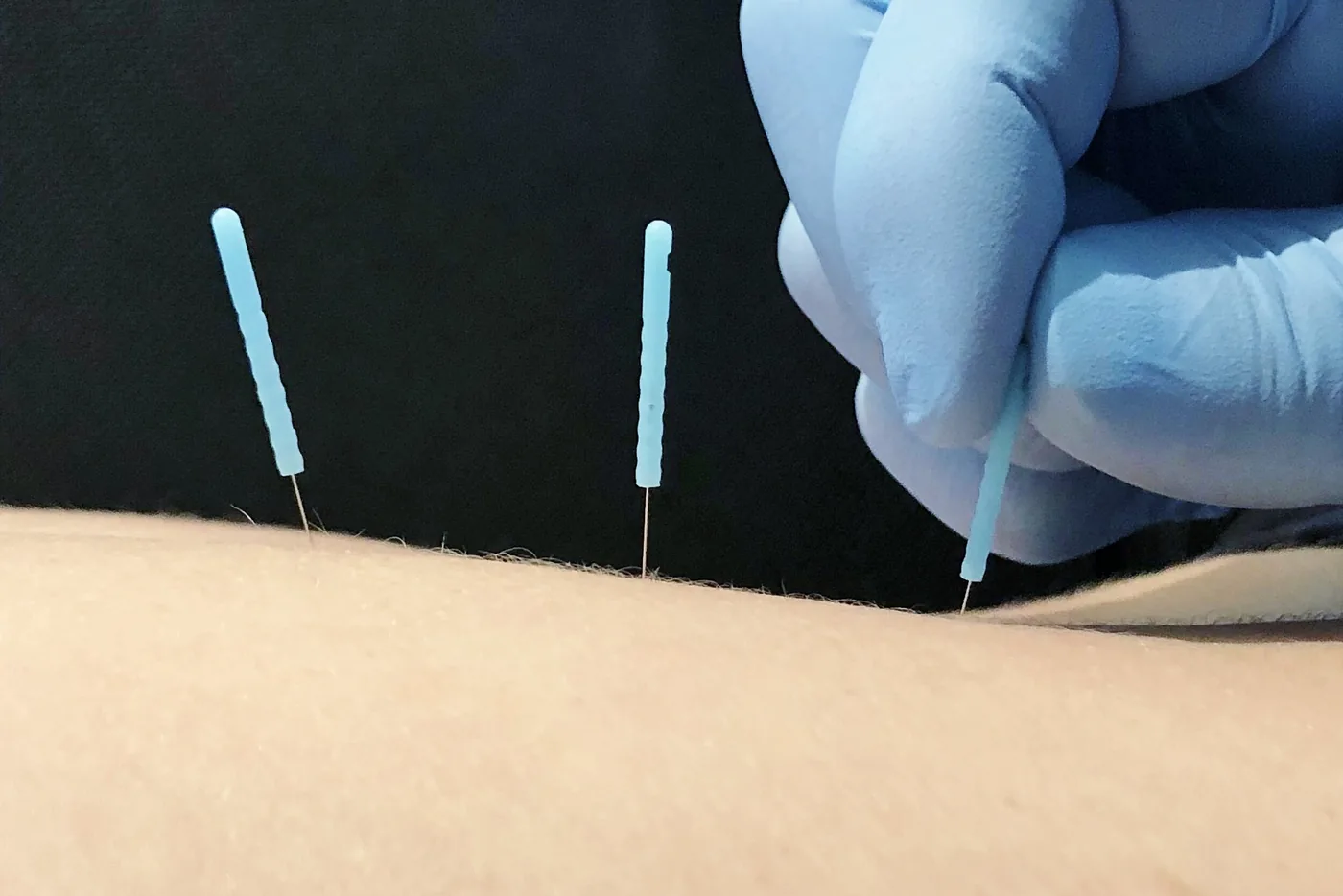
- Clear the restriction. Manipulation, dry needling, cupping or instrument-assisted soft tissue work, aimed at what the evaluation found.
- Load it properly. Strength and control exercises that make the new range usable, so the change is trained rather than borrowed.
- Fit it to your week. A short list you can run inside your existing training, not a second program on top of it.
When a joint cannot yet take heavy load, blood flow restriction training gives a strength stimulus with light weights, without adding fatigue you cannot afford close to competition.
When to have one
The best time is before the load goes up: the start of pre-season, the first weeks of a marathon block, or a couple of months before an event you cannot afford to miss. That leaves time to fix what the screen finds before it is tested by the hardest training of the year.
In season, the work changes. A tune-up in a competition week looks nothing like an off-season block. Sessions get shorter on load and longer on keeping you moving well, and they are timed so treatment never costs you a session you needed.
After an injury, the same tests become the return-to-sport criteria. Feeling ready and being ready are not the same thing, and the gap between them is where re-injury happens. See the road back to the court and returning to running without getting hurt again.
What it looks like for different sports
Runners: calf and hip strength, single-leg control, ankle range and how the weekly mileage is building. Runner's knee, shin splints and plantar fasciitis are the usual targets. See runner's knee is preventable.
Golfers: hip and thoracic rotation, because a stiff hip or upper back makes the lower back do the turning. See golf and back pain.
Lifters and CrossFit athletes: squat depth, overhead position and the shoulder and elbow load of the week. See physical therapy for weightlifters.
Jumping and cutting sports: landing mechanics, hamstring strength and ankle control. See hamstring strains that keep coming back.
Masters athletes: the same tests, with more attention to recovery between sessions and to tendons, which adapt more slowly with age. See staying active after 40.
Why it happens at your gym
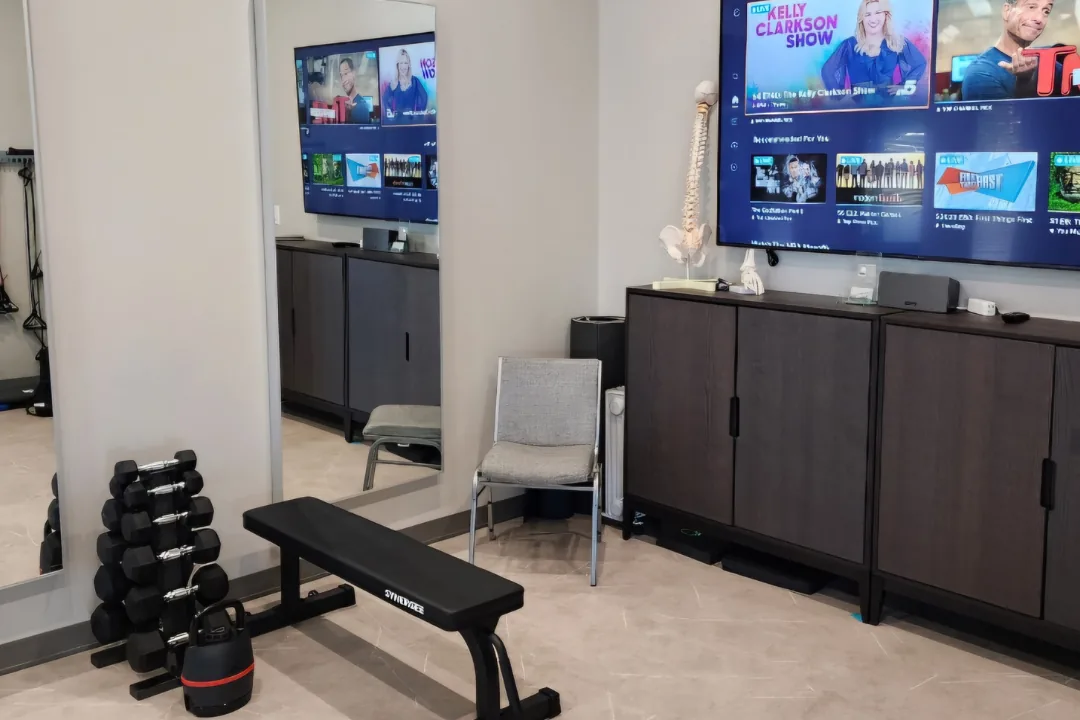
Sports sessions can take place at your gym, home or office as well as at the clinic. Treating you where you train means the actual movement that matters can be tested on the equipment you use: the barbell, the track, the court, the practice tee.
It also makes the plan easier to keep. Exercises chosen in the place you train, with the equipment you have, are the ones that get done.
What a screen cannot do
It cannot predict every injury, and no honest clinician will claim it can. Contact injuries, falls and plain bad luck are part of sport.
It does not replace a training plan, a coach or sensible load management. Most overuse injuries follow a sudden jump in training, and no amount of screening makes a doubled mileage week safe.
It is not a medical exam. An acute injury with significant swelling, a joint that gives way, or pain with numbness, weakness or fever needs a physician first. Physical therapists screen for these signs and refer on when they appear.
Who gets the most out of one
- Athletes training or competing hard every week
- Anyone whose same niggle returns every season
- Athletes coming back from an injury who want it done properly
- Anyone with a big event on the calendar they cannot afford to miss
- Masters athletes who want to keep training, not taper down
- Youth athletes in a heavy growth or competition phase
Where to start in Dallas
Book a free discovery visit online or call (214) 600-7762. No physician referral is required in Texas.
Sessions are 60 minutes, one-on-one with Dr. Lockett, at 10670 North Central Expressway, Suite 110, in North Dallas, or at your gym. More on sports performance therapy.
Questions people ask
Injury prevention physical therapy for Dallas athletes
Osteopractic Physical Therapy & Pain Relief in North Dallas offers injury prevention screening and treatment for athletes: a full-body evaluation of range, strength and control, hands-on treatment of what it finds, and a strength plan timed around your season. Sessions are 60 minutes, one-on-one with Dr. Brent Lockett, PT, DPT, at the clinic or at your gym. No referral is needed.
What does a sports injury screening include?
Range of motion and strength compared side to side, single-leg balance, squats and hops, landing and change of direction, the movement your sport repeats, and your injury and training history.
When should an athlete get a pre-season screen?
Before training load goes up: the start of pre-season, the first weeks of a race block, or a couple of months before a key event, so there is time to fix what the screen finds.
Do I need to be in pain to see a sports physical therapist?
No. A screen is most useful before pain starts, while a stiff joint or weak side is still only a limitation and not yet an injury.
Can physical therapy prevent sports injuries?
It cannot prevent every injury, especially contact injuries and falls. It can find and correct the stiffness, weakness and control problems that many overuse injuries grow from, and help you manage training load.
Can the screen be done at my gym?
Yes. Sports sessions can take place at your gym, home or office, so the movements that matter can be tested on the equipment you actually use.
Do I need a referral for sports physical therapy in Texas?
No. Texas allows direct access to physical therapy. Some insurance plans have their own referral rules, which is a separate matter.