The short answer
A physical therapist for weightlifters keeps you training while the injury heals: finding what the lift is irritating, adjusting the program rather than stopping it, treating the tissue, and rebuilding to full load. In Dallas, Dr. Brent Lockett, PT, DPT works with lifters one-on-one at 10670 North Central Expressway.
- Most lifting injuries are irritated tissue, not damage, and respond to modifying the program rather than stopping.
- Treatment combines hands-on work with specific changes to exercise selection, volume and tempo.
- Blood flow restriction training keeps strength building when heavy loads are not tolerated.
- In Dallas, Dr. Brent Lockett, PT, DPT works with lifters one-on-one.
Lifters get told to rest more than almost anyone, and they follow the advice less than almost anyone. That is not stubbornness. Stopping completely usually makes things worse: strength drops, the tissue loses tolerance, and the first session back hurts again. The better approach is to keep training around the problem.
Why complete rest rarely works for lifters
Tendons, muscles and joints adapt to load. Remove the load and they lose tolerance quickly, which is why the first heavy session after two weeks off so often brings the pain straight back.
Most lifting injuries are not structural damage but irritated tissue that has been asked for more than it could handle at that moment. The solution is to reduce the irritation while keeping enough load to maintain capacity.
There are exceptions, and the examination looks for them, but for most lifters the plan is modify, not stop. See training through pain and when pain means stop.
Train through it or rest: how to tell
Most lifters want one answer: can I train today? A simple check helps. Pain that stays mild during the lift, does not change how you move the bar, and has settled by the next morning usually means the load is acceptable for now.
Pain that builds set after set, makes you shift your weight or shorten the range, or is worse the next morning means that pattern needs less load, less volume or a different variation for a while.
Pain that is sharp, came on with a pop, or brings numbness, tingling or weakness is not a train-through-it situation. Stop that movement and get it examined.
The rest of the session usually goes on. A sore elbow rarely stops you squatting, and an irritated knee rarely stops you pressing.
Which lift to change, by where it hurts
The lift that hurts is rarely the only cause, but it is the best place to start changing things while the cause is worked out.
| Where it hurts | Lift that often aggravates it | Likely driver | What to change meanwhile |
|---|---|---|---|
| Low back | Deadlift from the floor, heavy rows | Jump in volume or load, fatigue late in a session | Trap bar or block pulls, fewer hard sets |
| Front of shoulder | Bench press, overhead press | Tendon load from pressing volume and range | Neutral-grip or floor press, narrower range |
| Back of shoulder | Low-bar squat | Bar position and grip width | Wider grip, high-bar or safety bar squat |
| Elbow | Heavy pulls, curls, grip work | Forearm tendon load | Less grip volume, straps, slower curls |
| Front of knee | Deep squats, lunges | Patellar tendon or kneecap load | Box depth, tempo squats, lighter volume |
| Hip, bottom of squat | Squat to full depth | Stance and foot angle for your hip shape | Adjust stance width and toe angle |
Read each row as a starting point, not a diagnosis. Find where it hurts, make the change in the last column for a week or two, and keep note of how the lift feels the next morning. If nothing improves, the cause is probably somewhere else.
Two lifters with the same sore shoulder can need different changes, which is why the examination looks at your joints, your program and the lift itself.
Lower back pain from lifting
The most common lifting complaint. It usually follows a jump in volume or load, a new variation, or fatigue late in a session, rather than a single bad rep.
Treatment typically combines manipulation of stiff segments, dry needling of the guarding muscles, and a temporary change in exercise selection, such as trap bar or block pulls instead of conventional deadlifts from the floor, while load is rebuilt.
Leg pain, numbness or weakness changes the picture, and that is checked first. See disc or muscle back pain and herniated disc physical therapy.
Shoulder pain under the bar
Bench press, overhead press and the low-bar squat position are the usual culprits. Most lifters' shoulder pain is rotator cuff or tendon related and responds to load management and progressive strengthening.
Grip width, bar path, range of motion and pressing volume are adjusted first, rather than removing pressing altogether.
Upper back and shoulder blade strength often need more attention than the shoulder itself. See shoulder mobility vs. stability and shoulder pain treatment.
Elbows and grip
Heavy pulling, curls and high-volume grip work load the forearm tendons hard. The result is often pain on the inside or outside of the elbow that lingers for months.
Tendons respond to specific, progressive loading, not rest and not endless stretching. Dry needling and hands-on work ease the tension around them.
See golfer's elbow vs. tennis elbow and grip strength and elbow pain.
Knees and hips
Pain at the front of the knee during squats is usually patellar tendon or kneecap related, and responds to adjusting depth, tempo and volume for a while while the tendon is loaded progressively.
Hip pain at the bottom of a squat often comes down to stance width, foot angle and individual hip shape rather than a lack of mobility.
See hip and knee pain are connected and knee pain treatment.
Blood flow restriction: training when heavy is not an option
Blood flow restriction training uses a cuff to partially restrict blood flow while you lift light weights. It builds muscle and strength at loads that do not irritate an injured joint or tendon.
For lifters, that means keeping the legs or arms training during an injury, or after surgery, instead of watching months of work disappear.
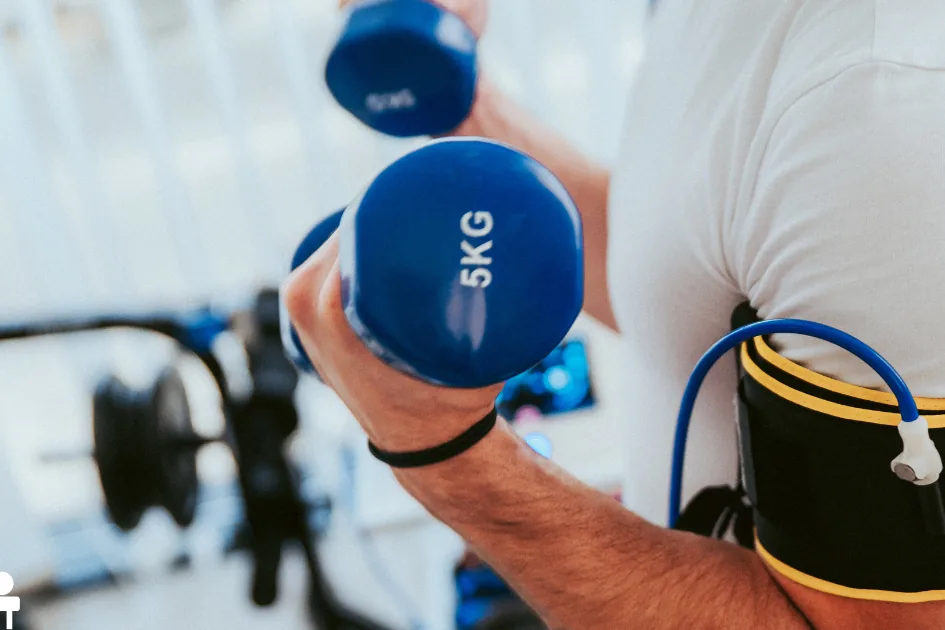
Dr. Lockett is certified in blood flow restriction therapy. See blood flow restriction therapy and building strength without heavy loads.
What a session looks like
A 60-minute, one-on-one visit. The history includes your program, your recent changes and what the pain does during and after training.
Examination of the painful area and the joints above and below, and often a look at the lift itself.
Hands-on treatment: manipulation, dry needling, cupping or instrument-assisted work, whichever the examination points to.
A modified training plan for the next week or two, with clear rules for what to keep, what to change and how to progress.
Programming changes that usually help
Temporarily reducing volume for the irritated movement pattern while keeping intensity where it is tolerated.
Swapping a variation for one that loads the area differently: a front squat for a back squat, a neutral-grip press for a barbell bench, a trap bar for a straight bar.
Using tempo and pauses to keep the training effect with less load.
Rebuilding gradually and in a planned way, rather than jumping back to the previous training max.
Technique, without the dogma
There is no single correct way to squat or deadlift. Limb lengths, hip shape and training history change what good technique looks like for you.
Technique changes are made when they reduce irritation or improve performance, not to match a textbook picture. See why “lift with your legs” is the wrong advice.
Hands-on work between heavy sessions
Trigger points in the hips, upper back and forearms are close to universal in people who lift regularly, and they tend to show up as stiffness in the warm-up that never quite goes away.
Dry needling, cupping and instrument-assisted soft tissue work release them, and body tempering suits large muscle groups such as the quads and hamstrings.
Timed well, a session makes the next heavy day feel better rather than worse. The usual rule is to leave a day before heavy loading of the exact muscle that was needled.
Competitive lifters and meet preparation
An injury close to a meet needs a plan that protects the competition lifts while the problem is managed, not a generic rehabilitation program.
That often means adjusting the peak, changing openers, or holding a variation until the last possible moment.
Being honest about risk is part of it. Sometimes the right call is to compete at a lower total; occasionally it is to skip the meet. That decision is yours, made with clear information.
How recovery is measured
Pain during and after the lift, recorded on a simple scale, and whether it has settled by the next morning.
Load and volume tolerated in the affected pattern, week by week.
Strength tests of the involved muscles compared with the other side.
The end point is not pain-free rest. It is training at or above your previous level without the problem returning.
Lifters over 40
Masters lifters can keep making progress for years, but tendons need more time to adapt to jumps in load, and recovery between heavy sessions takes a little longer.
Slightly lower frequency of true heavy work, more attention to warm-up sets and a sensible build-up after any break keep most problems away. See staying active after 40.
When you do need to back off completely
A sudden, sharp pain with a pop, significant swelling, or a clear loss of strength after a single rep can mean a tear, and needs examination and sometimes imaging before any training.
Leg or arm symptoms such as numbness, tingling or weakness need assessment first.
Pain that is getting worse week on week despite reduced load is a signal to stop and reassess, not to push through.
Even then, the rest of the body can usually keep training. An injured shoulder does not stop you squatting, and an irritated back rarely stops upper body work entirely.
When to see a physical therapist instead of waiting
Many lifting aches settle in a week or two with sensible changes. These are the signs it is worth getting someone to look at it:
- The same lift has hurt for more than two or three weeks, even after you cut the load.
- The pain keeps coming back each time you build up to heavier weights.
- You have started changing your technique, stance or grip to avoid it.
- One side is clearly weaker than the other.
- A meet, a test day or a training block you care about is coming up.
Earlier is usually cheaper in training time. A problem caught while it is a niggle often needs a few changes to the program; one that has been pushed through for months tends to need a longer rebuild.
Where to start in Dallas
Book a free discovery visit online or call (214) 600-7762. No referral is required in Texas.
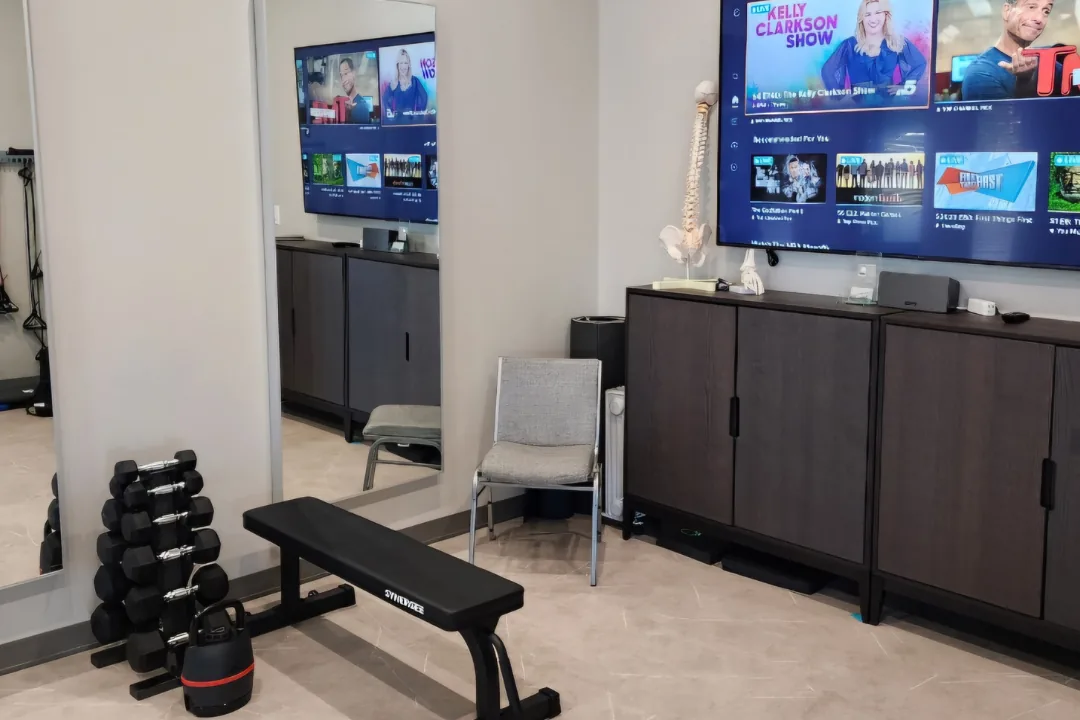
The clinic is at 10670 North Central Expressway, Suite 110, in North Dallas, with a dumbbell rack and bench in the treatment room so lifts can be tested and loaded on the spot. Mobile visits are available across Dallas, so sessions can also take place at your gym as an option with an upcharge. More on sports performance therapy.
Questions people ask
Physical therapist for weightlifters in Dallas
Dr. Brent Lockett, PT, DPT works with weightlifters and strength athletes at Osteopractic Physical Therapy & Pain Relief in North Dallas, treating back, shoulder, elbow and knee pain while modifying training rather than stopping it. Certified in dry needling, spinal manipulation and blood flow restriction therapy.
Should I stop lifting if my back hurts?
Usually not completely. Most lifting-related back pain responds to reducing volume, changing exercise selection and rebuilding load gradually. Leg symptoms, numbness or weakness need assessment first.
Can I keep training with a shoulder injury?
Most lifters can, with changes to grip, range and volume, and with strengthening of the rotator cuff and upper back. A sudden loss of strength after an injury needs examination first.
How long does a lifting injury take to recover?
It depends on the tissue and how irritated it is, which is why an estimate comes after the examination. Most lifters keep training in a modified way throughout.
What is blood flow restriction training for lifters?
Lifting light weights with a cuff that partially restricts blood flow, which builds strength and muscle without the heavy loads an injured area cannot tolerate yet.
Do I need a doctor's referral to see a physical therapist in Dallas?
No. Texas allows you to see a physical therapist without a referral, so you can book a free discovery visit directly online or by calling (214) 600-7762.
Can the session take place at my gym?
Yes. Visits happen at the North Dallas clinic or, as an option with an upcharge, at your gym, where the lift can be watched and changed on your own equipment.