The short answer
A first episode of sciatica often eases over weeks, and leg pain from a disc commonly improves over weeks to months with conservative care. With the right plan, many people notice the leg pain retreating toward the back within the first two weeks. Our low back pain plan typically runs four to eight one-on-one visits, one to two a week, though nerve pain is less predictable. In Dallas, Dr. Brent Lockett, PT, DPT treats it without injections.
- A first episode of sciatica often eases over weeks; leg pain from a disc commonly improves over weeks to months with conservative care.
- The source decides the timeline: a disc, an irritated joint or the deep hip muscles each recover differently and need a different plan.
- Our low back pain plan typically runs four to eight one-on-one visits, one to two a week; nerve pain is slower and less predictable, so you get an estimate after the examination.
- Leg pain centralizing, moving up toward the back, is the best sign it is working; pain spreading down the leg or a weakening foot means the plan must change.
- Sciatica is treated here with examination-led manipulation, dry needling and loading, with nothing injected. No referral needed to start: Texas allows up to 30 days without one.
Sciatica rarely announces how long it plans to stay. It starts as an ache in the buttock, and within a few days there is a line of pain down the back of the leg, tingling in the foot, and a car seat or office chair that you dread. The question most people search for sciatica treatment in Dallas with is a simple one: how long is this going to last, and how many appointments will it take?
Below: the honest ranges, why the source of the nerve irritation changes them, what recovery looks like stage by stage, the signs that it is improving, what speeds it up and slows it down, and how it is treated at our North Dallas clinic without steroid injections.
How long sciatica lasts: the honest ranges
A first episode of sciatica often eases over weeks. When a disc is the source, leg pain commonly improves over weeks to months with conservative care, because the body reabsorbs disc material over time and the nerve irritation settles as that happens. Larger herniations are often the ones that shrink the most.
Those are ranges, not promises, and three things move you within them: what is irritating the nerve, how long it has been going on, and what you do in the meantime. A leg that has hurt for two weeks and one that has hurt for a year are different problems, even when the pain feels the same.
The part people miss is what happens after the pain goes. Rest calms a flare and changes nothing about why it happened, which is why repeat episodes tend to arrive sooner and last longer. So there are really two timelines: how long until the leg settles, and how long until the back and hips can take what your week asks of them without the nerve flaring again.
Why the source changes the timeline
Sciatica is a symptom, not a diagnosis. It describes pain along the sciatic nerve and says nothing about why the nerve is irritated. There are three common sources, and each one recovers differently:
- The spine: a disc bulge or a narrowed opening pressing on a nerve root as it leaves the lower back. This is the version most people assume they have. It responds to work at the spine and to directional loading, and it settles as the nerve calms.
- The joints: an irritated facet or sacroiliac joint in the lower spine or pelvis refers pain into the buttock and thigh in a pattern that can look exactly like nerve root pain. Manipulation and mobility work change it, often faster than a nerve root settles.
- The deep hip muscles: the nerve runs past, and in some people through, the piriformis. Irritable gluteal muscles can irritate the nerve directly, and their trigger points refer pain down the leg on their own. Dry needling and manual work into the deep hip, then hip strength, are the plan.
Treating all three the same way is why so much sciatica care goes nowhere, and why so many people feel their sciatica is lasting forever. The full comparison of the spine and the buttock is in sciatica or piriformis, and the disc version, including when surgery belongs, is in physical therapy for a herniated disc.
Sciatica recovery, stage by stage
Recovery moves through stages, and each one is marked by what the leg does, not by a date on the calendar. The ranges below are the ones on our own condition pages; how long you spend in each depends on the source and how long it has been there.
| Stage | Roughly when | What the work looks like | The sign it is working |
|---|---|---|---|
| 1. Find the source | The first visit | History, nerve tension, reflex, strength and sensation tests, repeated movement testing, the red-flag screen, and hands-on treatment in the same hour | You know whether the disc, the joint or the hip muscles are driving it, and what eases the leg |
| 2. Calm the nerve | The first two weeks; most clients notice a change in the first two or three visits | The movement direction that eases the leg, done often; manipulation, dry needling or cupping where that is the driver; short walks instead of bed rest | The leg symptoms start to centralize, moving up toward the back |
| 3. Rebuild tolerance | Once the leg has started to settle; weeks rather than days | Hip and trunk strength, sitting and walking tolerance, then the lifting your work and life need | Sitting and walking last longer week by week; sleep improves |
| 4. Take over and taper | When the result holds between visits | Visits spaced out while you run the program on your own, then discharge with a plan for a bad week | A flare is shorter and milder, and you know what to do about it |
How to read this table: the right-hand column is what moves you on, not the calendar. If the leg pain is centralizing, you are in the right stage even if it still hurts. If it is spreading further down the leg, the plan needs to change, whatever week it is.

How many physical therapy visits does sciatica usually take?
Our low back pain plan typically runs four to eight one-on-one visits, seen one to two times a week, and most clients notice a change in the first two or three. Sciatica sits at the slower, less predictable end of back problems, because nerves are the slowest tissue to settle. A joint-driven leg pain can change in a visit or two; a disc that has irritated a nerve root for months usually takes longer.
That is why nobody here quotes you a number before the examination. A number given over the phone is a guess, and it becomes an expectation that is wrong in one direction or the other. What you get instead, after the first visit, is an estimate with the reasoning behind it, and what should have changed by when.
How the visits are spaced matters as much as how many there are:
- Early, closer together, while the nerve is most irritable and the plan is being set.
- Later, further apart, every two weeks and then every month, as the work shifts to the program you do on your own.
- Not stopped the day the pain goes, because pain settles before strength and tolerance return, and that gap is where the next episode starts.
Every visit here is 60 minutes, one-on-one with Dr. Lockett, so the hands-on work and the loading happen in the same hour. That is the main reason a one-on-one model tends to reach the same result in fewer sessions. The general answer, for every kind of problem, is in how many physical therapy visits will I need.
Signs your sciatica is getting better
Pain is a poor day-to-day guide, because it swings with sleep, sitting and stress. These markers are more reliable, and they are the ones checked at every visit here:
- The leg pain is centralizing. It retreats from the foot to the calf, from the calf to the thigh, from the thigh to the buttock and back. This is the single most useful sign, even if the back aches more for a while as it happens.
- The painful area is shrinking, or the tingling and numbness reach less far.
- Sitting and walking last longer before the leg starts, week by week. For buttock-driven pain, sitting tolerance is the main marker.
- Sleep is improving. Night pain is often one of the first things to ease as the nerve calms.
- Strength and reflexes are holding steady or improving on the re-test.
The sign that something needs to change is the opposite: pain moving further down the leg, or a foot or calf getting weaker. Many people find the leg pain moves further down on bad days and back up on good ones; a short flare is normal, a steady march down the leg is not. If nothing measurable has changed after a sensible period, the plan should change, or you should be referred on.
What speeds recovery up, and what slows it down
Most of the change happens in the days between visits, not in the hour itself. These are the levers you control:
- Speeds it up: starting early, because problems seen in the first weeks usually take less time than the same problem left for months; the movement direction that eases the leg, done often; walking in short, tolerable bouts; getting up from a chair before the leg starts rather than after; doing the home program.
- Slows it down: days of bed rest; long stretches of sitting or driving; hamstring stretches, which pull on an already irritated nerve and make many people worse the next day; poor sleep; a sudden jump in load somewhere else in life; and stopping the program the week the pain goes.
Other health factors such as diabetes or inflammatory conditions also change the timeline, and they are worth mentioning at the first visit.
Sitting deserves its own line in Dallas. A commute on Central Expressway, a day at a desk and a flight out of DFW or Love Field are often the three things a sciatic leg tolerates least, and sitting tolerance is usually the real-world measure of progress. More in sitting all day and back pain.

Sciatica treatment without steroid injections
Most sciatica settles without an injection or surgery, and most guidelines put a trial of movement-based treatment before either. Nothing is injected at our clinic. A typical hour for sciatica combines:
- Directional loading. The movement direction that centralizes the leg pain, found at the examination and repeated often at home. This is the core of the plan when the spine is the source.
- Spinal manipulation where the testing shows a stiff or irritated segment in the lower spine or pelvis. It is not used where the testing says a nerve root is acutely compressed; then gentler techniques and positions come first.
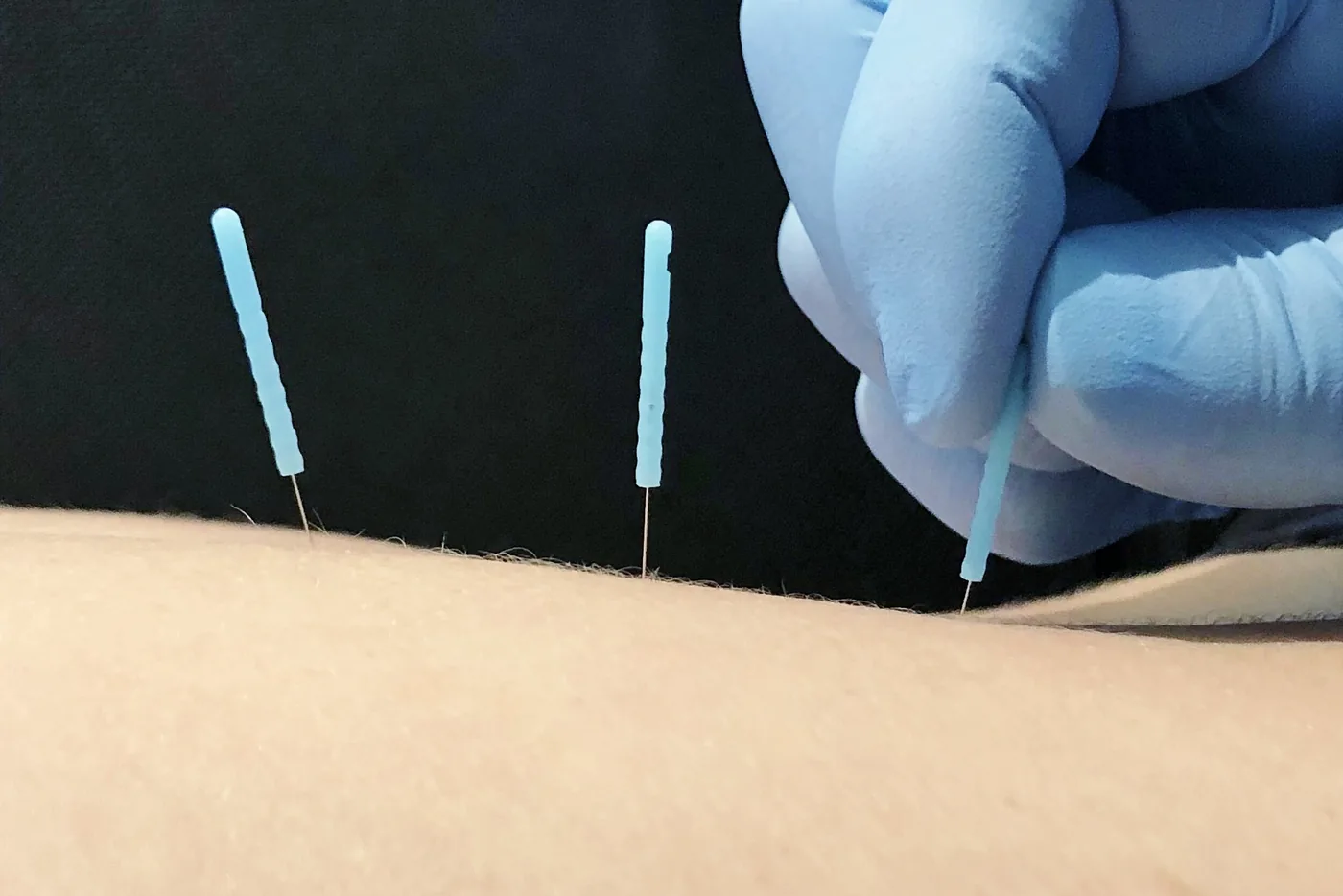
- Dry needling when the piriformis and gluteal muscles are part of the picture. A thin, sterile needle reaches trigger points at a depth hands and foam rollers cannot, and no drug is injected. It is less useful when the irritation is purely at the nerve root.
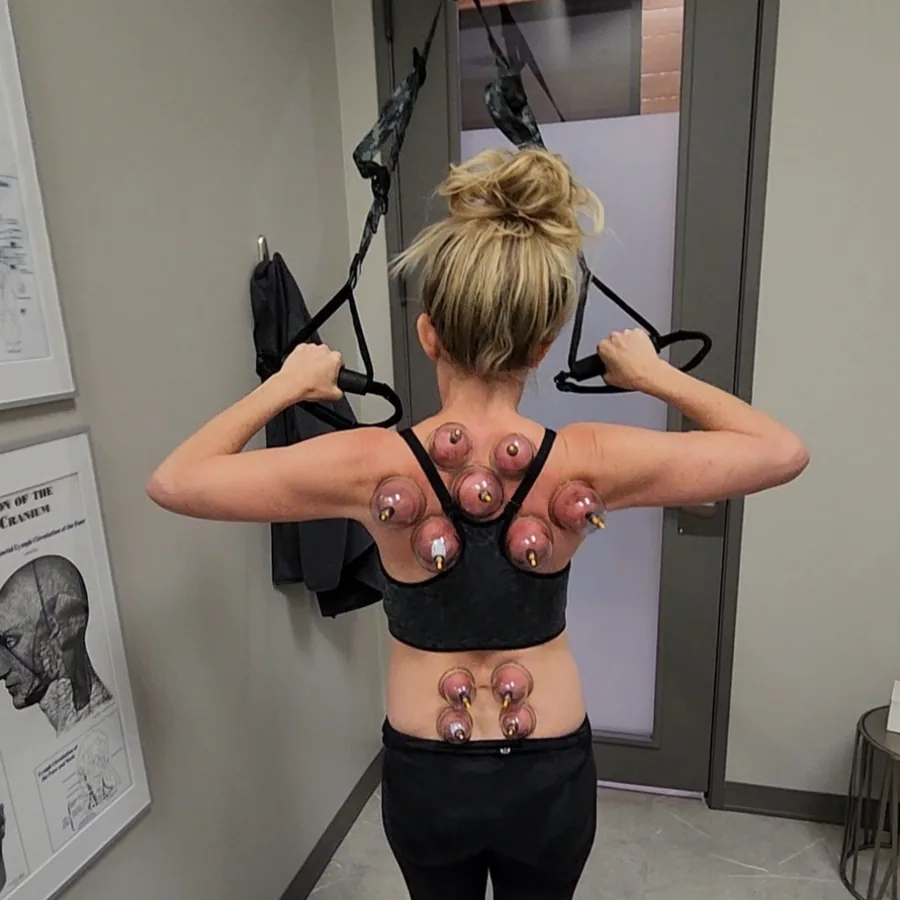
- Cupping and manual work on the muscles guarding the back and hip.
- Progressive strength for the hips and trunk as the nerve settles, with blood flow restriction training when heavier loading is not yet tolerated.
Where do injections fit? An epidural steroid injection places an anti-inflammatory around an irritated nerve root. The relief is often partial and temporary, measured in weeks to a few months for many people, and it does not change why the nerve became irritated. It can open a window when pain is too severe to exercise, and that window is best used for the strength and movement work above. Whether you have one is a decision for you and your physician; medication decisions belong there too.

When to see a physician instead
Physical therapy is the usual first treatment for sciatica, and a few situations are not therapy problems. Get urgent medical care rather than therapy if you have:
- loss of bladder or bowel control, or new trouble starting to pass urine;
- numbness around the groin or inner thighs;
- weakness that is getting worse by the day, such as a foot starting to drag;
- pain in both legs at once;
- sciatica after a fall, with fever, or with unexplained weight loss.
The first two are an emergency: an emergency room the same day. Severe leg pain that has not settled at all after a proper trial of care is a reason to ask for a physician or surgical opinion, with your progress records in hand.
This screen happens before any treatment here. Differential diagnosis is part of Dr. Lockett’s post-doctorate osteopractic training, so “this needs a physician” is an answer you can be given at the first visit rather than after months of appointments. Imaging is rarely needed to start; see what an MRI changes about back pain treatment.
Who treats sciatica well in Dallas: what to look for
Whoever you see, these are the things that shorten sciatica rather than stretch it out:
- An examination that names the source: disc, joint or deep hip, with nerve tests and repeated movement testing, not a label.
- A red-flag screen before any treatment.
- Markers, not a fixed number of visits: what should change, and roughly when, with the reasoning.
- Hands-on treatment and loading in the same session, so the window the first opens is used by the second.
- Honesty about injections and surgery, including telling you when your case is the exception.
That is how sciatica is treated at Osteopractic Physical Therapy & Pain Relief. Dr. Brent Lockett, PT, DPT holds a Diploma in Osteopractic and is certified in spinal manipulation, dry needling and blood flow restriction therapy. Every visit is 60 minutes, one-on-one, never handed to an aide. Leg-dominant pain has its own page on sciatica treatment in Dallas, and back-dominant pain is on lower back pain and sciatica.
Cost, insurance, referral and where you are seen
- Free discovery visit: No charge — a conversation about your leg and whether this approach fits
- 6-visit pain/movement plan: $840 — six 60-minute, one-on-one visits, designed to reduce pain, restore movement and build strength
- 12-visit performance package: $1,560 — twelve 60-minute visits, for ongoing wellness, mobility and preventative care
- Single sessions: see sessions & packages
Packages are tailored after the examination, not before it, and nobody is sold a block before a plan exists. The practice is an out-of-network provider: you receive a superbill after every session to file with your insurance for potential reimbursement.
No referral is needed to start: Texas allows up to 30 days of treatment without one, and continuing past that needs a referral. The full rule is in do you need a referral for physical therapy in Texas.
Most clients come to the clinic at 10670 North Central Expressway, Suite 110, in North Dallas. Visits at your home or office are available across Dallas and the surrounding areas, which helps when the chair or car seat that sets off your leg is the thing worth assessing, and telehealth sessions are offered for checking the program between visits. Call (214) 600-7762 or book a free discovery visit, and bring any scan report you have.
Questions people ask
How long does sciatica last?
A first episode often eases over weeks. When a disc is the source, leg pain commonly improves over weeks to months with conservative care. How long yours lasts depends on the source and how long it has been there.
How many physical therapy visits does sciatica usually take?
Our low back pain plan typically runs four to eight one-on-one visits, one to two a week, and most clients notice a change in the first two or three. Nerve pain is less predictable, so you get an honest estimate after the examination, not before it.
Sciatica treatment in Dallas without steroid injections
Osteopractic Physical Therapy & Pain Relief in North Dallas treats sciatica one-on-one with Dr. Brent Lockett, PT, DPT, in 60-minute visits: nerve testing first, then spinal manipulation, dry needling and loading matched to the source. Nothing is injected, and no referral is needed to start.
What are the signs sciatica is healing?
The leg pain centralizes, moving up toward the back; the painful area shrinks; sitting and walking last longer week by week; and sleep improves. Pain spreading further down the leg or a weakening foot are the opposite signs.
Can sciatica go away on its own?
A first episode often eases over weeks. What rest does not change is the pattern that caused it, which is why repeat episodes tend to arrive sooner and last longer.
Is walking good for sciatica?
Usually, yes. Walking in short, tolerable bouts is one of the most reliable things for disc-related leg pain, and days of bed rest tend to slow recovery.
Should I stretch my hamstrings for sciatica?
Not while the nerve is irritated. A hamstring stretch pulls on the sciatic nerve, and many people feel worse the next day. The movement direction found at the examination is a safer place to start.
Do I need a steroid injection for sciatica?
Most sciatica settles without one, and most guidelines put a trial of movement-based treatment first. An injection can open a window when pain is too severe to exercise. That decision belongs with you and your physician.
When is sciatica an emergency?
Loss of bladder or bowel control, or numbness around the groin or inner thighs, needs an emergency room the same day. Weakness getting worse by the day or pain in both legs needs a physician promptly.